Applications
Are the resins used in dental 3D printing dangerous for reproductive health?
At Northwestern University, a team of researchers developing the first female reproductive tract on a chip (EVATAR) in order to enable sex-based ex vivo (outside of the organism) research discovered something worrying about their “biocompatible” materials. While using
- 3 min read
- Applications
- Six more stories
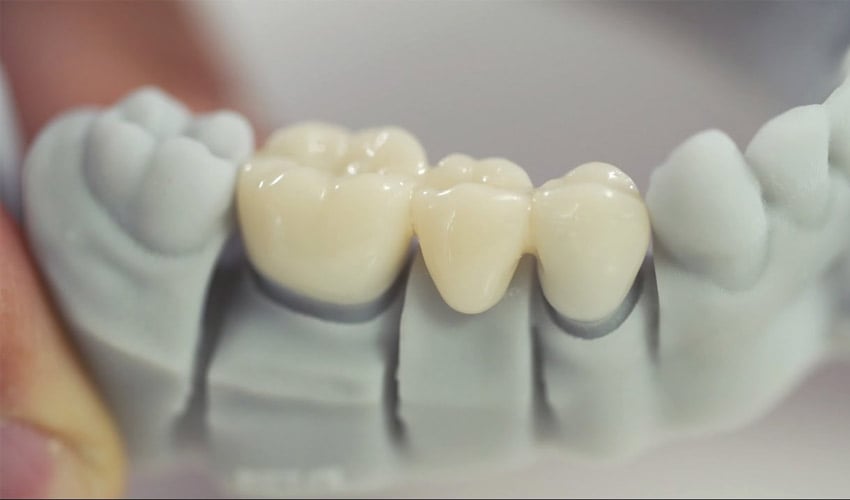
At Northwestern University, a team of researchers developing the first female reproductive tract on a chip (EVATAR) in order to enable sex-based ex vivo (outside of the organism) research discovered something worrying about their “biocompatible” materials. While using 3D printing resins commonly used in dentistry, they realized that these resins could be potentially harmful to mammalian oocytes (commonly referred to as eggs) in vitro. Notably, they found significant ovo-toxicity in mammals leaching from the materials, suggesting that there needs to be a more rigorous evaluation of the available biocompatible materials today. The results of this study potentially call into question certain uses of dental additive manufacturing. Also it highlights the continued obstacles related to the biocompatibility and current certification of resins.
Estimated at $9.7 billion in 2025 according to Grand View Research, dental 3D printing allows for multiple applications: 3D printed trays, custom-made implants, molds, prostheses, and more. In many cases, stereolithography technology is preferred, a process based on photosensitive resins. Today, they are mainly used to make aligner molds that are then thermoformed. However, the results of the study conducted by Northwestern University suggest that they could leak compounds that could induce severe toxicity into the oocyte. Should we be concerned about the use of these resins in additive manufacturing?
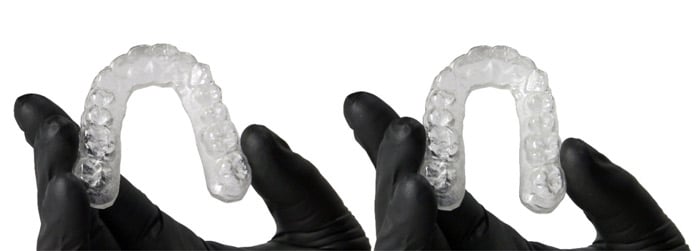
photo credit: EnvisionTec
The researchers explain that they used two biocompatible resins to print 3D micro-physiological platforms to accelerate the manufacturing of a prototype reproductive device. Since reproductive cells are highly sensitive to leachable compounds, they conducted an examination of the toxicity of the resins used using an in vitro mouse oocyte maturation test. The culture made in this 3D-printed piece revealed rapid oocyte degeneration. Francesca Duncan, co-author of the study and Assistant Professor of Obstetrics and Gynecology at Northwestern University’s Feinberg School of Medicine, explains: “Our results are important because they demonstrate that leachates from commonly used materials in 3D printing slated as ‘biocompatible’ but that may have have adverse effects on reproductive health. There is a critical need to better understand the identity and biological impact of compounds that leach from these materials”.
More from the desk
Six other notes from the rest of the bench.
 NewsMIT Engineers 3D Printed Glass Bricks for ConstructionGlass is remarkable because as long as it isn’t contaminated, it can be infinitely recycled without properties changing. That’s part of the appeal of its use in additive manufacturing, and compared to traditional glass casting, AM methods may allow for…
 MaterialsFillamentum Talks Environmental Responsibility in the Polymer 3D Printing SectorWhen it comes to 3D printing materials, polymer filaments still reign supreme worldwide with the market expected to be worth $8.1B by 2030 according to a report from Market Research Future. However, in a world increasingly aware of the impact…
 Applications#3DExpress: Bentley Achieves Significant AM MilestoneThis week, there has been a flurry of news in the additive manufacturing industry as many companies have taken advantage of RAPID + TCT for important announcements. This includes from MX3D who has announced a new partnership with the Phillips…
 MaterialsGet bowled over by these 3D-printed bowling ballsStart-up Freshmade 3D from Ohio have recently announced that they have created a material strong enough to create 3D-printed bowling balls from. The material, called AMClad, is an “isotropic Engineered Sand Composite (ESC)”, that they say is “ideal for 3D&hellip
 NewsInfographic: 3D Printing to Protect the OceansAdditive manufacturing is establishing itself as a valuable technology in many sectors. In the past, we’ve explored its impact in fields such as jewelry, the marine industry, art, sport and even the Olympics, through various infographics. Today, we turn our…
 Software#3DStartup: Exponential Technologies (xT) Optimizing Production Processes With AIOptimization of printer parameters is an area in additive manufacturing that is currently experiencing a surge of innovation. This is because in order for companies to scale production and add additional printers to their fleet, consideration must be given to…