Materials
BIO INX Launches New, Ready-to-Print Bioink Resin for DLP 3D Printing
This week, the Belgian startup BIO INX launched a game-changing new material: BIORES INX, a gelatin-based bioink resin developed for digital light processing (DLP) 3D printing. Bioprinting with DLP has been limited because of the lack of biocompatible and biodegradable…
- 3 min read
- Materials
- Six more stories
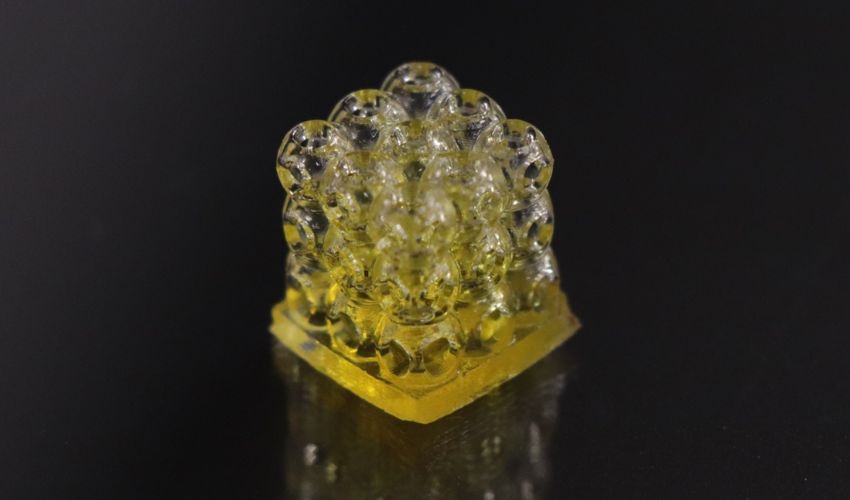
This week, the Belgian startup BIO INX launched a game-changing new material: BIORES INX, a gelatin-based bioink resin developed for digital light processing (DLP) 3D printing. Bioprinting with DLP has been limited because of the lack of biocompatible and biodegradable materials but resins like the BIORES INX are making that work a possibility. The ink is suitable for tissue regeneration and is compatible with cartilage, bone and cardiac applications.
What sets BIORES INX apart from other bioinks? Firstly, its gelatin methacrylamide (GelMA)-based composition closely mimics the natural extracellular matrix, enhancing biocompatibility. Gel-MA is derived from natural collagen, and according to BIO INX’s website, it is widely regarded as a gold standard in tissue engineering and biofabrication. Once the material is printed, it forms a strong, biocompatible, and biodegradable hydrogel network ideal for various biomedical applications including soft and hard tissue regeneration.
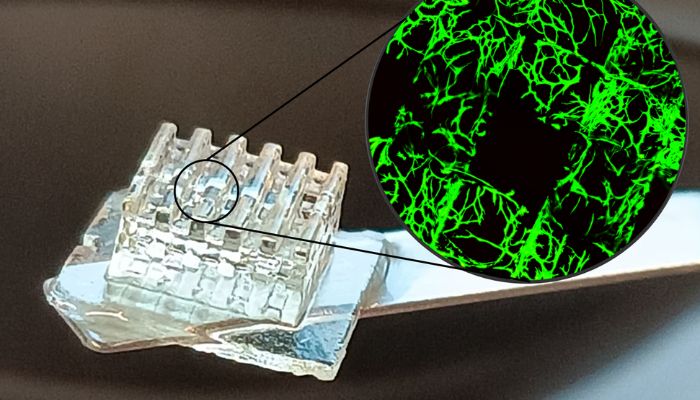
Microscopic view of a scaffold printed with BIORES INK
What’s more, the resin is ready to print and liquid at room temperature. This is significant because most gelatin-based resins are not liquid at room temperature and require heated containers. However, heating the resin can lead to water evaporation. By providing a gelatin-based resin that is ready at room temperature, BIO INX enables more straightforward processing. The BIORES INK is also ready to use because it is sterile and ISO 10993-3 certified. This certification means the resin demonstrates excellent biocompatibility.
More from the desk
Six other notes from the rest of the bench.
 NewsTree-Root Inspired Template-Constrained Additive Technique Creates Durable Electronic CircuitsConformal electronics are stretchable, flexible electronic devices often used for applications like smart skins and robotics. While 3D printing conformal electronics is possible, the process can come with challenges. Often, conformal electronics have significant mechanical and th
 GuidesHow to Take Advantage of the Benefits of Ceramic Additive manufacturing: Experts give their advice!Last year, SmarTech Analysis released its latest report on ceramic 3D printing, estimating that the technology will be worth approximately $4.8 billion by 2030. A real opportunity is gradually emerging for the industry, with additive manufacturing offering concrete advantages in&
 NewsAmerica Makes announces AM education challengeThere is no doubt that 3D printing is a technology that we will continue to see grow into the future; But when we discuss the future, it is important to remember who our future is, and that would be kids.…
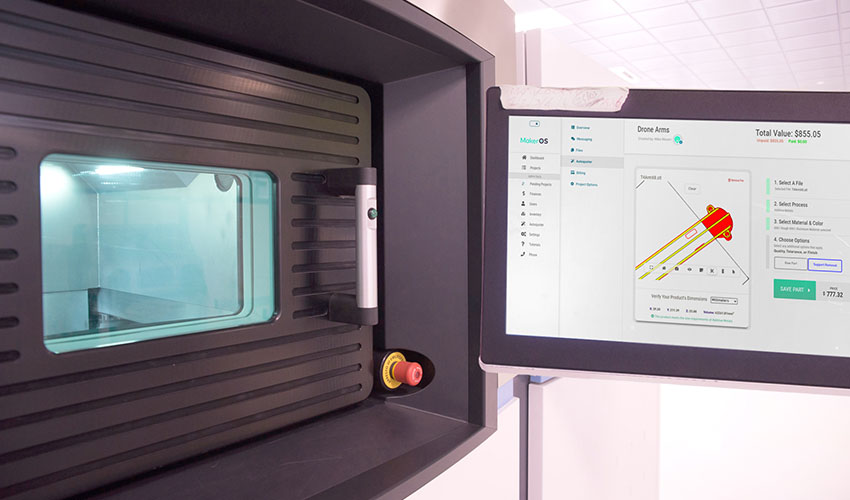 SoftwareMakerOS releases version 2.0 to sync 3D printing teams with their clientsMakerOS, a startup based in New York City and Detroit, launched a collaboration platform for 3D printing businesses back in 2015. Given the challenges 3D printing companies were facing when managing various client projects at the same time, the MakerOS…
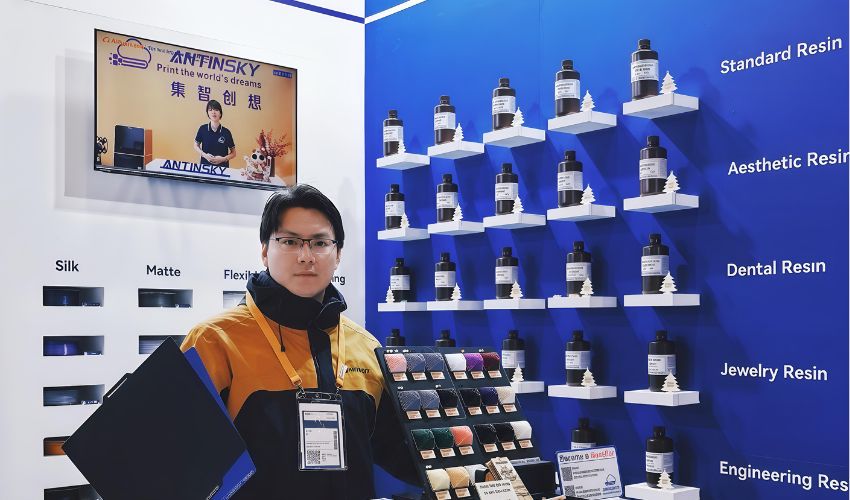 GuidesANTINSKY’s Approach to Simplifying Desktop 3D Printing for UsersAs desktop 3D printing continues to expand across fields such as design, education, dentistry, and small-scale manufacturing, users are increasingly looking for solutions that go beyond hardware alone, with materials, reliability, and workflow simplicity becoming just as importan
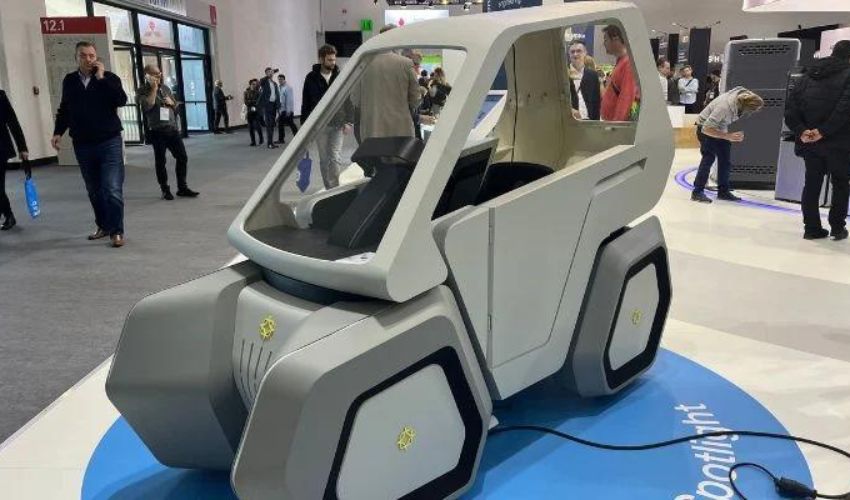 NewsnFrontier Unveils UILA, a 3D Printed Hyrbid Electric Cargo Bike and Electric VehicleOnce again, 3D printing has been used for an innovative and sustainable new solution. This time, nFrontier, a Berlin-based innovation studio, has unveiled UILA, a revolutionary vehicle that is essentially a hybrid between an electric cargo bike and a small…