News
Tree-Root Inspired Template-Constrained Additive Technique Creates Durable Electronic Circuits
Conformal electronics are stretchable, flexible electronic devices often used for applications like smart skins and robotics. While 3D printing conformal electronics is possible, the process can come with challenges. Often, conformal electronics have significant mechanical and th
- 3 min read
- News
- Six more stories

Conformal electronics are stretchable, flexible electronic devices often used for applications like smart skins and robotics. While 3D printing conformal electronics is possible, the process can come with challenges. Often, conformal electronics have significant mechanical and thermal vulnerabilities. Those made through traditional printing are often prone to tearing, cracking and other damage, which limits their performance and dependability. Furthermore, fabricating high-resolution circuits with diverse materials is cumbersome, and requires innovative manufacturing techniques to ensure mechanical durability and precision.
To address these issues with conformal electronic fabrication, Researchers at Xi’an Jiaotong University developed Template-Constrained Additive (TCA) printing technology and published their findings in December 2024. According to the results of their paper, titled Root-inspired, template-confined additive printing for fabricating high-robust conformal electronics, the new method promises to improve the durability and precision of additively manufactured electronic circuits.
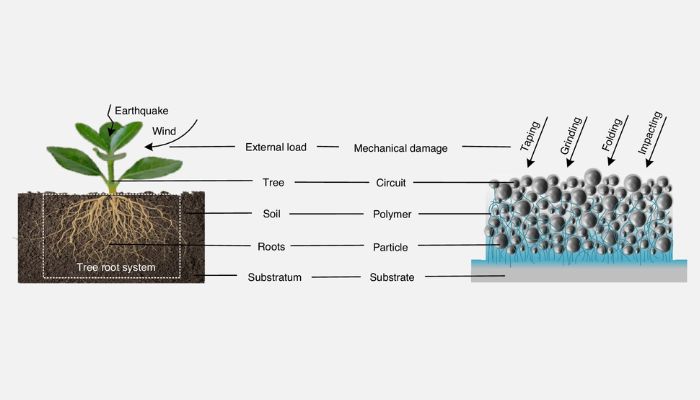
Image credit: Xi’an Jiaotong University
Template-Constrained Additive: Inspired by Tree Roots
This biomimetic approach was inspired by the strength of tree root systems. In the face of violent winds and earthquakes, tree roots keep a tree grounded. The key here is the roots’ relationship with the soil: they are interlocked, promoting tight stacking of the soil particles. So, the Xi’an Jiaotong University researchers aimed to replicate these circumstances by creating a circuit that interlocked polymers and conductive polymers.
More from the desk
Six other notes from the rest of the bench.
 ApplicationsKnee replacement with additive manufacturing and artificial intelligenceThe Italian medical implant manufacturer, REJOINT, announced it is using GE Additive’s Electron Beam Melting (EBM) technology to additively manufacture knee implants. The medical company aims to offer a customized medical solution to patients. Both additive manufacturing and arti
 NewsHow Miele Uses Replique’s 3D Printing Network For Home AppliancesBASF’s Chemovator business incubator alum Replique has partnered with Miele, a premium home appliance manufacturer based in Germany, for an additive manufacturing network deal. With this partnership, Replique will have the exclusive right to produce and ship 3D-printed Miele prod
 MaterialsCreating illusory materials with multi-material 3D printingInnovation is second nature to the additive manufacturing sector, and one recent project that illustrates exactly this is Illusory Material. Conceived by industrial designer Jiani Zeng and computational designer Honghao Deng during their time at MIT, the aim of this…
 GuidesMiCob and Its Concrete 3D Printing Technology for Civilian and Military UseContinuing advances in additive concrete manufacturing are leading to the adoption of this technology in multiple industries. Companies around the world are seeking to take advantage of the benefits offered by this innovative method of production. One such company is…
 ApplicationsScottish Researchers Pave the Way for Space Factories With Zero Gravity 3D Printing3D printing in space travel has made considerable progress in recent years. Initiatives from both NASA, which is researching the use of additive manufacturing in space including for structures, and the ESA, which has tested metal 3D printing on the…
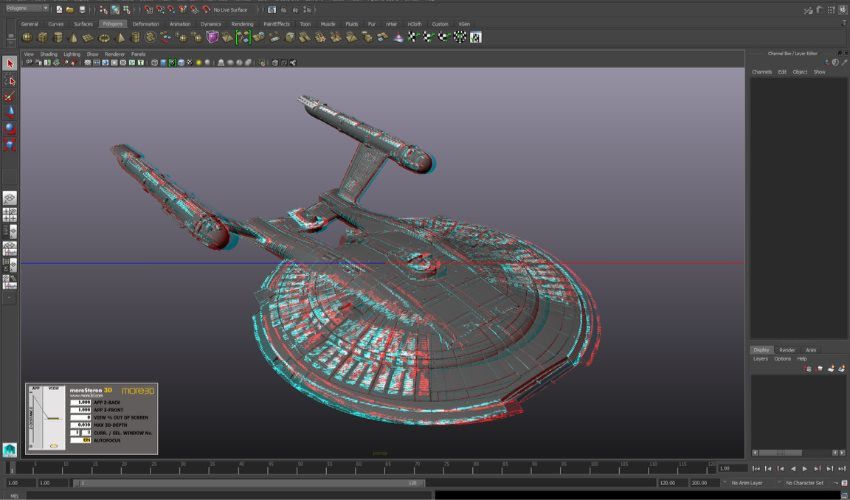 SoftwareMaya, The Popular 3D Modeling and Animation SoftwareMaya is one of the most popular software solutions for 3D modeling and animation. Developed in 1998 by the American company Autodesk, now recognized as the world’s leading software company, Maya stands out for its comprehensive functionality. Very popular in…