Applications
Application of the Month: World’s First Single-Piece 3D Printed Inconel Rocket Engine
We’ve seen plenty of 3D printed rocket engines in recent years. In 2025 alone, New Frontier Aerospace successfully tested one, while POLARIS Spaceplanes trialed a 3D printed aerospike engine. Other major players, from Relativity Space to Launcher and Orbex, are…
- 3 min read
- Applications
- Six more stories
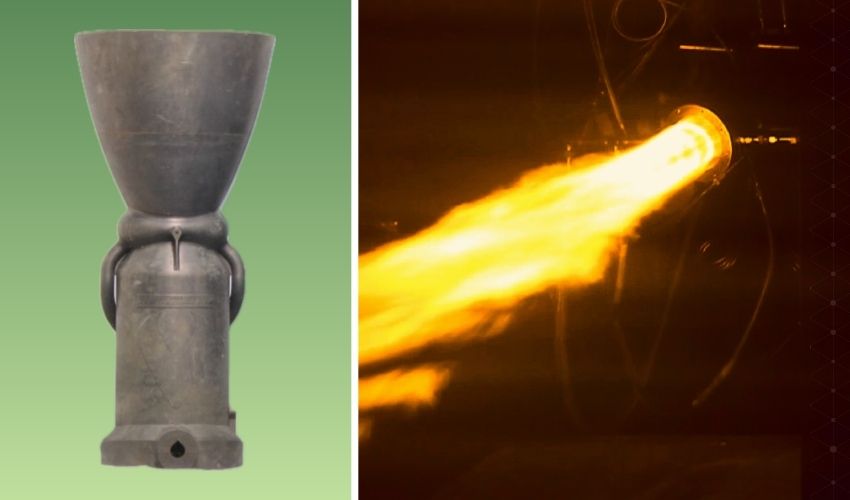
We’ve seen plenty of 3D printed rocket engines in recent years. In 2025 alone, New Frontier Aerospace successfully tested one, while POLARIS Spaceplanes trialed a 3D printed aerospike engine. Other major players, from Relativity Space to Launcher and Orbex, are also betting on additive manufacturing to unlock designs that conventional methods can’t achieve. Against this backdrop, what makes this month’s Application of the Month stand out? Enter Chennai-based AgniKul Cosmos, which has unveiled what is claimed to be the world’s largest single-piece 3D printed Inconel rocket engine. About a meter long, the engine is printed as one fully integrated component, without welds, joints or fasteners, from fuel entry to plume exit.
So why does it matter that the engine was fabricated in a single piece? For one, it greatly reduces manufacturing complexity, cutting out the time-intensive steps of welding, joining or fastening multiple components. It also minimizes the risk of weak points or failure during operation. AgniKul reports that its integrated approach reduced production time by more than 60% while also lowering the engine’s weight, resulting in a more efficient design overall. Beyond speed and scalability, the single-piece structure improves durability and fluid flow, marking a significant leap over the company’s previous generations of engines.
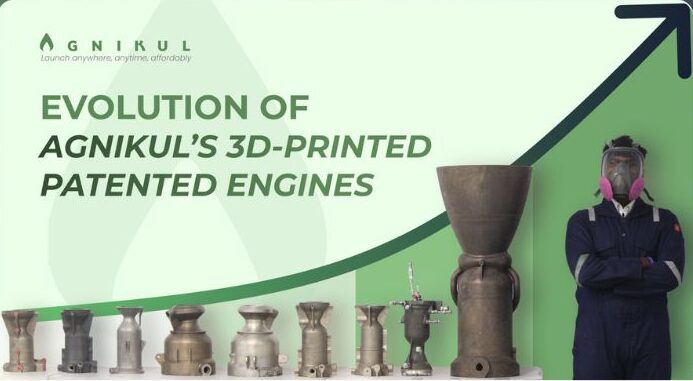
The evolution of AgniKul Cosmos’ 3D printed engines, highlighting how large their latest one is by comparison
The choice of material is equally critical. The engine is made of Inconel, a nickel-chromium-based superalloy prized for its strength and ability to withstand extreme heat and pressure. These qualities make it particularly well-suited for rocket propulsion, where components must survive the intense conditions of launch and flight.
More from the desk
Six other notes from the rest of the bench.
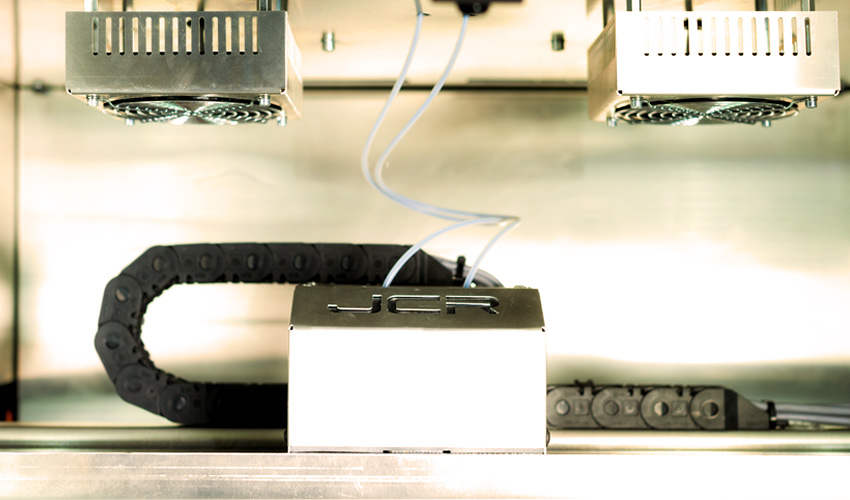 PrintersSicnova: Creators of the JCR 3D PrintersThere are a variety of big players in the industrial 3D printer industry. These include 3D Systems, HP with their Multi Jet Fusion technology, and a number of others. However, is there an option in between desktop 3D printers, and…
 NewsNew Cafe Features 3D Printed Furniture from Coffee GroundsIn recent years, global efforts to implement the circular economy have significantly increased. A key component of this model is circular design, which focuses on developing products that are environmentally friendly and have a sustainable life cycle. A notable example…
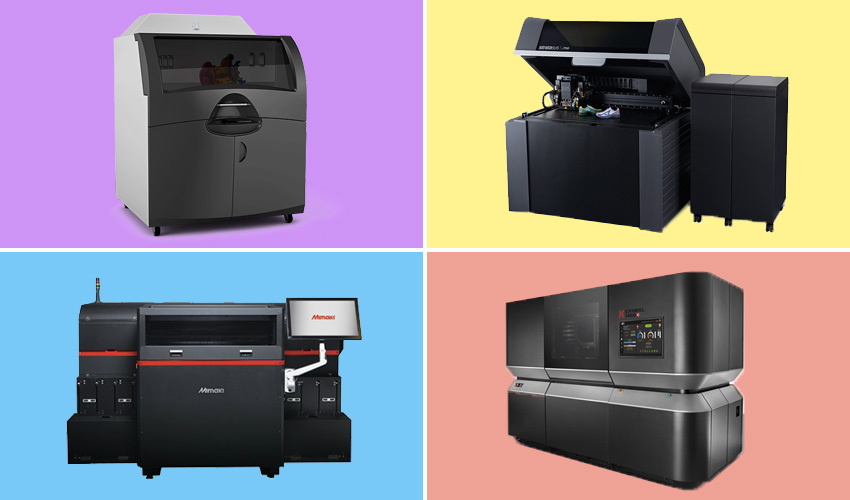 PrintersWhat are the Material Jetting 3D Printers on the Market?Material Jetting is one of the seven families of additive manufacturing processes. As the name suggests, it consists of depositing material on a printing tray, layer by layer, much like a 2D printer that drops ink on paper. Here, the…
 MaterialsThe High-Performance Polymer Market: An Opportunity for 3D Printing?Research and Markets recently released its latest report on the Global High-Performance Materials in Additive Manufacturing Market. Entitled ‘The Global 3D Printing High-Performance Plastic Market’, it analyzes the place and evolution of high-performance polymers such
 NewsHP reveals new Jet Fusion 5200 3D printing solution and strategic alliancesOne of the largest manufacturers of industrial solutions, HP, is releasing its new 3D printer: the HP Jet Fusion 5200. It unveiled its new AM solution at an event with Siemens today, thus expanding its portfolio with an additional machine.…
 ApplicationsHoneywell Receives £14+ Million to Accelerate Development of Aerospace Additive ManufacturingThis is good news for additive manufacturing in aerospace! The Honeywell group, leading a consortium comprising 3T Additive Manufacturing, BeyondMath, Qdot Technology, and the Oxford Thermofluids Institute, has just announced that it has received £14.1 million in funding from the