Printers
What are the Material Jetting 3D Printers on the Market?
Material Jetting is one of the seven families of additive manufacturing processes. As the name suggests, it consists of depositing material on a printing tray, layer by layer, much like a 2D printer that drops ink on paper. Here, the…
- 3 min read
- Printers
- Six more stories
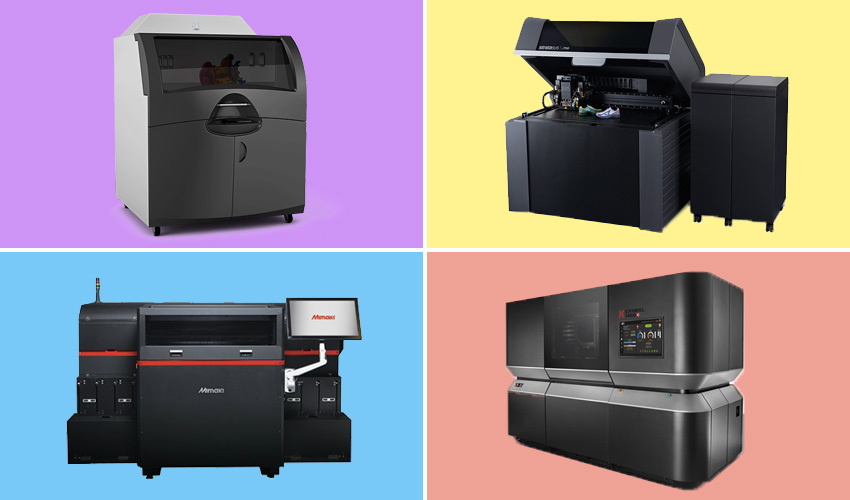
Material Jetting is one of the seven families of additive manufacturing processes. As the name suggests, it consists of depositing material on a printing tray, layer by layer, much like a 2D printer that drops ink on paper. Here, the print head actually projects many fairly large drops of ink, usually composed of photopolymers which are then hardened by UV light. But the process can also use metal, ceramics and even wax, dividing material jetting into three subgroups: Material Jetting, better known as the patented technology PolyJet; NanoParticle Jetting (NPJ) and Drop on Demand (DOD). Regardless of the process used, the user usually obtains high-precision, highly detailed parts with the possibility of printing in colour and with several materials. To help you make your choice, we have selected a few 3D printers per technology, classified by sub-group.
Material Jetting
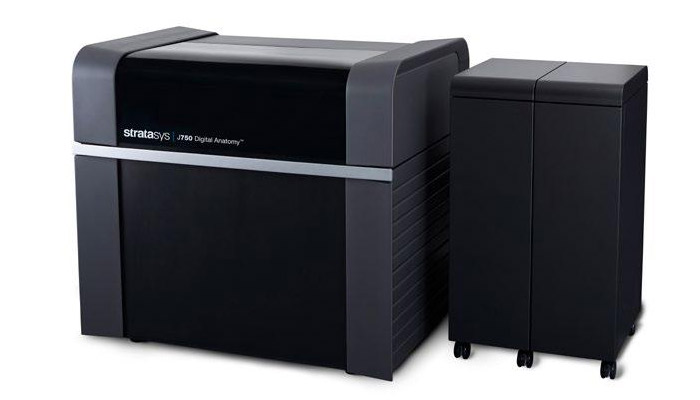
Stratasys – J750 Digital Anatomy
Stratasys is the leading player in 3D material jet printing, having merged in 2012 with Objet Ltd. the company that patented the process. Its process has been called PolyJet and makes it possible to create multi-material, multi-color and even transparent parts. Stratasys today offers a wide range of PolyJet 3D printers but we will focus on the J750 Digital Anatomy, mainly designed for the medical sector. It offers a volume of 490 x 390 x 200 mm but above all can recreate very precisely the behavior of human tissues on anatomical models, allowing health professionals to have a real feeling and to train better.
Mimaki 3DUJ-553 Printer
In 2017, the Japanese manufacturer Mimaki, which has historically specialized in 2D printing, unveiled the 3DUJ-553 industrial 3D printer. With a print volume of 508 x 508 x 305 mm, the 3D printer is based on a UV LED process. In this process a light hardens the different layers applied successively. The machine deposits ink droplets coloured, white or black, on the printing tray until the final piece is obtained. A considerable advantage for professionals, especially since the 3DUJ-553 would offer 10 million colors to its users. In addition, it is also possible to add transparency with translucent ink. Thanks to its simulation software, it is possible to have a very precise overview of the shape and colors of the part before printing. Also, the printer has a surveillance camera, allowing users to follow the printing process remotely. Finally, the machine uses a support structure that can be dissolved in water. This makes it possible to obtain accurate and neat models, without damaging them.
More from the desk
Six other notes from the rest of the bench.
 MaterialsTumaker on the 3D Printing of Pellets Adapted to Production RequirementsAs 3D printing technologies gain prominence in different application sectors, more and more companies are considering taking advantage of the benefits offered by the manufacturing process. The main method they tend to opt for is the fused deposition modeling (FDM),…
 ApplicationsStratasys Showcases Automotive Applications at RAPID + TCT 2025While at RAPID + TCT 2025, one thing that was very obvious was the prevalence of applications on the show floor and in conference sessions. This follows a trend that we have seen for quite some time now, with companies…
 PrintersTumaker Explains the Benefits of 3D Printing with PelletsOne of the main technologies that we highlighted during the latest edition of the Formnext expo in Frankfurt, is additive manufacturing with granules, also called pellets. In this exclusive interview onsite at Formenxt, we meet with Joao Haudenschild and Zoltan…
 MaterialsADDITIV Metals World, the Virtual Event Dedicated to Metal Additive ManufacturingAfter the success of last year’s ADDITIV virtual events, which brought together thousands of additive manufacturing professionals, with key players in different industries, the leading virtual event platform for additive manufacturing is back once again. This time, we’
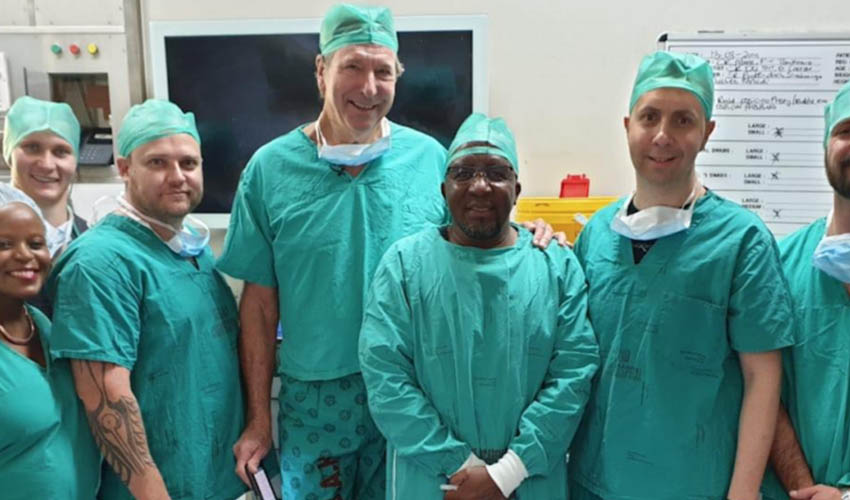 ApplicationsMiddle ear transplant to cure deafness using 3D printing technologiesA group of researchers from South Africa have successfully completed a groundbreaking operation with the use of 3D printing technologies. In fact, it represents a big advancement for the medical field, as it is the first time a middle ear…
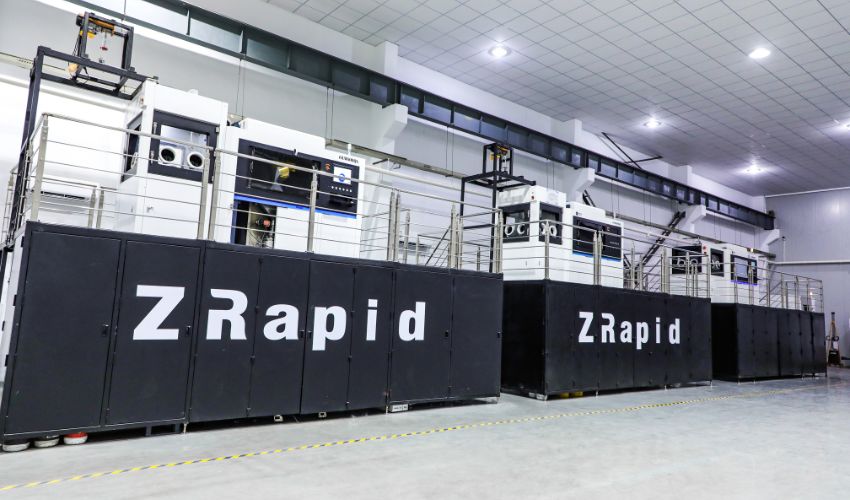 PrintersZRapid Targets Expansion Into Europe With iSLM 3D Printer RangeAdditive manufacturing is experiencing massive growth as one of the key technologies needed for the world to move towards digitalization and Industry 4.0. Despite an increasingly complex global financial context for many industries nowadays, additive manufacturing, which allows p