Applications
Application of the Month: Customized 3D-Printed Titanium Shoulder Arthrodesis Plates
In recent years, the rapid development of additive manufacturing technology in healthcare has led to significant advances in research, drug development and the production of prostheses, implants and medical devices. In the latter case, metal 3D printing in particular has…
- 3 min read
- Applications
- Six more stories
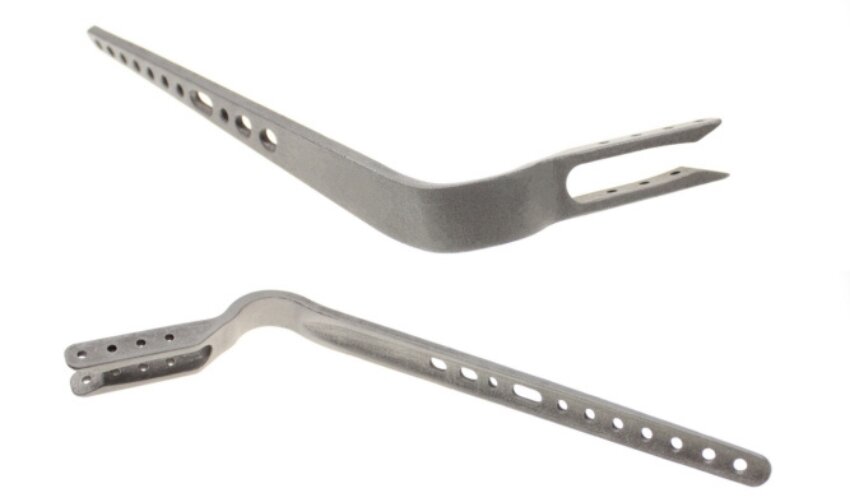
In recent years, the rapid development of additive manufacturing technology in healthcare has led to significant advances in research, drug development and the production of prostheses, implants and medical devices. In the latter case, metal 3D printing in particular has revolutionized the medical industry, enabling highly customized and rapidly produced medical solutions. Furthermore, the use of biocompatible materials, such as titanium and cobalt alloys, guarantees safe and durable medical devices. It also enables more sustainable production by reducing material waste, cutting manufacturing costs and improving efficiency through higher production speeds.
Additive manufacturing now makes it possible to create tailor-made plates, screws and complete prostheses and implants, all perfectly adapted to the anatomical characteristics of each patient. This is made possible by integrating technologies such as 3D scanning, CT and other imaging techniques, with 3D software and 3D printers. The resulting products have proved not only safe, but also, in some cases, more effective, speeding up the patient’s healing process. To explore this topic further, let’s take a look at this recent case study to understand the benefits of using metal additive manufacturing to produce titanium shoulder arthrodesis plates.
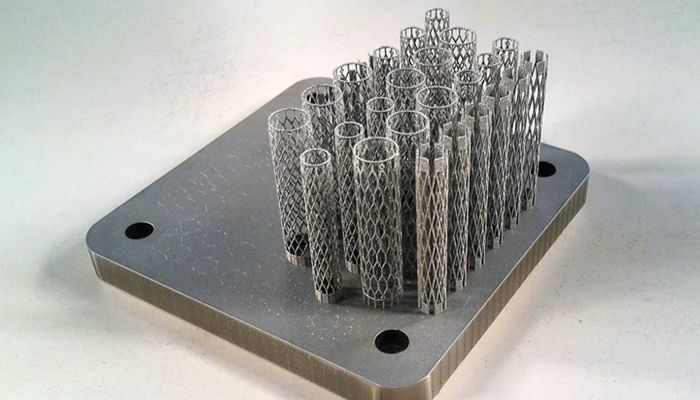
3D printing is changing the way medical implants and prostheses are produced
Comparison of Shoulder Arthrodesis Plates Made Using Traditional and Additive Manufacturing Methods
Manufacturers of implants for spinal surgery, neurosurgery and osteosynthesis are encountering numerous difficulties in the production of shoulder arthrodesis plates. These devices are used to resect (a surgical term meaning cut out when referred to a tissue or part of an organ) the humeral head in cases of shoulder ligament injury. However, manufacturing these products using traditional methods remains a challenge, as the design and manufacture of specialized tools is time and resource intensive. In addition, the complex geometry of the parts poses difficulties. In addition to machining, bending operations are often required, but this technology is not very precise and does not guarantee the necessary degree of repeatability.
More from the desk
Six other notes from the rest of the bench.
 NewsTop 5 Videos of the Week: 3D printing for hypersonic applications …This week we found the top 5 videos about 3D printing and the way additive manufacturing is shaping our society. The technology has infiltrated many sectors, from medical to automotive! Check out our selection of the week to keep up with the innovations! This week we…
 ApplicationsU.S. Soldiers Are Using 3D Printing to Build Battlefield-Ready DronesSoldiers from the U.S. Army’s 173rd Airborne Brigade are now taking battlefield adaptability into their own hands. After the Army retired the RQ-7B Shadow drone in March 2024, a team called Hawkeye Platoon, from the 1st Squadron, 91st Cavalry Regiment,…
 NewsSelf-Monitoring Plastics? Glasgow Researchers 3D Print Auxetic MaterialsPicture yourself stretching a material, say, a rubber band. The more you stretch it, the thinner it becomes. A group of researchers from the University of Glasgow designed a material that does the opposite: plastics that grow wider when pulled.…
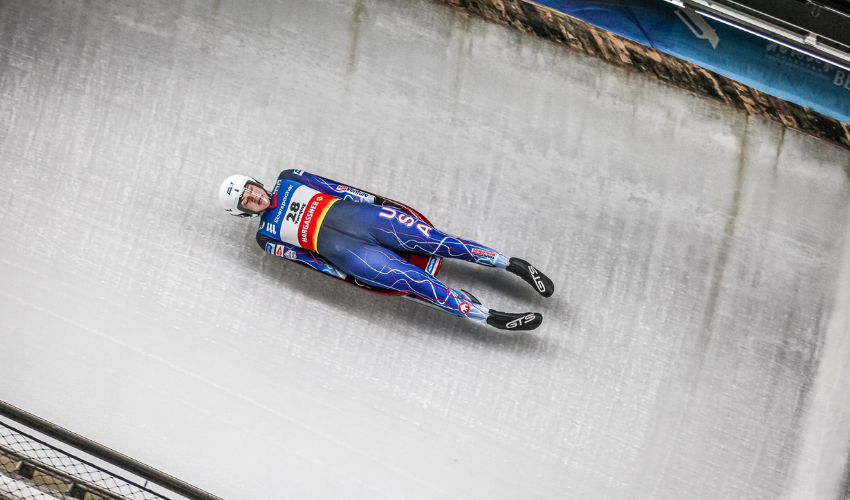 NewsTop 5 Videos: USA Luge Team, Construction, and Industry InterviewsAnother Sunday means another Top 5 list of videos straight from the world of 3D printing! This week begins with a look at the world of sport; an introductory video explores how the US Luge team uses 3D printing to…
 NewsColumbia University Has 3D Printed a 7-Layer CheesecakeThough food 3D printing may not have yet convinced all food lovers, it certainly has raised its fair share of questions. For example, is a food 3D printer healthy? Or can it improve the way we eat and respond to…
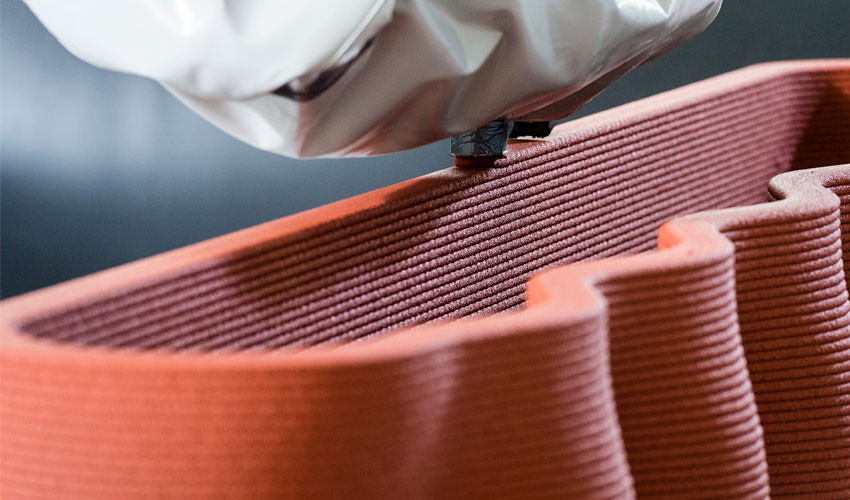 GuidesMeeting with Sika, specialist in concrete 3D printing3D printing applied to the construction sector offers many advantages, whether in terms of cost, time or durability of materials. The actors who have embarked on concrete additive manufacturing are more and more numerous, convinced of the benefits that 3D…