News
Self-Monitoring Plastics? Glasgow Researchers 3D Print Auxetic Materials
Picture yourself stretching a material, say, a rubber band. The more you stretch it, the thinner it becomes. A group of researchers from the University of Glasgow designed a material that does the opposite: plastics that grow wider when pulled.…
- 3 min read
- News
- Six more stories
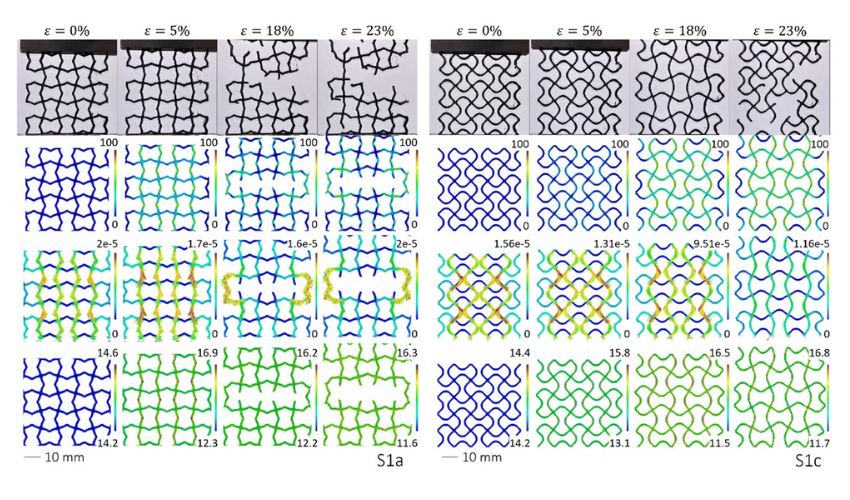
Picture yourself stretching a material, say, a rubber band. The more you stretch it, the thinner it becomes. A group of researchers from the University of Glasgow designed a material that does the opposite: plastics that grow wider when pulled. These are classified as auxetic materials, and the researchers achieved this unique behaviour by carefully engineering and 3D printing internal geometries. But how exactly are these plastics made, and what are their applications?
Late this June, the team reported a breakthrough in developing and designing novel auxetic structures using high-performance engineering plastics. The research, published in Materials Horizons, demonstrates how additive manufacturing can create self-monitoring materials with programmable properties like strength, stretchability and strain sensitivity. In general, auxetic materials have extraordinary mechanical characteristics, like enhanced energy absorption and improved damage tolerance, so the plastics developed by the Glasgow team have potential for many applications.
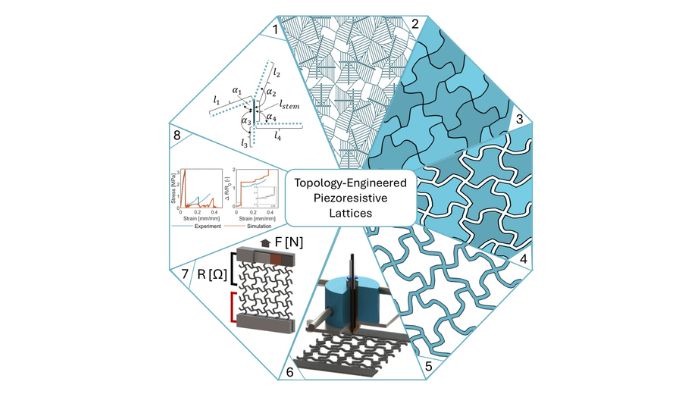
Illustration of the Glasgow study (Photo Credit: Johannes Schneider et al./Materials Horizons)
The researchers used an FDM Apium P220 3D printer from Apium Additive Technologies GmbH, with PEEK, to create these structures. PEEK is a strong, semi-crystalline thermoplastic that is not only heat and wear resistant but also capable of substituting some metals due to its strength-to-weight ratio. Furthermore, the material is lightweight and biocompatible, already widely used for engineering and biomedical purposes. Using PEEK allowed the researchers to precisely control both mechanical and electrical behaviour.
More from the desk
Six other notes from the rest of the bench.
 NewsWhat to Expect at RAPID + TCT 2022The biggest North American additive manufacturing event, RAPID + TCT will be taking place this year from May 17th-19th in Detroit, Michigan. This is the 30th year that the event will be held and is a joint project between two…
 News#TOP5 Videos: 3D printed steak, autonomous bus…We found the TOP 5 videos of the week about 3D printing and the way additive manufacturing is shaping and changing our society. This week we touch on 3D printed steak, autonomous 3D printed bus, Desktop Metal’s on-demand 3D printing…
 MaterialsPolymer 3D Printing Is Being Driven by Material and Technological InnovationsThe first 3D printing process invented was stereolithography, a method wherein a photosensitive polymer is hardened via a laser, putting plastics at the forefront of the market since the very beginning. Something that has continued to this day. Indeed, according…
 NewsFamily moved into social housing project with 3D printed house3D printing in construction have gained popularity over the past few years. Two years back the Yhnova project was launched, with the various stakeholders demonstrating how 3D technologies could be used to buildaffordable and sustainable housing. Now the 3D printed…
 NewsWhat’s new at the 2020 AMUG Conference?This year, the annual AMUG Conference will take place in Chicago once again, from March 22 – 26! The Additive Manufacturing User Group association has been organizing this eagerly-awaited yearly conference since the 1990s. Once solely focused on the advancement…
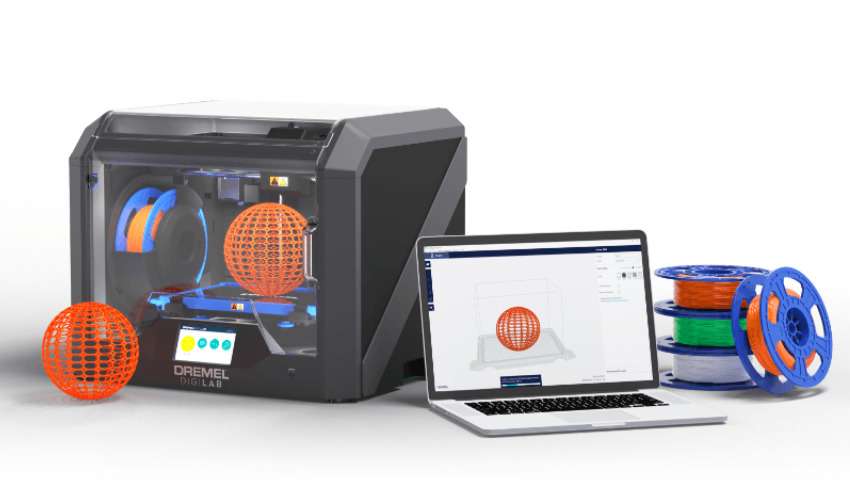 PrintersWhich Dremel 3D Printers Are Currently On the Market?In 2014, Dremel Manufacturing Company moved into 3D printing market with their offshoot, Dremel DigiLab. In line with their focus to shape the new generation of pioneers, their motivation, according to the website, centers around using their products and machines…