Guides
Meeting with Sika, specialist in concrete 3D printing
3D printing applied to the construction sector offers many advantages, whether in terms of cost, time or durability of materials. The actors who have embarked on concrete additive manufacturing are more and more numerous, convinced of the benefits that 3D…
- 3 min read
- Guides
- Six more stories
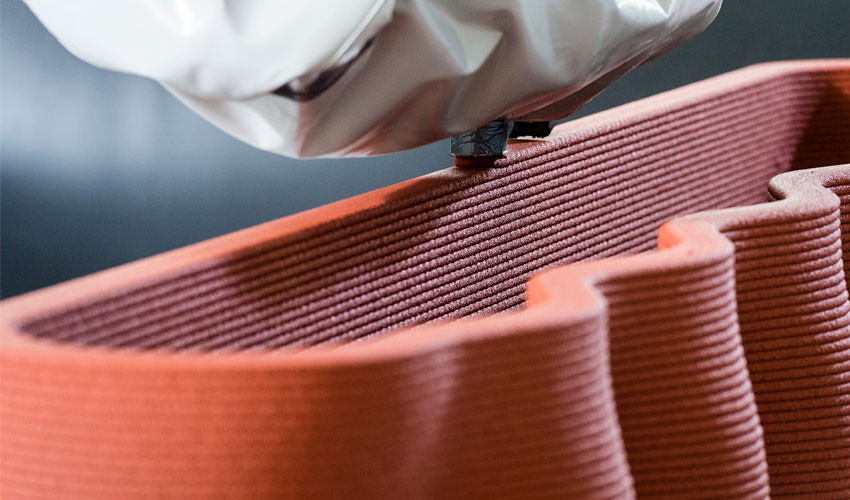
3D printing applied to the construction sector offers many advantages, whether in terms of cost, time or durability of materials. The actors who have embarked on concrete additive manufacturing are more and more numerous, convinced of the benefits that 3D technologies can bring. The Swiss company Sika is no exception; It specializes in the construction and industrial sectors and uses 3D concrete printing to design structures more efficiently. It has developed its printing material and its process, which is faster than other systems on the market today. We met with Olivier Herr, the Laboratory Manager at Sika to learn more about the process and the long-term vision of the Swiss company.
3DN: Can you introduce yourself and Sika?

Oliver Herr
Hello, my name is Olivier Herr, I am an Engineer in geomaterials and a specialist in cements and concretes. I started my career as an R&D Engineer and in 2012, I joined Sika as the Laboratory Manager. I am currently Deputy Director of Innovation at Sika France and in charge of the development of 3D printing in connection with Sika Corporate. Specializing in chemicals, Sika is a leader in the development and manufacturing of systems and products for bonding, sealing, caulking, strengthening and protection in the construction and industrial sectors. We operate in different markets including concrete, and we have been working in it for more than 100 years.
3DN: Can you tell us more about the technology you have developed?
Our 3D printing process uses robotics innovation and applies it to the concrete industry. Composed of a cement-based ink with a controlled printhead, it allows us to create, layer-by-layer, concrete elements, to mesh with various forms or design. The concrete elements are manufactured according to a digitized plan that is read and transformed into a real object via the printer.
More from the desk
Six other notes from the rest of the bench.
 Applications3D Printing Firms Partner to create Artificial HeartsCARMAT, founded by cardiologist Alain Carpentier, is known for working on the most advanced artificial heart in the world. The company has just announced a partnership with 3D printer manufacturer AddUp. Unveiled on Monday, this collaboration is expected to accelerate…
 GuidesAtome3D on Scaling Up and the Evolution of the 3D Printing MarketAmong the French distributors that have managed to make their mark on the 3D printing market in recent years is Atome3D.com. Since its creation in 2016, the company, which is based in the suburbs of Toulouse, has continued to grow…
 NewsDiscovery, the 3D printed carbon fiber satelliteMini-Cubes is a young American company that designs very small satellites: called PocketQubes, they measure only 5 cm and remain more accessible than traditional satellites. The reason we are telling you about it today is because the company has started…
 ApplicationsThe University of Florida 3D prints medical device implants using siliconeThe University of Florida (UF) is making headlines again today for their latest developments in 3D printed medical device implants. Created at UF, this new advancement boasts “quicker implantation of devices that are stronger, less expensive, more flexible and more comfortable&he
 Guides#3DStartup: Mantle on its Unique Paste-Based Metal Additive Manufacturing ProcessMantle, a young, American startup, made headlines back in February 2021 with the launch of its TrueShape technology. The proprietary AM process distinguishes itself from other metal 3D printing processes on the market by using paste as the printing material…
 News3D printing, the future El Dorado of the job market?In 2014, 3Dnatives France published a study on recruitment in the 3D printing industry with the goal of showing how technology has led to an increased demand for diverse profiles to join the industry. Recently the Orientation Council, (a body that is…