Applications
Application of the Month: NASA Uses 3D Printing to Manufacture More Accessible Antennas
Aerospace is one of the sectors where additive manufacturing has truly left its mark. This includes in telecommunications. Here, 3D printing makes it possible to develop antennas with improved designs and advanced materials. These antennas are essential for data transmission&hell
- 3 min read
- Applications
- Six more stories
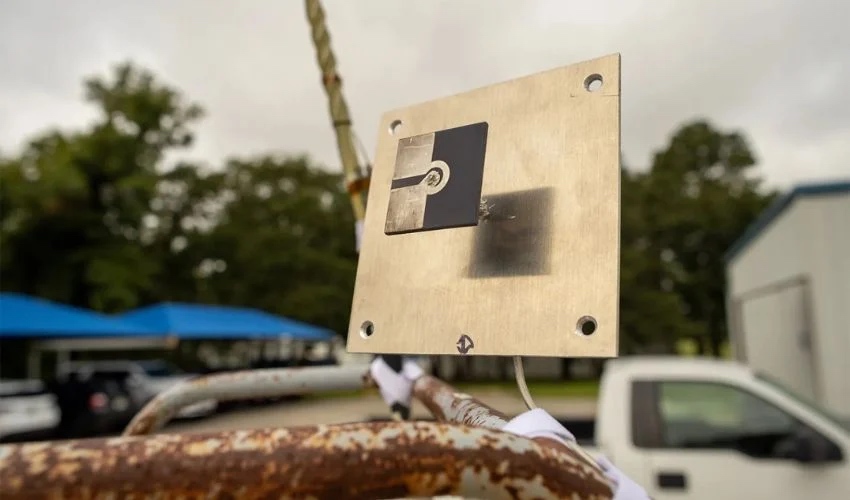
Aerospace is one of the sectors where additive manufacturing has truly left its mark. This includes in telecommunications. Here, 3D printing makes it possible to develop antennas with improved designs and advanced materials. These antennas are essential for data transmission in space missions as they facilitate communication between satellites, probes and the Earth.
Recently, engineers from NASA’s Near Space Network and the Electronics 3D Printing group at Goddard Space Flight Center developed and tested a 3D printed antenna using Fortify’s technology. The project sought to demonstrate low-cost design and manufacturing capabilities for efficient antennas that meet industry requirements. The antenna was evaluated with relay satellites and launched on a weather balloon from NASA’s Columbia Scientific Facility in Palestine, Texas. This development took only three months and represents a milestone in the manufacture of low-cost communication equipment for future space missions.
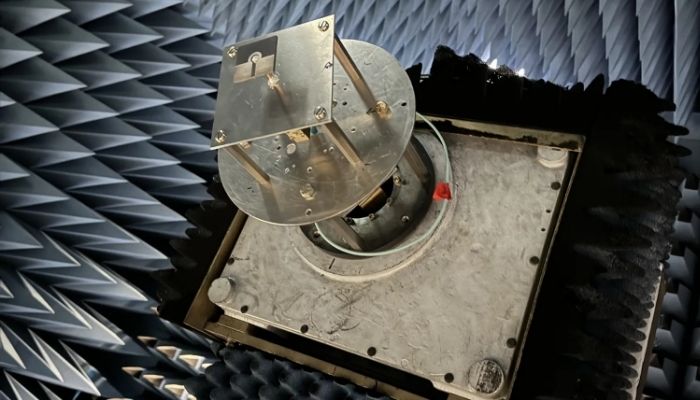
The antenna in the electromagnetic anechoic chamber at the Goddard Center (photo credits: NASA/Peter Moschetti).
The development of 3D printed antennas has many challenges. Manufacturing antennas using 3D printing is particularly complex due to the need to integrate materials with specific electromagnetic properties and ensure adequate conductivity for signal transmission. Engineers designed an optimized structure for data transmission and used innovative materials. NASA stated that “low electrical resistance, tunable, ceramic-filled polymer material,” which allowed it to improve signal tuning. After design and printing, the antenna was tested with NASA’s relay satellites before being tested at high altitudes aboard a weather balloon.
More from the desk
Six other notes from the rest of the bench.
 GuidesThe Top Bicycles Made With 3D PrintingAs you know, more and more additive manufacturing is playing an important role in the world of sports, where it allows for the design of custom-made equipment. Cycling is undoubtedly one of the sports where 3D technologies are most widely…
 NewsRestoring a 1919 Harley Davidson with 3D TechnologiesFounded in 2007 by Carl van de Rijzen, Visual First (VF), is a Dutch company specializing in reverse engineering. Undertaking the renovation of a 1919 Harley Davidson, the company found that one of its mechanical parts, in this case the…
 MaterialsBraskem to Expand 3D Printing Material Portfolio Through taulman3D AcquisitionWhen it comes to additive manufacturing, materials are key to getting parts with the desired properties. It should thus come as no surprise that the material 3D printing market has been developing rapidly over the past few years, with many…
 NewsA house 3D printed in a single block in BelgiumIn Belgium, a two-storey house has just been erected thanks to additive manufacturing: using the concrete 3D printer BOD2, developed by COBOD, the Kamp C company was able to construct a 90 square meter structure in only three weeks, and…
 NewsHow the British Film Institute Uses 3D Printing to Preserve Film HistoryHidden away in the BFI National Archive, a 3D printer works tirelessly and quietly to help save film history. Since it was acquired nearly three years ago, the Formlabs Form 3L has allowed the Archive Technology team to reproduce long-obsolete…
 GuidesSmart Cups discusses 3D printed beverages and its proprietary technologyIt is increasingly often that we hear news about how 3D printing technologies are transforming the food industry. Today we have numerous companies 3D printing meat, relatively recently emerged a project of 3D printed fish… But we rarely talk about…