News
Restoring a 1919 Harley Davidson with 3D Technologies
Founded in 2007 by Carl van de Rijzen, Visual First (VF), is a Dutch company specializing in reverse engineering. Undertaking the renovation of a 1919 Harley Davidson, the company found that one of its mechanical parts, in this case the…
- 3 min read
- News
- Six more stories
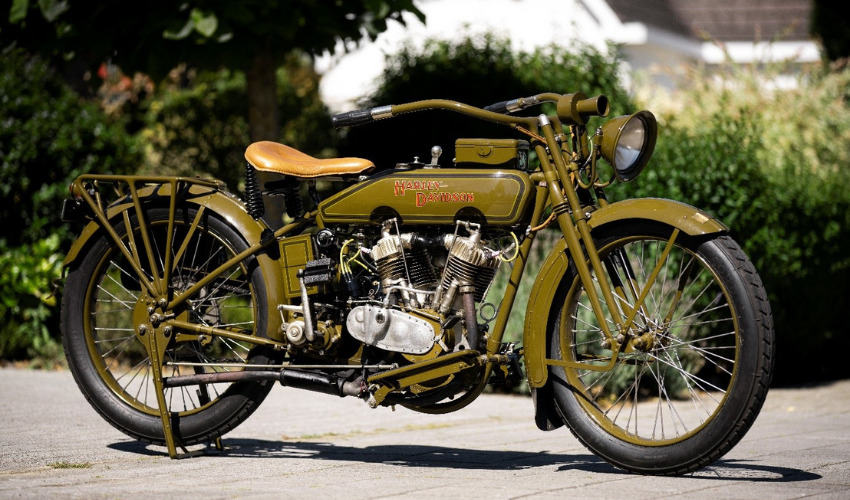
Founded in 2007 by Carl van de Rijzen, Visual First (VF), is a Dutch company specializing in reverse engineering. Undertaking the renovation of a 1919 Harley Davidson, the company found that one of its mechanical parts, in this case the distributor cap, was in poor condition and unrecoverable. However, the component was manufactured a hundred years ago and its production has since ceased. While working with Edwin Rappard, Director of 4C Creative CAD CAM Consultants and an Artec 3D ambassador, Carl discovered the benefits of 3D digitization and additive manufacturing: the distributor cap could be scanned using an Artec 3D scanner, then 3D printed. The bike is ready to go!
When it comes to producing spare parts, 3D technologies certainly appear to be a viable solution: from a 3D file, a user is able to recreate a spare part, whatever its condition, initial manufacturing date, etc. . This file is often obtained through a 3D scanner. This in turn is part of a reverse engineering (or reverse engineering) process where one creates a copy of an object for which they have neither the plans nor the manufacturing method. The process is particularly used in the automotive sector often to repair certain parts of old collector cars. In the case of Visual First and 4C, Carl van de Rijzen sends his part to Edwin who scans it, prepares a 3D file and sends it back.
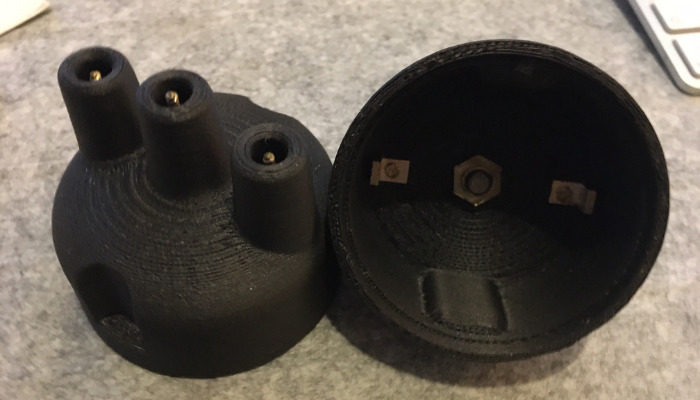
The distributor cap printed in 3D in PA. (photo credits: Artec 3D)
Replace the part using Artec 3D 3D scanner
How do you replace a part that was manufactured 100 years ago, especially when production has since stopped? A headache for Carl, especially since even if this part was available from a few dealers, it was far too expensive, and had no guarantee that it would be reliable. Nonetheless, the distributor cap is a central component in the ignition and starting of the engine. In order to overcome these obstacles, Carl called on 4C and more particularly Edwin Rappard to find a solution. This latter used a 3D scanner, more specifically the Artec Space Spider to model the part and work from the obtained model. The Space Spider is ideal for scanning small objects or intricate details (geometries, sharp edges, fine ribs) of large industrial objects with high precision. It is generally used in industry and the automotive sector, so its use made sense for Edwin. “He scanned it. He just solved the problem, and it was over,” recalls Carl van de Rijzen. “ He sent it back to me. And tada! The bike is 100 years old, and now we have the parts to make it work ”.
More from the desk
Six other notes from the rest of the bench.
 PrintersINTAMSYS Unveils FUNMAT PRO 310 NEO, Bringing Superior Industrial 3D Printing in a Desktop SizeLeading 3D printer manufacturer INTAMSYS has made quite a name for itself in recent years. The solutions provider is known for its industrial FFF 3D printing machines which are compatible with high-performance materials like PEEK, PEI, PPSU and engineering materials,…
 NewsKFC 3D printed chicken nuggets, the fast-food of the future is almost here?Kentucky Fried Chicken, more commonly known as KFC, is one of the leading fast-food chains in the world with more than 24,000 restaurants in 145 countries across the globe. The brand is mostly known for its “special recipe” fried chicken,…
 NewsTop 5 Videos: 3D printing the first commercial apartment buildingThis week we found the top 5 videos about 3D printing and the way additive manufacturing is changing production. The technology has infiltrated many sectors, from medical to automotive: check our selection of the week to keep up with the innovations! If you enjoy these, you&helli
 NewsTop 5 Videos: The BigRep PRO Industrial 3D PrinterThis week, discover the BigRep PRO industrial 3D printer. With a printing volume of one cubic meter, it is designed to produce large parts. Then, get to know the the J5 MediJet™ from Stratasys, which was developed specifically for the…
 ApplicationsThe Role of Women in Sectors Using 3D PrintingIn honor of International Women’s Day, once again we wanted to put women in the spotlight! Today, more and more women are mastering 3D technologies, but above all they are using them in their daily activities, in all sectors. This…
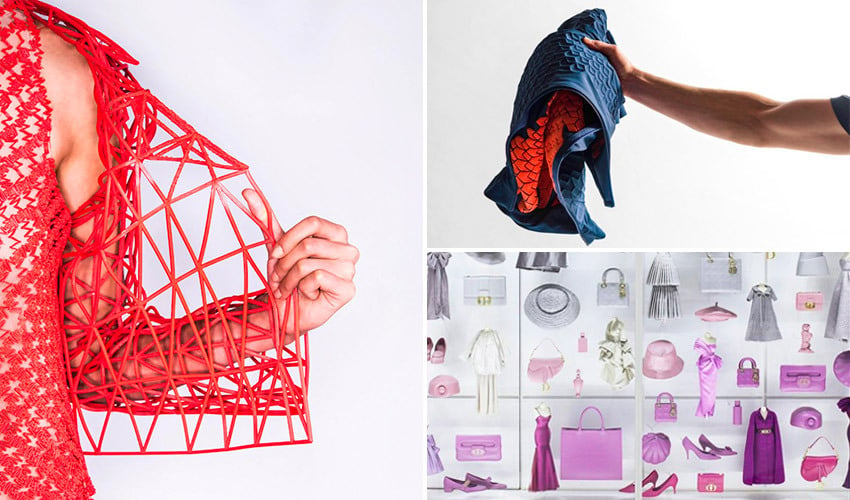 Guides3D Printed Fashion: The Top DesignsFashion brings together several industries, whether it is clothing, cosmetics, or luxury. All sorts of products are being created to embellish and affirm a style, a look, a way of being. In the world of fashion, it is necessary to…