News
How the British Film Institute Uses 3D Printing to Preserve Film History
Hidden away in the BFI National Archive, a 3D printer works tirelessly and quietly to help save film history. Since it was acquired nearly three years ago, the Formlabs Form 3L has allowed the Archive Technology team to reproduce long-obsolete…
- 3 min read
- News
- Six more stories
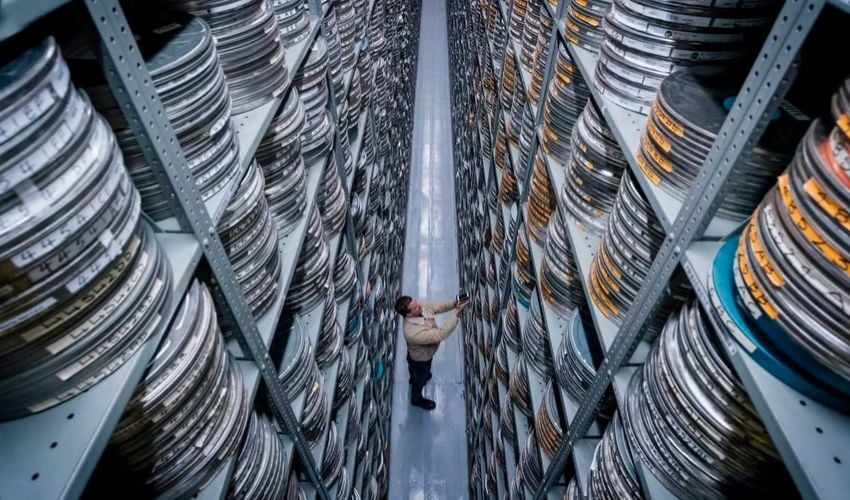
Hidden away in the BFI National Archive, a 3D printer works tirelessly and quietly to help save film history. Since it was acquired nearly three years ago, the Formlabs Form 3L has allowed the Archive Technology team to reproduce long-obsolete components that are essential for historic film and projection equipment. These include items such as film cores and intricate guides. Thanks to its large print volume, the Form 3L is particularly well suited for recreating the delicate parts of old film reels.
But print volume is not the only factor. Precision and surface quality are equally crucial for restoring antique film. The LFS (Low Force Stereolithography) technology from Formlabs makes this possible as well.
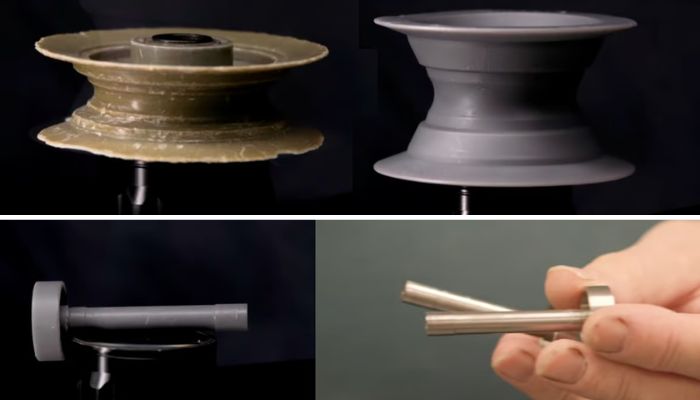
Some of the BFI’s applications: an antique, worn film reel and its 3D-printed replica (top); prototypes of a screw (bottom)
How the Restoration Works
The workflow begins with an EinScan Pro HD 3D scanner, which digitizes the existing parts. The model is then refined in SolidWorks and finally printed in resin. After printing, the parts go through careful post-processing with the Form Cure L to ensure stable mechanical properties. This step is especially important for components in old equipment that are exposed to mechanical stress or sensitive to temperature.
More from the desk
Six other notes from the rest of the bench.
 ApplicationsFrom High Fashion to Surgery Robotics, XJet’s Metal 3D Printing Is Enabling InnovationMetal and ceramic additive manufacturing (AM) has grown exponentially in recent years. According to one report from USD Analytics, the global metal AM market size is worth an estimated $4.9B in 2023 and expected to grow at a rate of…
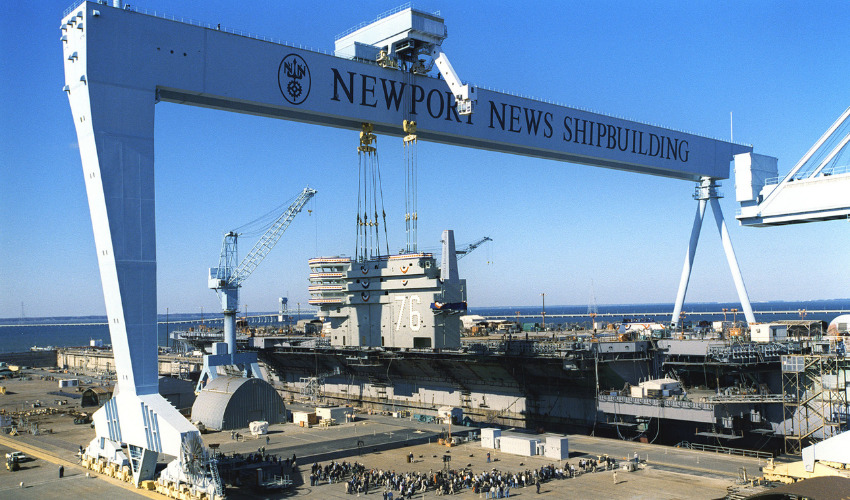 Materials3D Systems Plans to Develop Corrosion-Resistant Alloys for Shipbuilding and Maritime Applications3D Systems, in collaboration with Huntington Ingalls Industries’ Newport News Shipbuilding division, announced plans to develop Copper-Nickel (CuNi) and Nickel-Copper (NiCu) alloys for use in powder bed fusion additive manufacturing. Both CuNi and NiCu are corrosion-resistant, ma
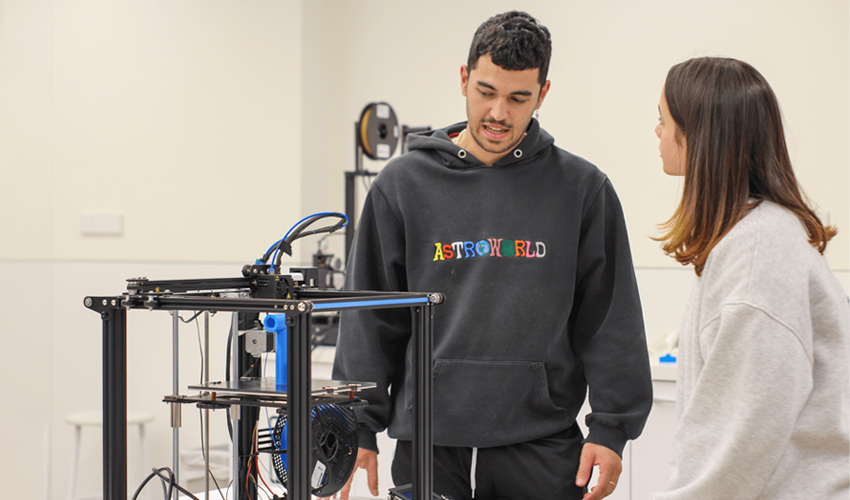 Applications3D Printing and Physiotherapy Help Children with Disabilities Regain Their IndependenceA new Spanish project is showing how 3D printing technology can significantly improve the lives of children with disabilities. The initiative was developed by the San Juan de Dios Comillas University School of Nursing and Physiotherapy (EUEF) in Madrid. In…
 NewsTop 5 Videos: Using 3D scanners to restore Michigan Central StationThis week we found the top 5 videos about 3D printing and the way additive manufacturing is changing production. The technology has infiltrated many sectors, from medical to automotive – check our selection of the week to keep up with the innovations! If you enjoy these, you&hell
 News3D printed prosthetics to help in a crisisAs the Number of Refugees fleeing Syria is still going up and has grown from 60.000 to 272.000 civilians over only days, the need for efficient and affordable tools are in high demand now more than ever. 3D printing keeps…
 News3D Printing is Being Used to Solve the Housing Shortage in GuatemalaIn Latin America, the implementation of additive manufacturing is still slow as not as many have adopted it as in other regions. However, companies such as Cementos Progreso are proof of the growth of 3D printing in this region. This…