Applications
Ansys Additive Simulation and Aconity3D Cooperate to 3D Print Flawless Bicycle Frame
Brightlands Chemelot is one of four innovation campuses located in Limburg, the Netherlands. Here, designers, researchers, and engineers have collaborated to create a fully 3D printed bicycle, one of the first of its kind, using high-performance materials and additive manufacturi
- 3 min read
- Applications
- Six more stories
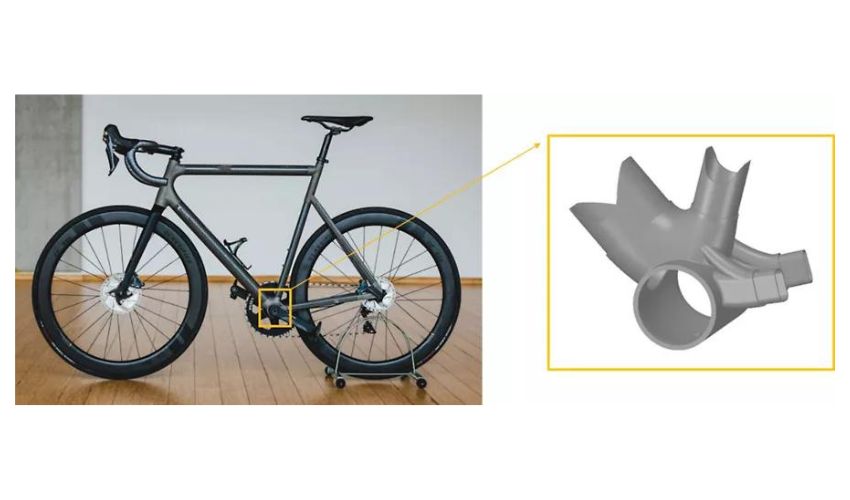
Brightlands Chemelot is one of four innovation campuses located in Limburg, the Netherlands. Here, designers, researchers, and engineers have collaborated to create a fully 3D printed bicycle, one of the first of its kind, using high-performance materials and additive manufacturing techniques to achieve a lightweight, durable and customizable frame. However, this discussion will focus on the production of the bottom lug, a critical component connecting various segments of the structure. To manufacture this part, Brightlands partnered with Aconity3D, a leading manufacturer and provider of laser-based metal 3D printing solutions.
In order to create a durable and lightweight bottom lug for the custom-made bicycle, designers opted for Ti-6Al-4V material. This titanium alloy is renowned for its strength and is typically used in aerospace and medical applications. The AconityMIDI+ laser powder bed fusion (LPBF) system at Aconity3D GmbH was used to 3D print the lug. However, during the printing process, an unexpected problem arose due to the use of support structures. The high stresses during the build process caused delaminations at the interfaces between the lower lug part and the supporting structures, which became too weak to maintain a solid bond with the built part geometry.
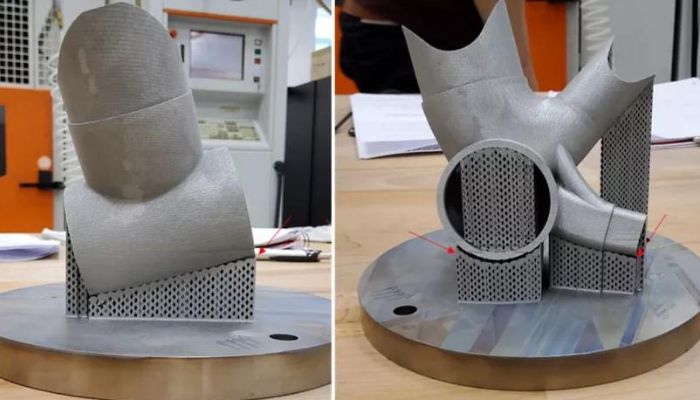
Delamination defects in the parts (Photo credits: Aconity GmbH)
Joining Forces With Ansys Additive Simulation and Aconity3D
Ansys and Aconity3D have partnered to address the challenge of delamination in support structures by integrating 3D printing process simulations into manufacturing. By utilizing the Ansys Additive LPBF simulations, the team could efficiently identify crucial areas and evaluate construction guidance and support strategies. The LPBF simulation provided a high-stress results tool highlighting critical stress regions, enabling engineers to recognize areas susceptible to crack formation during or after construction. Subsequently, based on the simulation outcomes, an optimized strategy was implemented for physical validation printing on the advanced Aconity MIDI+ system.
More from the desk
Six other notes from the rest of the bench.
 GuidesNippon Gases on Developing Gases for the Additive Manufacturing SectorIn additive manufacturing processes, many different systems coexist to ensure that the machines run smoothly to produce quality parts. One of them is the supply of gases for processes where stable temperatures are required – this is the case with…
 ApplicationsCan 3D Printing Improve Hospital Outcomes?Does additive manufacturing have a place in healthcare establishments? This is precisely the question being analyzed in research conducted by Dr. Atana Chaudhuri, associate professor of technology and operations management at Durham University Business School. He conducted a surv
 NewsGillette has launched customizable 3D printed razorWhat if you could personalize your disposable razor? This is the latest idea coming out of the American brand Gillette when they launched Razor Maker, a concept that allows for people to 3D print the handle of their razor. An idea that…
 NewsStratasys – Desktop Metal Merger Falls ThroughIndustry giants Stratasys and Desktop Metal have frequently been in the news in the past few years, initially as both companies have undertaken their own mergers and acquisitions. in 2021, DM acquired companies EnvisionTEC and ExOne, specialists in DLP and…
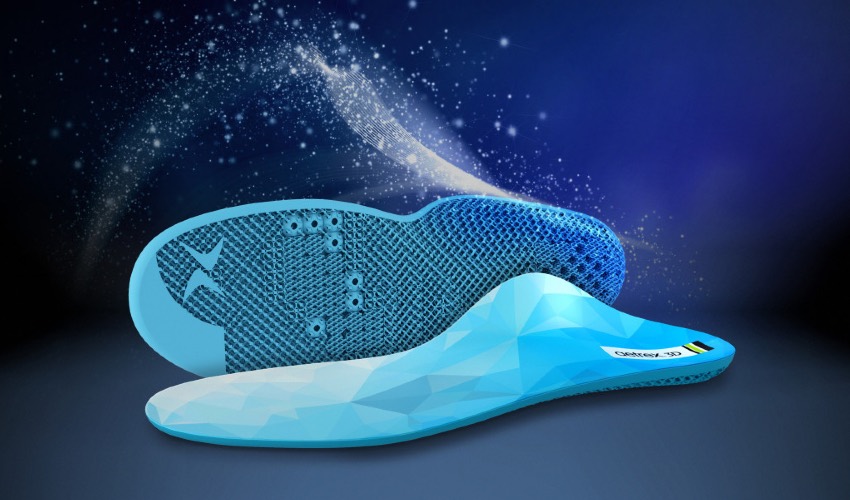 NewsAetrex partners with EOS to 3D print its thinnest orthotic insoleMedical footwear market is estimated to grow significantly in the near future, with more people becoming aware of the importance of therapeutic footwear and more companies offering a wider range of solutions. One of the biggest manufacturers on this arena…
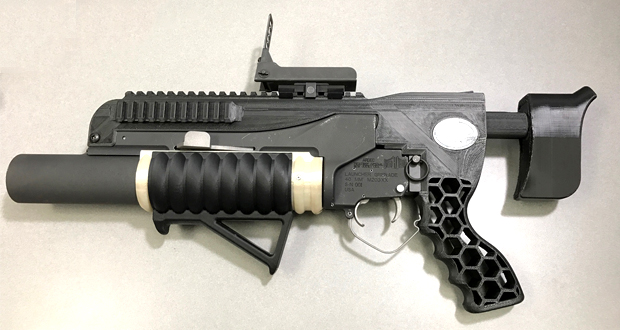 News3D printable gun files on sale for as low as $12 on the dark-web3D-printed weapons have been a major industry controversy since 2013. On May 6, 2013, Cody Wilson, the Senior Representative of the group Defense Distributed, unveiled and distributed the first weapon created with 3D printing, the “Liberator”. In only two days time&he