Materials
AM Polymers Introduces High-Performance Composites and Flame-Retardant Materials for 3D Printing
Nowadays, it is easy to encounter a wide range of different technologies within 3D printing, with its presence in many different industries and applications. Able to choose between stereolithography, material jetting, selective laser sintering and more, companies within the autom
- 3 min read
- Materials
- Six more stories
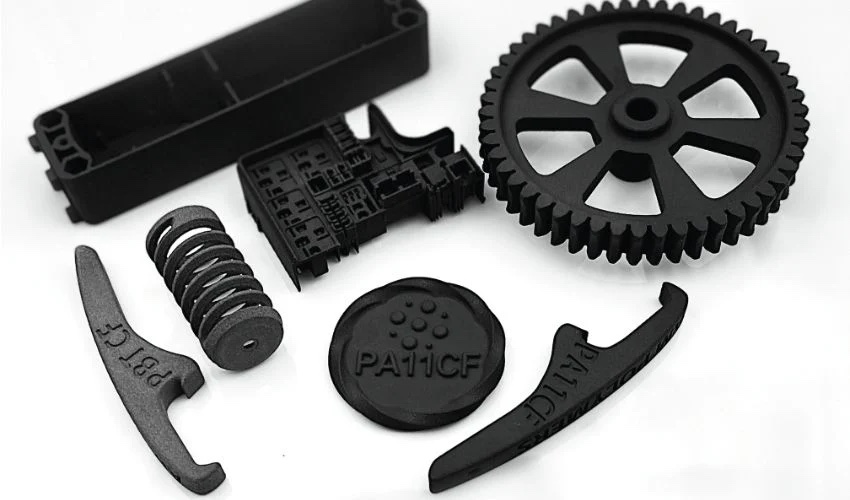
Nowadays, it is easy to encounter a wide range of different technologies within 3D printing, with its presence in many different industries and applications. Able to choose between stereolithography, material jetting, selective laser sintering and more, companies within the automotive, aerospace, but also medical and dental industries can benefit from 3D printed parts, although it is not always the technology itself that matters the most. In fact, in the majority of cases, the material used is more important, because a technology, no matter how sophisticated, cannot function without the appropriate material. Users can expand their entrepreneurial horizons above all by using powder-based materials, and powder-based polymers play a particularly important role here. As an expert in the production of such polymers, the company AM Polymers in particular has increasingly expanded its leading position in recent years, so that today they are regarded as an established partner and producer of, among other things, polyethylene, polypropylene, polyamide, polyurethane or even polybutylene terephthalate. But what about the application areas, the benefits and above all the innovative powder-based polymers?
In a study published this year by SmarTech Anaylsis on the use of polymers in the automotive industry, the results strongly highlighted once again the possibilities and advantages of AM material. Notably, in terms of production of internal combustion engines to be discontinued in the future, it is expected that major automotive manufacturers will increase the amount of parts produced with polymers from 1.5 million to around 6 million 3D printed parts by 2030. This means that targeted areas in the automotive industry such as end-use parts, supporting equipment for production such as jigs, specific tooling, or assembly aids, will be more widely manufactured with polymers. This will lead to material sales in the segment increasing from $80 million in 2022 to $600 million in 2030. However, the list of applications by using polymer powders is long, as AM Polymers shows. For example, you can also find them as tops of foam nozzles for firefighters, where a geometrically adapted structure has made it possible to increase performance – using polypropylene/polybutylene terephthalate. However, if we stay in the field of fire departments, electronic housings for fire engines have also been successfully produced thanks to polybutylene terephthalate. It should be noted here, however, that various functions had to be integrated, such as electronic resistance, but this was not a problem due to the material used.
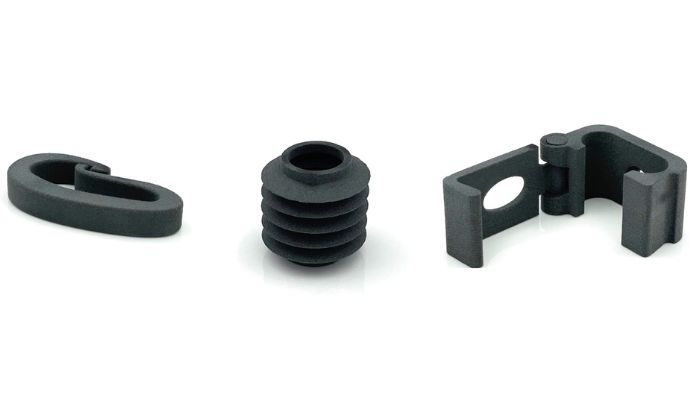
PA12 recycled powder ROLASERIT® PA12-04RGR001 has almost identical mechanical properties and refresh rate as the PA12 virgin powder for sustainable parts production (photo credits: AM Polymers)
What Are the Benefits of Polymer Powders From AM Polymers?
It is well known that additive manufacturing has a number of advantages when it comes to sustainability. However, the importance of the materials must not be underestimated. In recent months in particular, the team at AM Polymers has been able to achieve great successes in the recyclability of PA12. Thanks to a special refinement, it can be reused with a refresh rate of 50% without having to add new powder. When using this polyamide powder, which is available in black and white, the final 3D printed parts have an outstanding quality that gives no indication of reused material. However, the benefits of this approach do not end with the increased sustainability, because users can also benefit immensely in terms of the cost efficiency achieved as a result. If, for example, a 50% refresh rate of PA12 is compared directly with a 10% refresh rate of TPU, a cost efficiency of 43% compared with PA12 can be determined for a size of 20 liters and as much as 96% for a size of 72 liters.
More from the desk
Six other notes from the rest of the bench.
 PrintersMitsubishi Electric Announces Launch of its Wire-Laser Metal 3D PrinterIn a week of continued advancements in the additive manufacturing industry, the launch of a new metal 3D printer has come from a perhaps slightly less expected source. The famed Japanese conglomerate, Mitsubishi Electric, has announced that on March 1st…
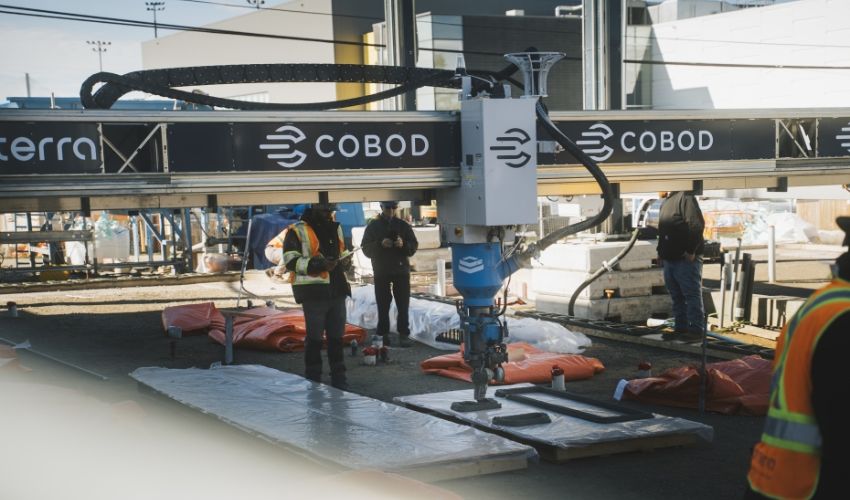 NewsCanada’s First 3D Printed Student Residence Breaks GroundThe University of Windsor has begun 3D printing what will become Canada’s first net-zero, multi-storey student residence, marking a major national milestone in additive construction and sustainable building design. The project, which officially moved into its printing phase at 10
 GuidesHow To Celebrate Easter With 3D PrintingThe sun is out, temperatures are warming up and Easter will take place this Sunday! Changing every year, Easter Sunday takes place following the first full moon after the vernal equinox (March 20th), though it is always on a Sunday…
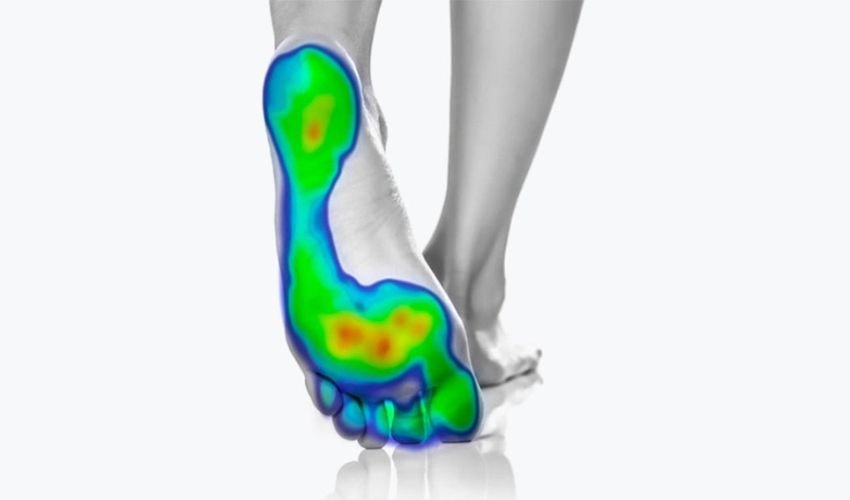 Applications3D Printed Insole Project Could Help Prevent Amputations Due to Diabetes in AustraliaResearchers at the Queensland University of Technology (QUT) Centre for Biomedical Technologies have been awarded a $810,000 AUD Medical Research Future Fund Primary Health Care Digital Innovations Grant to 3D print low cost, personalized, pressure off-loading insoles. These inso
 Printers3Dnatives Lab: EinScan-S 3D Scanner by Shining3D TestToday the 3Dnatives lab will be embarking on a test of the Einscan-S model from Shining 3D. This 3D scanner was born thanks to a Kickstarter campaign in early 2015, where they were able to scrape together a whopping $123,000 USD to…
 PrintersGuider 3, the New Professional 3D Printer from FlashforgeChinese manufacturer Flashforge has announced the launch of a new professional FDM 3D printer, the Guider 3. Designed for the production needs of small and medium-sized businesses, the machine is fast, with a compact and lightweight design to ensure flexible…