Printers
Mitsubishi Electric Announces Launch of its Wire-Laser Metal 3D Printer
In a week of continued advancements in the additive manufacturing industry, the launch of a new metal 3D printer has come from a perhaps slightly less expected source. The famed Japanese conglomerate, Mitsubishi Electric, has announced that on March 1st…
- 3 min read
- Printers
- Six more stories

In a week of continued advancements in the additive manufacturing industry, the launch of a new metal 3D printer has come from a perhaps slightly less expected source. The famed Japanese conglomerate, Mitsubishi Electric, has announced that on March 1st it will be releasing two models of its AZ600 wire-laser metal 3D printer. The launch not only shows the increased adoption of 3D printing even by large corporations but Mitsubishi’s own commitment to sustainability as this move is part of their efforts to reduce CO2 emissions in metal manufacturing.
Mitsubishi Electric Corporation was established in 1921 and is the electronics and electrical equipment core of Mitsubishi. Though perhaps slightly less known than its cousin, Mitsubishi Motors, the company is a leading name in electronics, offering solutions in everything from air conditioning, transportation, factory automation, building, energy, space and more. Now they are continuing their efforts in metal 3D printing as they will be launching what they claim to be the “world’s first wire-laser metal 3D printer that combines simultaneous 5-axis spatial control and digital additive-manufacturing technology that precisely and cooperatively controls processing conditions.”
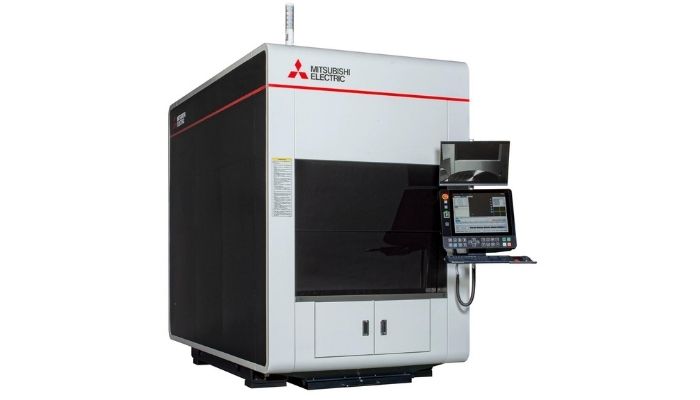
Photo Credits: Mitsubishi Electric
Why is Mitsubishi Turning to AM?
More and more industries and companies are turning to additive manufacturing to accomplish their goals thanks to the technologies’ various benefits. And this of course has also played a role in Mitsubishi’s decision to launch this printer. In fact, Mitsubishi points specifically towards the the fact that AM helps to shorten the conventional manufacturing process, reduce waste materials and improves design flexibility through easier part integration and reduction of weight. The company points to these last two in particular as benefits that it sees as helping to turn manufacturing towards a more decarbonized era.
More from the desk
Six other notes from the rest of the bench.
 SoftwareStep-by-Step: How to Use AI 3D Model Generators for 3D PrintingArtificial intelligence is becoming an integral part of our daily lives, whether we welcome it or not. Its ability to optimize workflows, predict outcomes, and adapt in real-time is driving innovation across industries—including additive manufacturing. Companies like Nike have le
 NewsUS Air Force develops reinforced ceramics 3D printed sensorsThe US Air Force has been incorporating additive manufacturing technologies in its operations for quite a while now. For instance, it has already collaborated with GE Additive to facilitate the adoption of metal 3D printing. This time US Air Force…
 Guides3D Evaluate: Assessing industrial 3D printing solutions, and moreFounded by Gil Lavi, a veteran of the additive manufacturing field, 3D Alliances is a successful consulting firm that focuses on helping startups in the 3D printing domain. After the COVID-19 crisis hit the world, the company realized that the…
 NewsResearchers Have Used 3D Printing to Create a ‘Healthier’ ChocolateWhen it comes to our favorite treats, what else could be at the top other than chocolate? Whether white, milk or dark, it comes in all kinds of varieties, and consumption of it worldwide has been steadily increasing. According to…
 NewsWho Were the Winners at AMUG 2024?A few weeks ago, AMUG 2024 came to an end. The annual event is known for its focus on education and networking, driven ultimately by the motto ‘by users, for users.’ taking place once again in Chicago, attendees were able…
 NewsFortify enables new functionality in photopolymer compositesFortify is a startup based in Boston that creates composites for the additive manufacturing industry. Following some research on composite 3D printing at Northeastern University in Boston, the founders decided to create a company that would develop materials with optimized&hellip