Guides
WASP Talks Sustainable Housing and 3D Printing with Soil
Earlier this year, we talked about WASP (World’s Advanced Savings Project), an Italian 3D printing company who finished the printing phase of their TECLA supporting structure. TECLA, a 3D printed eco-habitat, was engineered by WASP and designed by Mario Cucinella…
- 4 min read
- Guides
- Six more stories
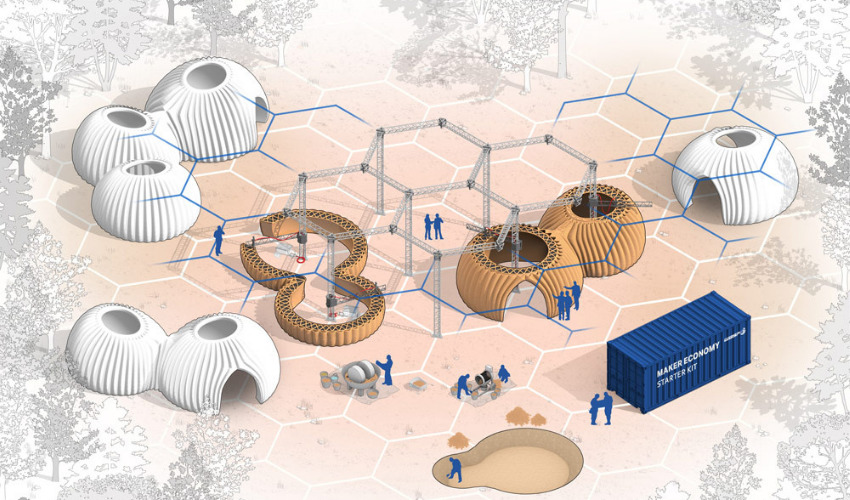
Earlier this year, we talked about WASP (World’s Advanced Savings Project), an Italian 3D printing company who finished the printing phase of their TECLA supporting structure. TECLA, a 3D printed eco-habitat, was engineered by WASP and designed by Mario Cucinella Architects to help move to a more circular housing model, creating buildings out of recyclable materials taken from the local terrain. The project was built using the Crane WASP, WASP’s 3D printer in the construction sector and was considered to be a large step forward in the area of sustainable construction. Though 3D printing, especially in construction, is considered a more eco-friendly alternative to traditional methods, the use of unsustainable materials like concrete have made it controversial. Work like the TECLA eco-habitat could bring us closer to a world where both housing and ecological crises could be fully addressed through the medium of 3D printing. We sat down with Alberto Chiusoli, a Building Engineer and Computational Designer at WASP to learn more about the TECLA project, printing with soil and the current state of sustainable construction and 3D printed houses.
3DN: Could you introduce yourself and tell us more about WASP?
I’m Alberto Chiusoli, I have a degree in Building Engineering and Architecture from Alma Mater Studiorum, University of Bologna, Italy. I collaborated with Carlo Ratti Associati in Torino as a technical designer and also in London with ecoLogicStudio. Currently, I’m a member of WASP. Our challenge is to build, with sustainable materials, innovative architectural components. WASP – World’s Advanced Saving Project – is a company that was founded in 2012 in Massa Lombarda (Ravenna- Italy) that designs and produces 3D printers that are made in Italy and sells them all over the world. The wide range of WASP 3D printers has been developed to answer a variety of human needs: food, housing, health, energy, work, art and culture. Inspired by the potter wasp, which builds its own nest with material recovered from the surrounding environment, WASP was born with the aim of developing large-scale 3D printers, to build houses with natural materials and available in the territory, at zero cost to the environment. We aim to create healthy, low-impact houses that generate energy, food and wealth. In 2018 we built GAIA the first house entirely 3D printed using raw earth and waste from the agricultural supply chain. Recently, WASP rose to a new challenge. TECLA is a new eco-habitat, created using entirely reusable, recyclable materials taken from the local terrain. Built using Crane WASP – the latest innovation in on-site 3D printed construction – TECLA represents a step-change in the move towards eco-housing.

Alberto Chiusoli is a Building Engineer and Computational Designer at WASP.
3DN: Can you tell us more about your 3D printers for the construction market?
Crane WASP represents the latest technological advancement of WASP in the field of construction on the site, a system that has made possible the construction of the first housing module in raw earth, Gaia (2018). The Crane WASP 3D printing system has been developed in recent years of research with the aim of being an integral part of the Maker Economy Starter Kit project, a container intended for the transport of the main technologies necessary for the establishment of self-construction sites around the world through the opportunities presented by digital manufacturing. The Crane WASP 3D printer is mainly inspired by the construction crane model, with the integration of a sophisticated numerical control system, specifically developed for the 3D printing of building materials. Crane WASP represents a new way of conceiving the entirety of construction, from the construction phase to the installation phase. Right now the 3D printing construction market is progressing really fast but most of the players are focusing on concrete printing while we believe in the value of sustainability and technological progress for the good of humanity.
More from the desk
Six other notes from the rest of the bench.
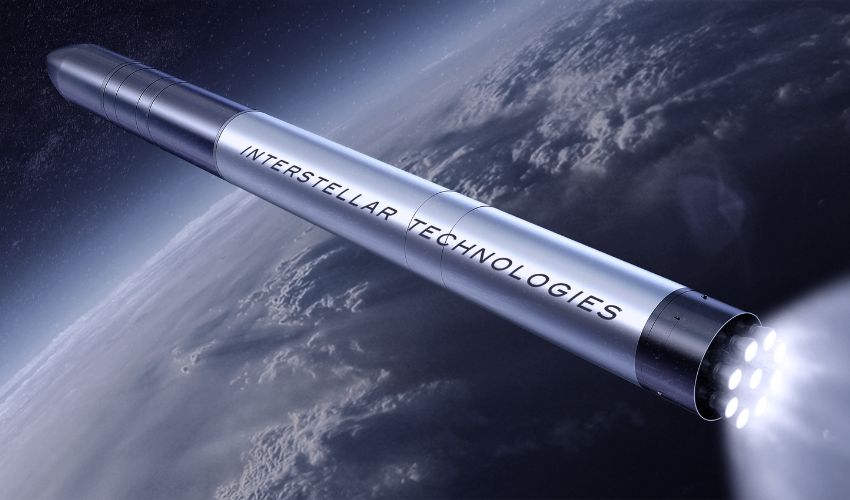 GuidesInterstellar Technologies Uses Additive Manufacturing to Accelerate Japan’s Space RaceSpaceX, NASA, ESA, Relativity Space, Blue Origin…what do these all have in common? Why they are all using additive manufacturing in the use of space exploration. And while you may notice that that that list includes many examples from Europe…
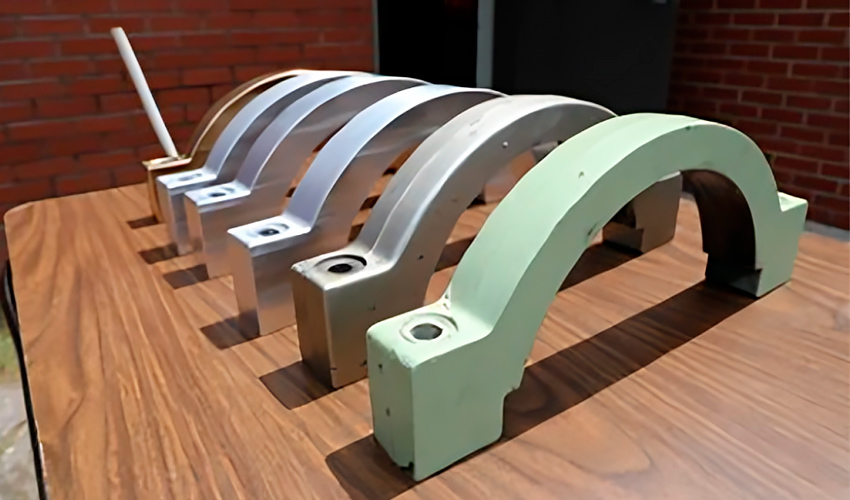 ApplicationsUS Soldier Completes SPEE3D Additive Manufacturing Demonstration for Army Research LabBy 2027, the value of additive manufacturing in the defense sector is projected to be $1.7 billion. Why? Employing additive manufacturing technologies is advantageous because it can mean faster production times, cheaper costs, and more customizable outcomes. While 3D printing&hel
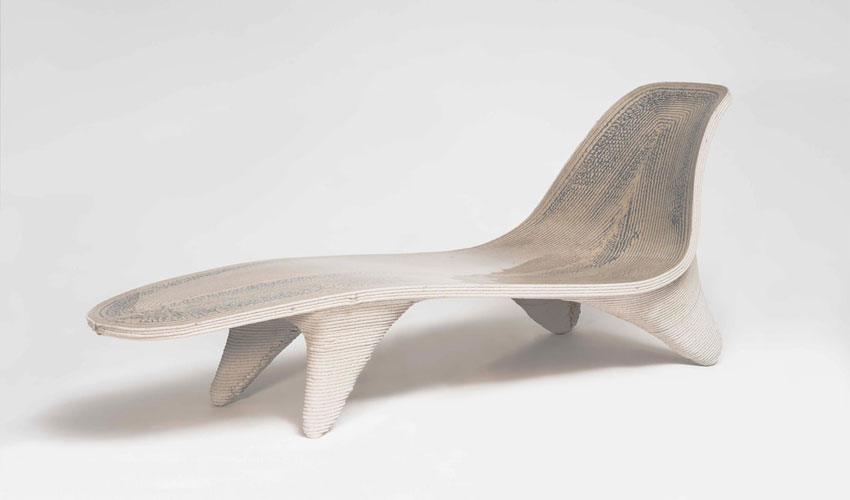 NewsA lounge chair using 3D concrete printingWhile 3D concrete printing is gaining momentum in the construction industry, it seems that technology is also widely used in the arts industry to create complex and unique structures, including furniture. This is the case of this project presented by the designer Philipp…
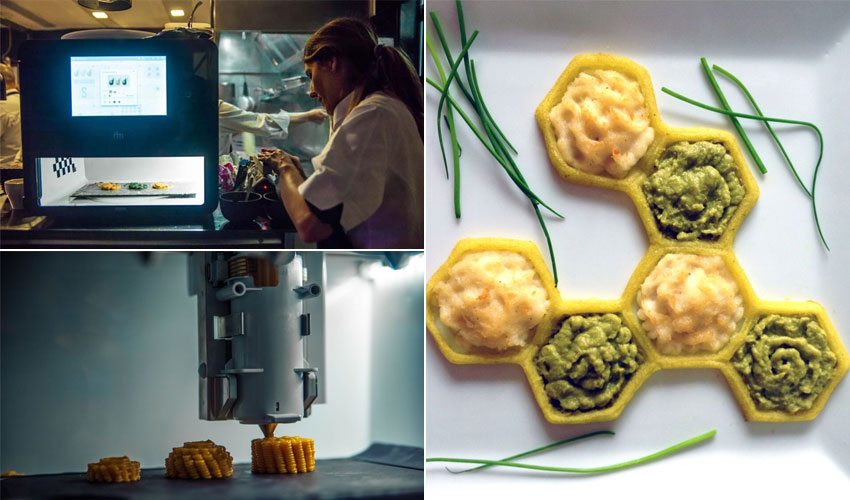 NewsA guide to 3D Printed Food – revolution in the kitchen?We all remember the Replicator, the Star Trek food manufacturer, able to turn any molecule into edible food and whole dishes. 3D food printing is able to make dishes from different pastes and materials, so it seems we are getting…
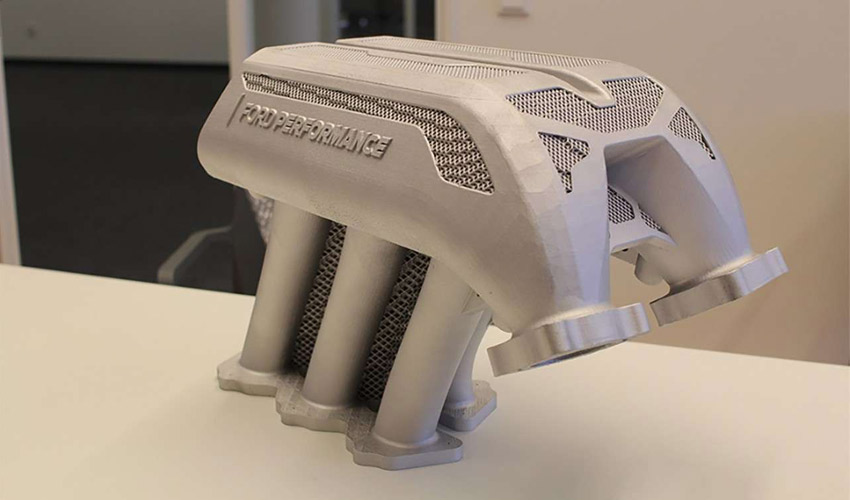 MaterialsFord produces the largest ever 3D printed metal automotive partLargest 3D Printed Metal Automotive Part in History Ford Performance, the high-performance division of Ford Motor Company, 3D printed what they claim to be the largest metal automotive part for a working vehicle in automotive history. The metal part was…
 NewsXYZBAG, 3D printed personalised handbagsXYZBAG is an Italian brand based in Turin that has chosen digital craftsmanship: it combines traditional design methods and additive manufacturing technologies to produce unique bags. Customisation is undoubtedly one of the reasons why more and more designers are turning…