News
“Mission Critical:” Alloy Enterprises Additively Manufactures Cooling Solutions for AI Data Centers
These days, it seems like AI is everywhere you look. With its use skyrocketing, the demand for AI data centers is growing, too. AI data centers house the IT infrastructure responsible for training and delivering AI. They require high-performance computing…
- 3 min read
- News
- Six more stories
These days, it seems like AI is everywhere you look. With its use skyrocketing, the demand for AI data centers is growing, too. AI data centers house the IT infrastructure responsible for training and delivering AI. They require high-performance computing units, as well as advanced storage architecture, networking and energy capabilities. All of these requirements necessitate massive amounts of power and cooling, the need for which, IBM reported, will only continue to grow. Goldman Sachs posited that AI will drive a 160% increase in data center power demand by 2030. Right now, the annual global demand for data center capacity is 60 gigawatts. McKinsey & Company estimated that by 2030, that would rise to 171 to 219 gigawatts, more than doubling.
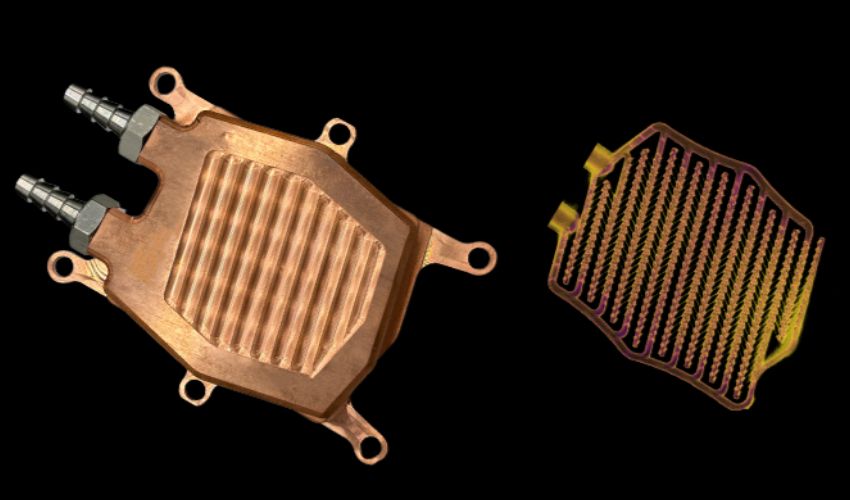
To save energy, AI data centers are employing advanced cooling systems. Massachusetts-based company Alloy Enterprises manufactures direct liquid-cooled components that handle extreme heat loads in AI and high-performance computing. Now, in addition to aluminum components, the company has launched a direct liquid cooling (DLC) copper solution that aims to slash AI data center energy costs and eliminate the need for HVAC. One reason traditional cooling solutions are hitting their limit is that chip power densities (meaning the amount of electrical power consumed by a chip) are increasing. Additionally, the maximum amount of heat a computer component can generate, also known as thermal design power (TDP), is increasing. Both factors demand improved cooling technology.
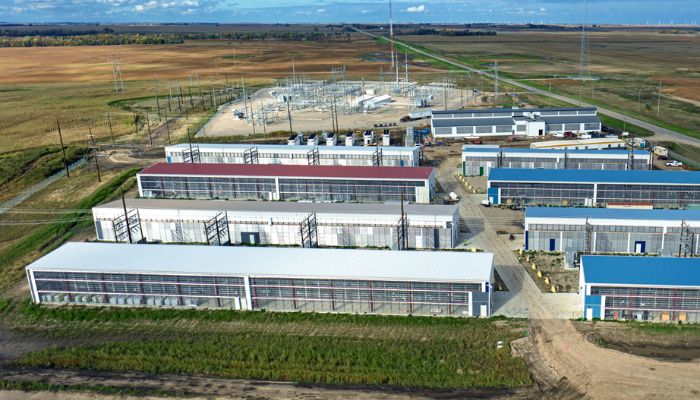
AI data centers (Photo Credits: McKinsey & Company)
Direct Liquid Cooling Achieved with Stack Forging
Alloy Enterprises uses a proprietary technology, a unique additive technique called Stack Forging, to fabricate the DLC solutions. The first step of stack forging involves digitally slicing 3D models into layers. Then, the design is laser-cut into sheets from the company’s custom feedstock. Next, they add an agent that creates an inhibition layer in designated areas of the design that act as a mold release. These sheets are then stacked and registered, and then diffusion-bonded together to form a solid block. Once this block is formed, the support material is removed and the components are heat-treated for strength and hardness. Because they are constructed in a single piece, they eliminate leak points common in traditional liquid cooling systems.
More from the desk
Six other notes from the rest of the bench.
 NewsTree Column, Blast Studio’s Column 3D Printed Out of Mycelium and WasteWhile we are used to seeing 3D printing associated with plastic and metal, more and more initiatives are combining the technology with natural materials. London-based design studio Blast Studio recently developed a 3D printing method using mycelium, also sometimes called…
 MaterialsResearchers 3D Print Structured Fabrics Capable of Supporting 50 Times Their WeightA team of scientists from Nanyang Technological University in Singapore, and the Caltech Institute of Technology in California have developed 3D-printed structured fabrics capable of supporting 50 times its own weight. Inspired by chainmail, it could stiffen on demand and…
 Guides#3DStartup: Gastronology’s 3D-Printed Food Can Help Patients With Eating DifficultiesFood is a basic fact of human life, and global trade means most people can enjoy cuisines and options from all over the world. However, not everyone can benefit from the rich variety of food available to us. What happens…
 NewsStudent creates CUDA; a 3D printed jetpackThere is no better way to enjoy the summer than under water, this is what Archie O’Brien, a 21 year old student at the University of Loughborough in the United Kingdom, thought. He has developed a 3D printed jetpack with…
 PrintersMetal 1.0 Doubles Kickstarter Goal, Hoping to Pave the Way for Sub-€10k Metal 3D PrintingA metal 3D printer for under €10,000 might sound like a pipe dream, but one Dutch engineer is turning it into a reality. Thomas Martinus Gerardus Bakker, a specialist in mechatronics engineering and system design, has developed the Metal 1.0.…
 SoftwareThe Best STL Repair Software For All LevelsWhen it comes to 3D printing, there is nothing more frustrating than ending up with a failed print. Although there are many different reasons behind this, including incorrect parameters and poor leveling, problems often also come from the model’s own…