Applications
Will 3D Printing Be Used for the First Commercial Mission to Mars?
If you have been following along for a while, you certainly know that additive manufacturing is playing an important role in the aerospace sector and especially in space travel. Already it is being used for applications in missions to both…
- 3 min read
- Applications
- Six more stories

If you have been following along for a while, you certainly know that additive manufacturing is playing an important role in the aerospace sector and especially in space travel. Already it is being used for applications in missions to both Mars and the moon and now there is another we can add to the list. Impulse Space and Relativity Space have announced the first commercial mission to Mars where Relativity’s 3D printed launch vehicle, Terran R will be used to deliver Impulse’s Mars Cruise Vehicle and Mars Lander. The companies note that they hope the partnership will help to rapidly advance their shared goal of a multiplanetary existence for humanity.
Relativity Space is one of the leading companies using additive manufacturing for space travel. They are especially known for their Terran R which is the first entirely 3D printed rocket in the world. Though the Terran R is not expected to launch from Cape Canaveral, FL until 2024, already its younger, partially 3D printed sibling Terra 1 is undergoing testing at Cape Canaveral Space Force Station. The company strongly believes in using 3D printing as a way to make more innovative, optimized rockets for cheaper, allowing for lower-cost space travel.
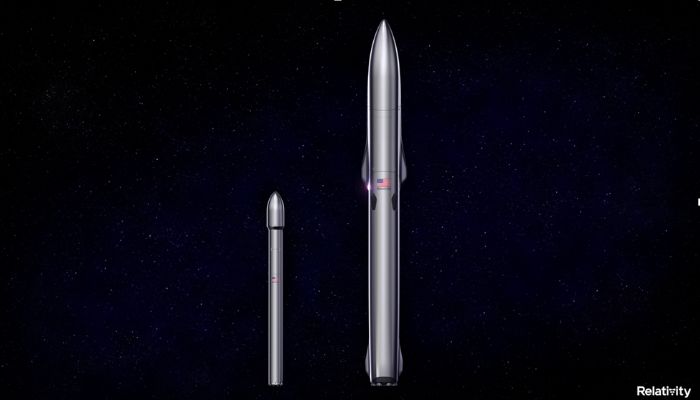
The Terran 1 (left) and Terran R (right) side by side (photo credits: Relativity Space)
As fellow commercial providers working on more affordable space travel, the partnership between Impulse and Relativity is a logical one. Under the deal, Relativity will launch Impulse’s Mars Cruise Vehicle and Mars Lander in Terran R from Cape Canaveral, FL until 2029. By working together, the two companies hope to overcome the difficulties in landing on Mars as well as enable research and development on the surface which will help build toward humanity’s multiplanetary future. This mission will be the first commercial flight to Mars, a huge step forward for the industry, though it should be noted that commercial launches are already underway through companies like SpaceX for travel to the moon.
More from the desk
Six other notes from the rest of the bench.
 NewsYinka Illori Makes London’s First 3D Printed Basketball CourtEveryday life in the big city can sometimes be quite stressful, monotonous and frustrating. Especially in the past year and a half, when quality of life has had to be restricted and all social contact minimized. To give people back…
 GuidesElementum 3D on Materials and Expansion in Metal Additive ManufacturingOne of the many considerations in 3D printing is what materials should be used for the printing process. Though still limited, 3D printing materials have expanded in recent years. Going from traditional materials like plastics and polymers, like PEEK and…
 PrintersToybox: The kids’ only 3D printerChildren are the future as they say, and Toybox, a small American company has them in mind with their latest 3D printer. Although this is not the first time that a company has decided to harness the creativity of children…
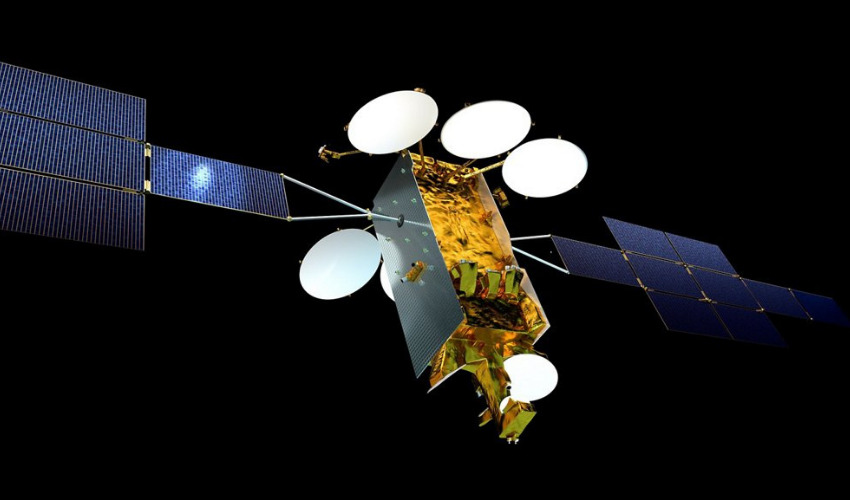 Applications3D printing goes to space on Airbus’ Eurostar Neo satellites3D printing is going back into space! Airbus has used Additive Layer Manufacturing (ALM) technology (otherwise known as 3D printing or additive manufacturing) for the creation of radio frequency (RF) components for two Eurostar Neo satellites which are planned to…
 ApplicationsFirehawk Oversubscribes $60 Million Investment, Securing Key European InvestorFirehawk Aerospace, a defense company specializing in advanced energetics and propulsion, has just secured investment from Presto Tech Horizons (PTH), a defense and resilience tech fund created through a partnership between European venture capital firm Presto Ventures and global
 News3D Printing Brings a Sea Monster to LifeYou might have seen the recent story about the discovery of the giant fossil that was extracted in the UK in the beginning of December 2023. The skull of a pliosaur, an ancient marine reptile from the Jurassic period, was…