News
APG Manufactures Lathe Chuck Jaws with Tritone’s MoldJet Technology
One of the best-known advantages of 3D printing, which is appreciated by different industries, is freedom of design. While still having to follow rules with certain limitations depending on the part to be produced, Design for Additive Manufacturing (DfAM) allows…
- 3 min read
- News
- Six more stories
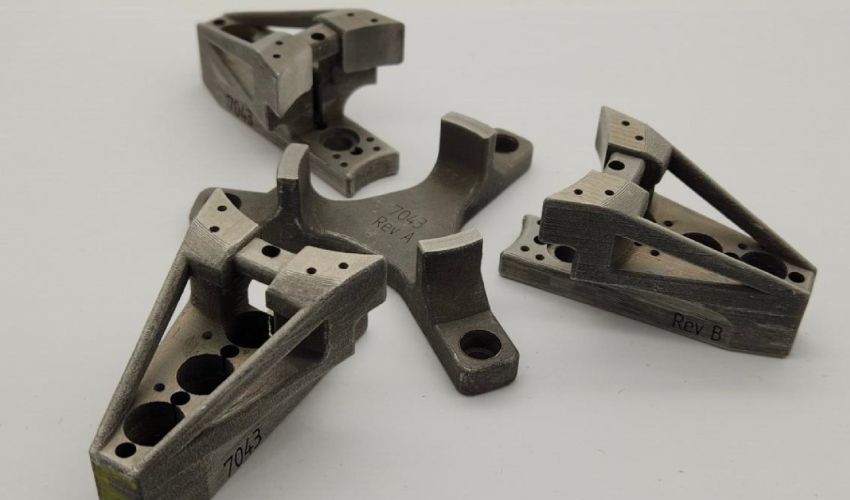
One of the best-known advantages of 3D printing, which is appreciated by different industries, is freedom of design. While still having to follow rules with certain limitations depending on the part to be produced, Design for Additive Manufacturing (DfAM) allows for geometries and performance that often cannot be achieved by other methods. Techniques such as generative design or topological optimization are increasingly being used in conjunction with 3D printing to reimagine the design of parts in unconventional ways and make them perform better, lighter, and more optimized.
U.S.-based Alpha Precision Group (APG), a leading supplier of precision components, specialty valves, and powder metal components, decided to use 3D printing for this very purpose, to find a solution to a problem that could not be solved by other techniques. By redesigning and 3D printing lathe chuck jaws, previously made by CNC machining, the company was able to improve its production process. But how did they do this?
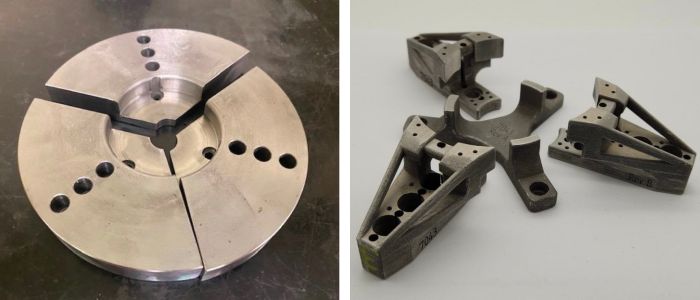
On the left, the original CNC-produced chuck design. At right, the new lightweight chuck jaw produced with Tritone‘s MoldJet additive technology.
Design for Additive Manufacturing to Achieve Lighter Spindle Jaws
In operation for more than 50 years, APG has brought together, under its brand, pioneering companies in materials and process improvement technologies. The company now works with a variety of techniques, including metal injection molding (MIM) and additive manufacturing.
More from the desk
Six other notes from the rest of the bench.
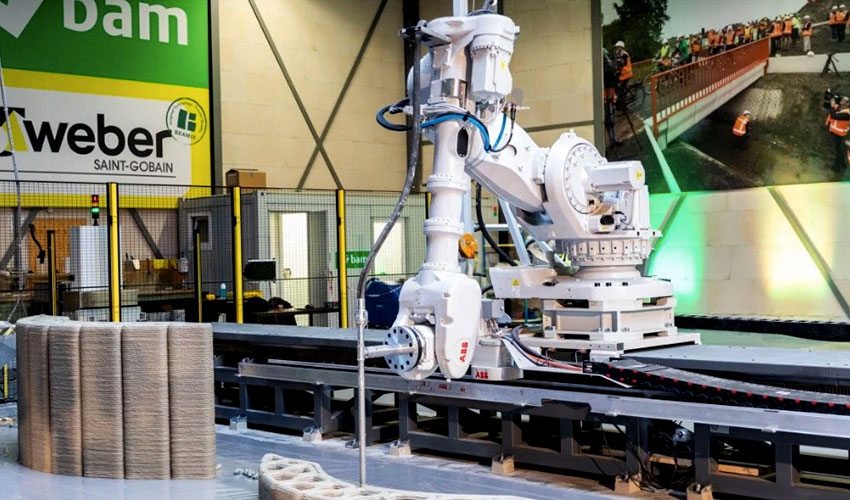 NewsEurope’s First 3D Concrete Printing FacilityThe first industrial 3D concrete printing facility in Europe was inaugurated on the 14th of January in Eindhoven, Holland. When applied to the construction sector, 3D printing offers many advantages whether in terms of costs, time or durability of materials.…
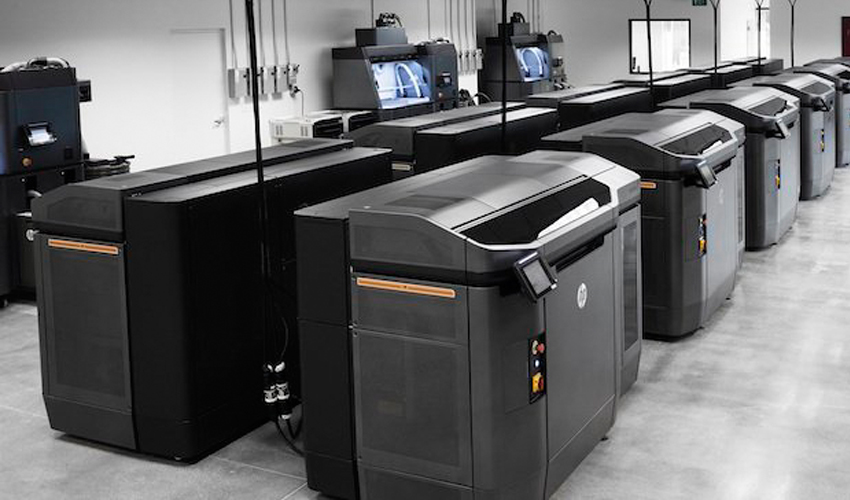 PrintersHP Announced New 3D Printer: Jet Fusion 3D 4210HP has expanded its additive manufacturing selection by announcing their new 3D printer – the HP Jet Fusion 3D 4210. This announcement also included the release of 3 new materials. The printer is designed for industrial-scale 3D production, and aims…
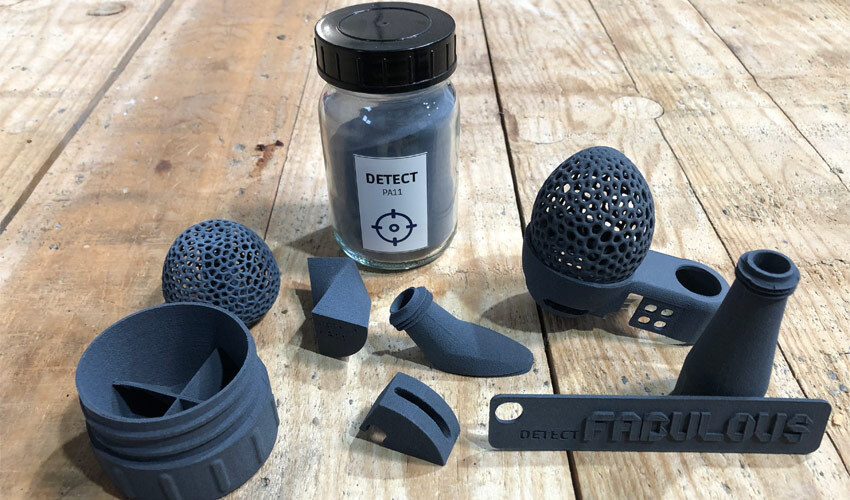 MaterialsFabulous is Presenting New Industrial Materials at Formnext 2021In 2020, Fabulous launched into the development of powders for additive manufacturing, more specifically thermoplastics for powder bed fusion processes. One of its first developments, BLUECARE, is a powder that has been certified for food contact in the European Union…
 News3D Technologies Could Help Save Endangered Freshwater MusselsOne of the greatest challenges facing biologists is preserving the world’s delicate biodiversity by saving endangered animals. We have all heard of the most famous examples like black rhinos, mountain gorillas, African forest elephants, orangutans and of course hawksbill se
 ApplicationsBugatti Unveils Tourbillon: The Next-Gen Hypercar with 3D Printed ChassisBugatti has just unveiled the latest generation of its hypercars: the Tourbillon. This new model blends cutting-edge technology, immense power, luxury, and advanced aerodynamics. As the successor to the Chiron, the Tourbillon boasts an impressive 1,800 hp engine and features&hell
 NewsTop 5: 3D Printing For Cancer TreatmentHello everybody and welcome to our weekly top 5, where we collate the best 3D printing videos of the week. This time we have a 3Dnatives original video for you about how 3D printing can be used for cancer treatment…