Materials
Using a Green Laser Facilitates 3D Printing of Pure Copper and Copper Alloys
Metal additive manufacturing is finding its way into more and more industries, from aerospace and marine to electronics and automotive. It enables the design of more complex, lightweight and durable parts. Copper’s excellent electrical and thermal conductivity, resistance t
- 3 min read
- Materials
- Six more stories
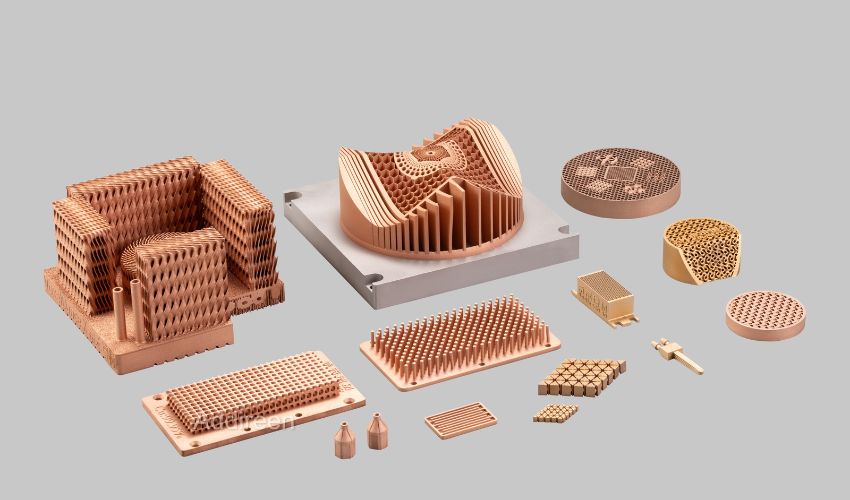
Metal additive manufacturing is finding its way into more and more industries, from aerospace and marine to electronics and automotive. It enables the design of more complex, lightweight and durable parts. Copper’s excellent electrical and thermal conductivity, resistance to atmospheric and marine corrosion, ductility and toughness make it one of the most widely used metal materials.
However, manufacturing with copper presents specific challenges, especially when using traditional laser powder-bed fusion (LPBF) techniques. Pure copper has a very low absorption rate for infrared lasers—less than 10%. As a result, high-power infrared lasers can lead to excessive vaporization and spattering, which negatively impact the final part. These effects include reduced material density, increased porosity, and diminished thermal and electrical conductivity. Additionally, when the reflected light is over 90%, it can damage the 3D printer’s optical components.
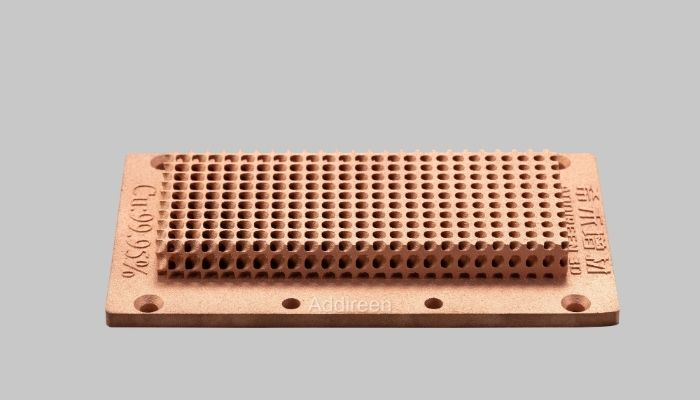
IGBT Heat Sink Copper Base Plate , Pure Copper
This is where Addireen, a Chinese manufacturer, stands out. With cutting-edge green laser technology, Addireen’s industrial machines overcome the limitations of infrared lasers. Their machines can produce copper parts with a density of 99.8% and a minimum wall thickness of 0.08mm, significantly enhancing the quality and precision of the components, unlocking copper’s full potential in metal additive manufacturing.
More from the desk
Six other notes from the rest of the bench.
 NewsHow to Build a 3D-Printed Mini TV That Broadcasts Episodes of The SimpsonsAlthough it may be difficult to believe, this maker project is not science fiction. Reddit user Brandon Withrow, has combined 3D printing and Raspberry Pi to create a 3D printed mini TV capable of playing the first 11 seasons of…
 NewsStratasys – Desktop Metal Merger Falls ThroughIndustry giants Stratasys and Desktop Metal have frequently been in the news in the past few years, initially as both companies have undertaken their own mergers and acquisitions. in 2021, DM acquired companies EnvisionTEC and ExOne, specialists in DLP and…
 Applications3D Printing Could Reduce Waste and Emissions When Retreading TiresA team from Virginia Tech has been selected by the REMADE institute for a $1.5 million project to improve tire retreading using additive manufacturing. Tire retreading is a common part of commercial vehicle maintenance. Essentially, when a tire is worn…
 GuidesHow Harvard Professors are Restoring HistoryDuring the writing of our recent feature story on the use of 3D technology in restoring history we spoke to staff at the Harvard Semitic Museum. We received such a large amount of great information about the museum that we…
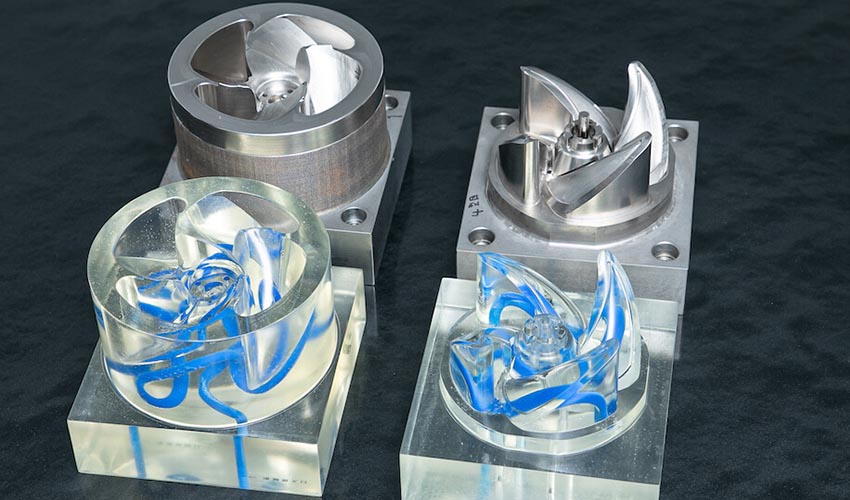 NewsOptimizing mold cooling channels using generative designEven though additive manufacturing is moving beyond being a rapid prototyping technology, injection molding is still the most efficient way to mass produce plastics parts. Injection molding is therefore essential for mass-production of plastic parts with complex shapes. In order&
 NewsHow to Make Your Own 3D-Printed Squid Game MaskNetflix’s Squid Game series has taken over the public consciousness and every corner of the internet. The Korean drama tells the story of a group of financially indebted people who risk their lives in a survival competition for the chance…