News
Optimizing mold cooling channels using generative design
Even though additive manufacturing is moving beyond being a rapid prototyping technology, injection molding is still the most efficient way to mass produce plastics parts. Injection molding is therefore essential for mass-production of plastic parts with complex shapes. In order&
- 3 min read
- News
- Six more stories
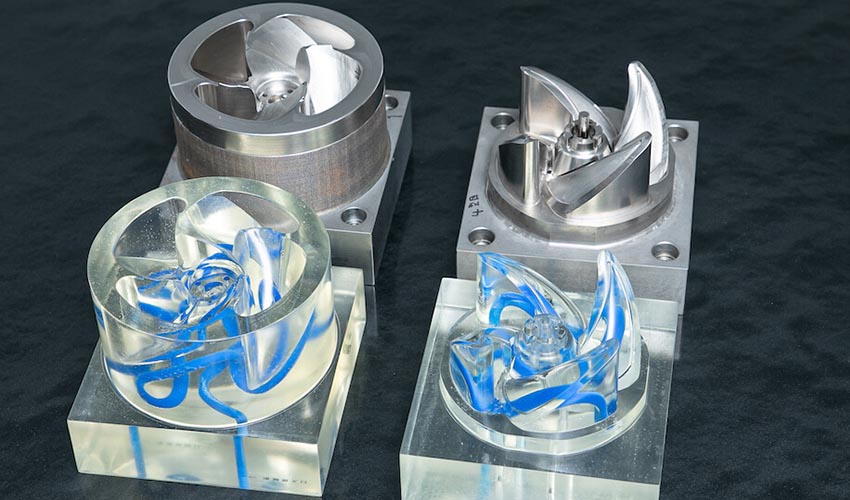
Even though additive manufacturing is moving beyond being a rapid prototyping technology, injection molding is still the most efficient way to mass produce plastics parts. Injection molding is therefore essential for mass-production of plastic parts with complex shapes. In order to create higher quality products at lower costs, it is important to develop advanced cooling systems for melted materials. Panasonic Corporation’s Life Solutions Company, in collaboration with Autodesk, has explored how automating the design of mold cooling channels could help this process.
Therefore, Panasonic Corporation’s Life Solutions Company is betting on a new hybrid manufacturing method that incorporates 3D printing, milling and generative design. Using the LUMEX Avance-25, it was possible to create a conformal-cooling system (which lays out the cooling channels conforming to the shape of the products). The result is a reduction in cooling times by 20% compared to conventional methods, where channels are drilled straight through the mold.
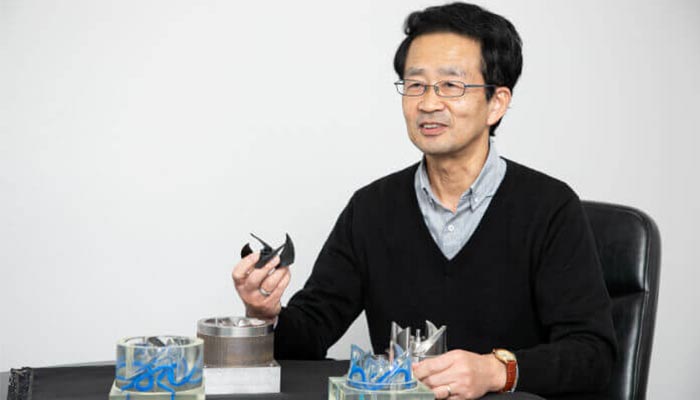
Seiichi Uemoto, an analyst at Panasonic’s Life Solutions Company, initiated using generative design to deliver new designs that otherwise would have been impossible | Image via Autodesk
A workflow supported by generative design
Generative design is a technique that delivers optimized design outcomes based on goals and constraints. Seiichi Uemoto, an analyst at Panasonic’s Life Solutions Company Manufacturing Engineering Center, initiated using generative design to deliver new designs that otherwise would have been impossible. “I thought that with the right settings in place, I could use generative design to automatically create mold-cooling channels,” he explains. The main difference with topology optimization is that it produces “only one solution from the conditions provided to the system. It is difficult to produce something with smooth contours from the generated result. But it became apparent to me that generative design would inherently result in smoother shapes,” he adds.
More from the desk
Six other notes from the rest of the bench.
 News#3DOpinion | What Is the State of the AM Market in the Beginning of 2024?We’ve all seen the headlines. Coming to the end of 2023 and the beginning of 2024, the 3D printing market has been inundated with thought pieces with titles claiming that 3D printing was dying, or that it failed to live…
 PrintersCalibry, the new fast and compact 3D scanner from Thor3DThor3D, the Russian manufacturer behind renowned 3D scanners, introduced at TCT Asia its new Calibry scanner. The Calibry is a manual 3D scanner that bets on being compact and high-speed. It was created to scan historically challenging objects. During TCT…
 NewsSaving Endangered Coral Reefs Using 3D PrintingMarine life has suffered significantly due to environmental issues in the past few years. Global warming and the accelerated urbanization in coastal areas has driven different parts of the life underwater to the edge of extinction. One alarming example is…
 ApplicationsFord Motor Company purchases new Production System P-1 from Desktop MetalAlready a leader in additive manufacturing in the automotive sector, Ford does not intend to stop here. The American firm has confirmed that it has already ordered the P-1, Desktop Metal‘s latest 3D printer, and will be one of the…
 NewsNova Meat reveals 3D printed pork during global disruption in meat supplyAt the beginning of the year, the Barcelona-based startup Nova Meat presented version 2.0 of its 3D printed plant-based steak. Now, it unveils a new product: 3D printed plant-based pork meat that they call pork skewer 2.0. The startup, which…
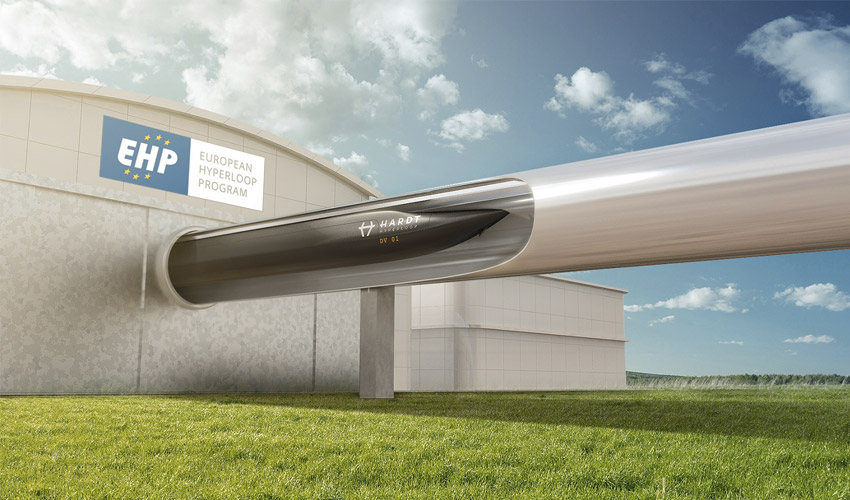 NewsEuropean Hyperloop Week, Innovative 3D Prototypes for the Transport of the FutureHave you heard of the Hyperloop project? The construction of this mode of transport consists of large tubes close to the vacuum through which capsules move. The initiative proposed by Tesla and SpaceX aims to transport people or goods at speeds…