Applications
Addion Has Designed Ultra-Realistic Eye Models to Help Prepare for Ophthalmological Surgeries
Austrian 3D printing service Addion GmbH, which specializes in the production of 3D printed medical devices, is using Stratasys PolyJet technology to design ultra-realistic surgical eye models to better prepare for critical operations. The multi-material, multi-color additive man
- 3 min read
- Applications
- Six more stories
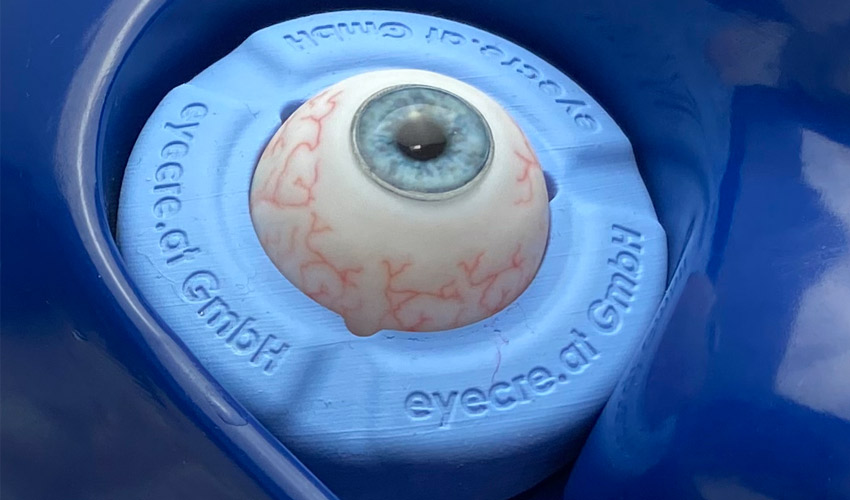
Austrian 3D printing service Addion GmbH, which specializes in the production of 3D printed medical devices, is using Stratasys PolyJet technology to design ultra-realistic surgical eye models to better prepare for critical operations. The multi-material, multi-color additive manufacturing process allows the company to achieve an unprecedented level of realism, a significant benefit of using 3D printing to train for difficult surgeries.
In the ophthalmic sector, it is often difficult to design models that reproduce the soft, watery tissues of human eyes. They often lack realism, especially with regard to color and touch. The eye is a difficult organ to replicate due to its complexity – the process is time consuming and quite expensive. Additive manufacturing can remove some of the barriers when it comes to designing custom surgical models, but some technologies don’t meet all needs, especially in terms of materials, transparency or color. This is where material jetting is particularly interesting: since it can combine several photopolymers and colors, ultra-realistic parts can be obtained.
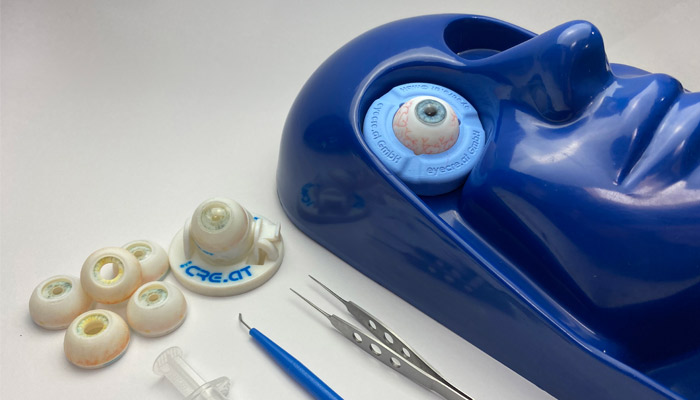
Photo Credits: Addion/Stratasys
Addion 3D prints a custom eye model
Addion GmbH relies on Stratasys’ Digital Anatomy machine, a solution thought for the medical sector in particular to reproduce the behavior of human tissue. Using TissueMatrix™ and GelMatrix™ materials, the company can mimic the soft, watery appearance of the eye, creating a high level of realism. Alexander Hechenberger, CEO of Addion, explains, “The skin layer on the model is one-tenth of a millimeter and is detached with very small, fine instruments, implanted, and then reattached. This level of detail was previously unimaginable.” Indeed, they are able to produce a surgical model where the cornea can be easily removed: this allows doctors to simulate an operation and better prepare, but also to better understand how the eye works.
More from the desk
Six other notes from the rest of the bench.
 NewsThe US Marines benefit from ICON’s 3D printing technologyICON is a construction technologies company based in Austin, Texas. With the help of proprietary 3D printing robotics, software and advanced materials, ICON mainly focuses on solving problems in the construction industry, by making it more cost-effective, among other things. The&
 NewsTop 5 Videos: Michelin, MissouriThis week’s Top 5 Videos of the Week include videos ranging from metal 3D printing, 3D printing in construction, and 3D printing at university. Remember, another Top 5 Videos is published every Sunday, so make sure you don’t miss out…
 ApplicationsCan DLP Be Used in the Creation of Microfluidic Chips?Medical applications in 3D printing are vast and growing larger by the day. One that is increasingly important, but perhaps less discussed, centers on microfluidics. Microfluidic devices (microfluidic chips) have emerged over the past 30 years and have been rapidly…
 GuidesTop 10 Applications of 3D Printing in Art3D printing gives a completely new meaning to the saying “art knows no boundaries,” proving that new technologies and creativity are in fact very compatible, contrary to popular belief. Because the use of additive manufacturing allows artists to go one…
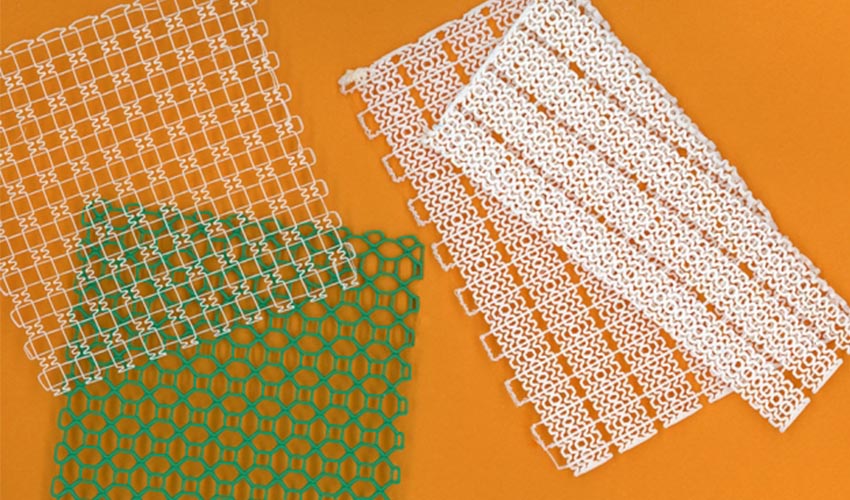 MaterialsEngineers at MIT develop 3D printed mesh for ankle and knee bracesIn our last ranking about 3D printed orthoses, we shared with you some of the projects and products being enhanced by 3D printing technologies. The ability to customise these medical devices in order to offer a personalised solution for each…
 NewsA futuristic reality: 3D printed SpaceX helmetsSpace travel and additive manufacturing are synonymous to innovation, and this time we are combining the two to take a closer look at the 3D printed SpaceX helmets. Elon Musk is well known for his inventions that seem to be straight…