Materials
Engineers at MIT develop 3D printed mesh for ankle and knee braces
In our last ranking about 3D printed orthoses, we shared with you some of the projects and products being enhanced by 3D printing technologies. The ability to customise these medical devices in order to offer a personalised solution for each…
- 3 min read
- Materials
- Six more stories
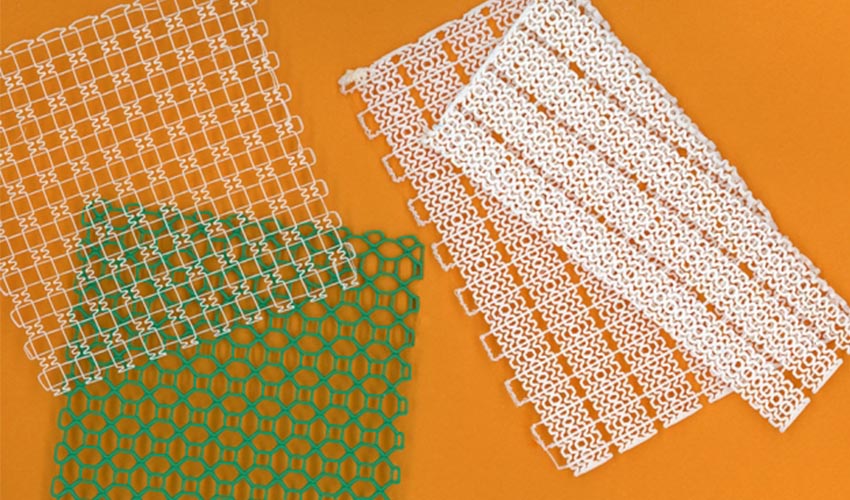
In our last ranking about 3D printed orthoses, we shared with you some of the projects and products being enhanced by 3D printing technologies. The ability to customise these medical devices in order to offer a personalised solution for each patient is a key reason for the use of additive manufacturing. However, can we push personalisation further? Recently, engineers at MIT designed pliable, 3D printed mesh materials whose flexibility and toughness has been designed to support softer tissues such as muscles and tendons. This new technique is different from previous ones, which usually rely on printing supports from solid, relatively inflexible materials.
More precisely, the engineers envisioned the tough yet stretchy fabric-like material being used as personalised, wearable supports, including ankle and knee braces, and even implantable devices, such as hernia meshes that better match to a person’s body. Sebastian Pattinson, who conducted the research as a postdoc at MIT explains, “This work is new in that it focuses on the mechanical properties and geometries required to support soft tissues.”
For example, the researchers fabricated a knee brace design that could conform to the knee even as it bends. Additionally, they designed and produced a glove with 3D printed mesh sewn into its top surface to conform to a wearer’s knuckles. “3D printed clothing and devices tend to be very bulky. We were trying to think of how we can make 3D printed constructs more flexible and comfortable, like textiles and fabrics. One of the reasons textiles are so flexible is that the fibers are able to move relative to each other easily. We also wanted to mimic that capability in the 3D-printed parts”, explained Pattinson.
More from the desk
Six other notes from the rest of the bench.
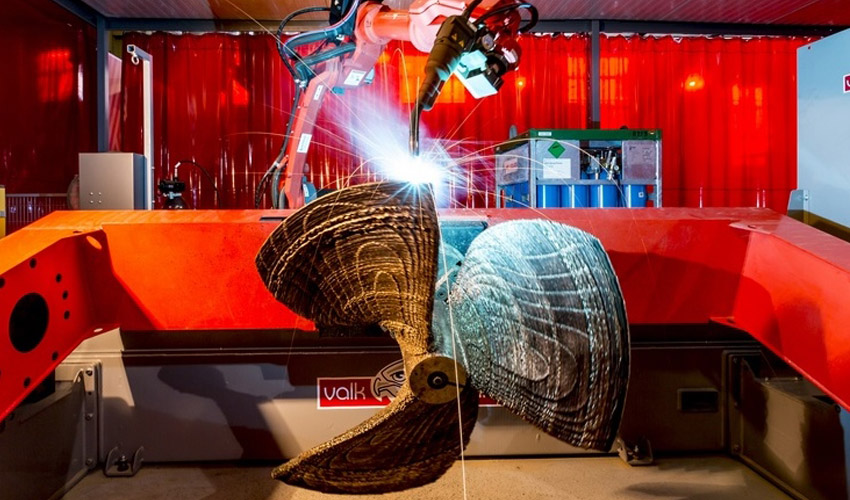 ApplicationsRAMLAB continuous forward in their creation of a 3D printed boat propellerIn the port of Rotterdam, the biggest port in Europe, a 3D printing lab was set up some time ago to test additive manufacturing in the shipbuilding sector: RAMLAB propellers for boats. Last May you may remember that we presented…
 NewsWorld’s first 3D printed community project is officially underwayWe previously told you about New Story and ICON’s mission to create the world’s first 3D printed community as a means to combat homelessness. At the time, the exact location of the project had not been revealed. The project is…
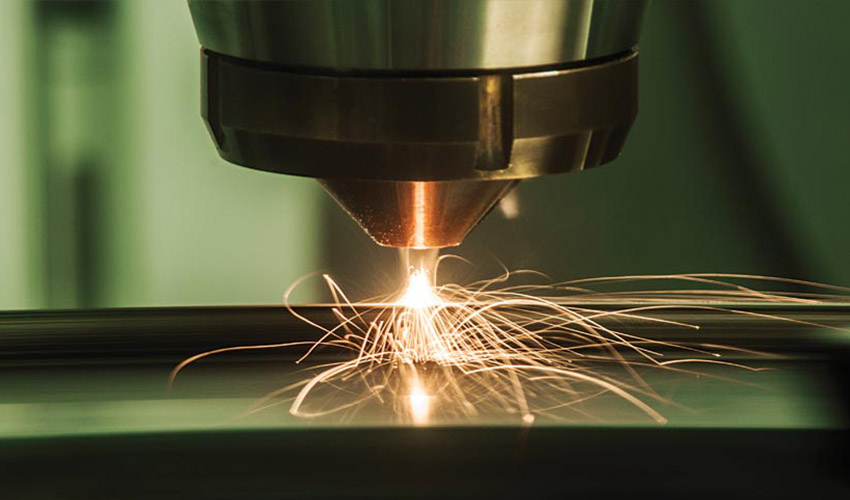 NewsThe Complete Guide to Directed Energy Deposition (DED) in 3D PrintingDirected Energy Deposition (DED) is a more complex 3D printing process, typically used to repair or add additional material to existing components. It is completely possible to fabricate parts from scratch using this technology, but it is often used for…
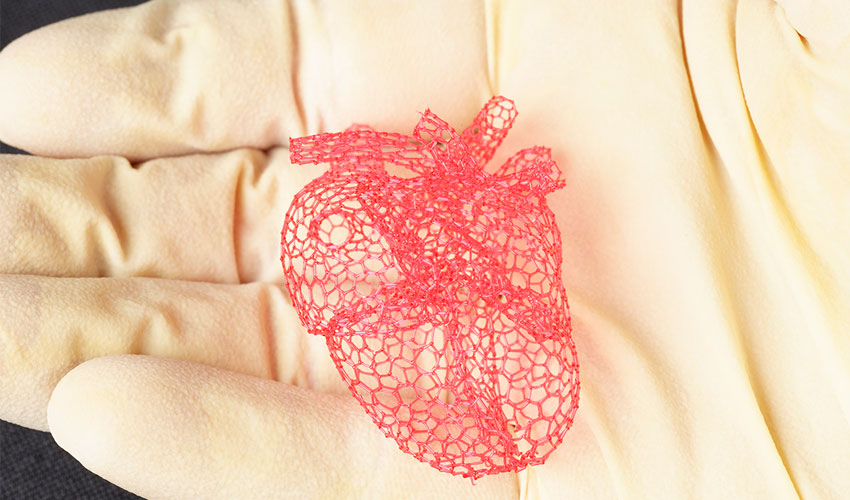 ApplicationsEngineers bio-print structures from sugarIt appears that bioprinting is gaining more ground as engineers at the University of Illinois have reportedly developed a new sugar-based biomaterial that could have a significant impact on medical engineering and cancer research. The team of engineers has opted…
 NewsRestoring a 1919 Harley Davidson with 3D TechnologiesFounded in 2007 by Carl van de Rijzen, Visual First (VF), is a Dutch company specializing in reverse engineering. Undertaking the renovation of a 1919 Harley Davidson, the company found that one of its mechanical parts, in this case the…
 NewsThe #3DStartup of 2018!Throughout 2018 we have had the pleasure of being introduced to 12 original 3D printing startups with whom we discussed products, services and innovations. We wanted to reward the most inventive one by organising a competition: we gave you the…