Applications
Can DLP Be Used in the Creation of Microfluidic Chips?
Medical applications in 3D printing are vast and growing larger by the day. One that is increasingly important, but perhaps less discussed, centers on microfluidics. Microfluidic devices (microfluidic chips) have emerged over the past 30 years and have been rapidly…
- 3 min read
- Applications
- Six more stories
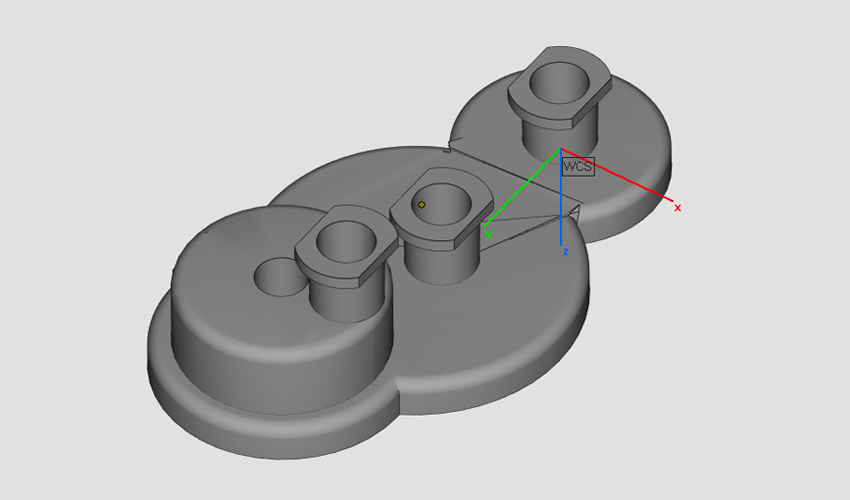
Medical applications in 3D printing are vast and growing larger by the day. One that is increasingly important, but perhaps less discussed, centers on microfluidics. Microfluidic devices (microfluidic chips) have emerged over the past 30 years and have been rapidly integrated into many different biomedical applications including but not limited to cancer research, drug screening, drug delivery and molecular diagnostics. And, additive manufacturing is also being used to produce the important devices, with a recent research paper from the Faculty of Pharmacy at Aristotle University of Thessaloniki, Greece showing how DLP could be used for their fabrication.
As mentioned, microfluidic devices have been gaining in popularity in recent years. But what exactly are these? Well, microfluidics refers to the manipulation of fluids at a microscopic scale. It allows for fast responses, minimal sample consumption and high throughput. Meanwhile, microfluidic devices, namely microfluidic chips, are a set of micro-channels that have been etched or molded into a material. Traditionally, devices in microfluidics are made of glass, silicon and polydimethylsiloxane (PDMS). Yet increasingly they are also being made with AM.
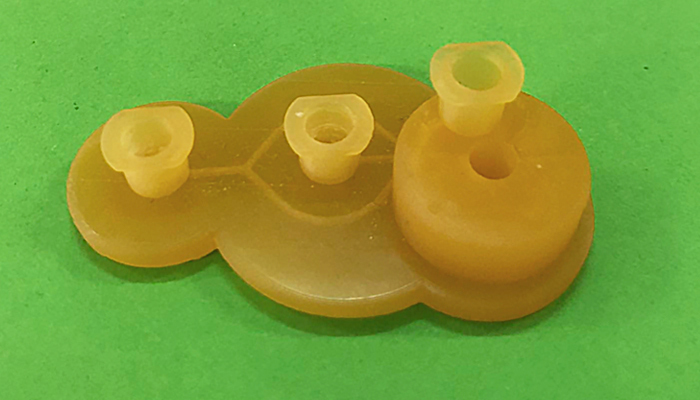
The microfluidic device made by the researchers
Previously, only Stereolithography (SLA) and Two Photo Polymerization (2PP) have been used thanks to their precision and ability to produce parts with small dimensions. But those are no longer the only options. In the study “Fabrication of a microfluidic device using Digital Light Processing (DLP) 3D printing,” Eleftherios Andriotis, Paraskevi Kyriaki Monou and Dimitrios Fatouros have outlined how to fabricate a microfluidic device with Digital Light Processing (DLP). The researchers were able to accomplish this task with the help of Lino3D, a well-known 3D printing lab based in Greece.
More from the desk
Six other notes from the rest of the bench.
 SoftwareImaging Software For the Evaluation of 3D Printed Metal PartsAs 3D printing becomes more widely used, and final parts become more readily available, there is an increasing need to assess the quality of parts designed through additive manufacturing. For that reason, researchers at Nanyang Technological University Singapore (NTU Singapore)&h
 GuidesMighty Buildings, 3D printing houses on the spotBy now we know that additive manufacturing provides a multitude of advantages to the construction industry. More and more actors in the industry are interested in integrating this technology into their activities. We have already seen several projects of 3D…
 NewsUnited States Congress passes Defense bill including provisions for additive manufacturingIn what seems like a whirlwind of news of the latest applications by the U.S. military with 3D printing, such as bringing 3D printers to the front lines or creating a 3D printed Navy submarine hull prototype, this latest news may…
 Materials3D Systems and CollPlant To Co-Develop Bioprinted Solutions for Breast Reconstruction TreatmentsIn 2020, 2.3 million women were diagnosed with breast cancer globally. Breast cancer is the most common cancer across the world, and with breast cancer survival rates at 90%, the medical industry has ramped up efforts to enhance breast reconstruction…
 MaterialsLiquid crystal shape shift material developed by UCSDMaterial scientists from the University of California San Diego have developed liquid crystal material that can shift its form. Researchers demonstrated that by controlling the printing temperature of liquid crystal elastomer, or LCE, it is possible to control the material’s degr
 NewsInfographic: 3D Printing in MusicMusical instrument manufacturing has been synonymous with time, money and prestige. Stradivarius violins, for instance, are still considered the best in the world for their excellent construction. Although more affordable manufacturing methods have been available for some time, a