Guides
8 Reasons to Use a Robotic Arm for 3D Printing
Robotic arms—motorized, programmable and designed for precision—have long been a staple of industrial automation. With joints and articulations mimicking a human arm, they enhance efficiency in manufacturing by streamlining repetitive tasks. Sound familiar? These advantages paral
- 3 min read
- Guides
- Six more stories
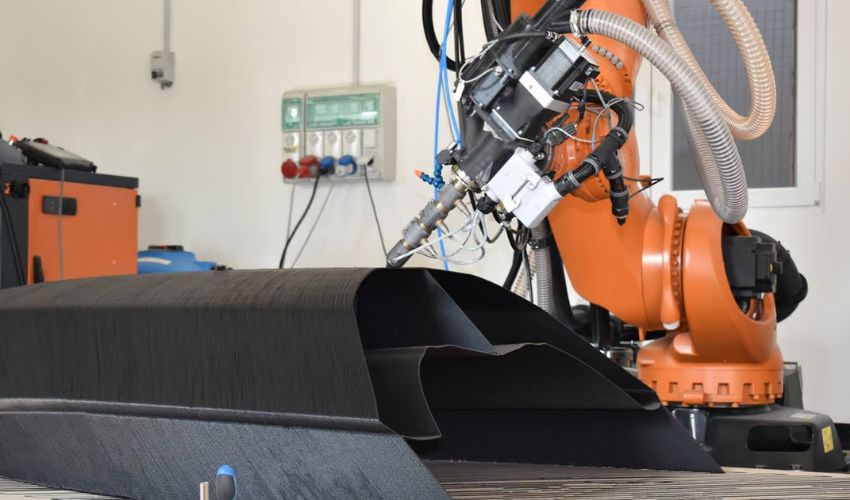
Robotic arms—motorized, programmable and designed for precision—have long been a staple of industrial automation. With joints and articulations mimicking a human arm, they enhance efficiency in manufacturing by streamlining repetitive tasks. Sound familiar? These advantages parallel those of additive manufacturing. So why not combine the two?
Integrating 3D printers with robotic arms introduces new opportunities, offering greater flexibility, adaptability and workflow optimization. In this article, we explore eight reasons to adopt robotic arm 3D printing. Note that while non-3D printing robotic arms can be used within an automated additive manufacturing process, in this article, we will focus primarily on robotic arms that directly perform 3D printing. There are many robotic arm 3D printing solutions on the market, so familiarize yourself with their benefits here!
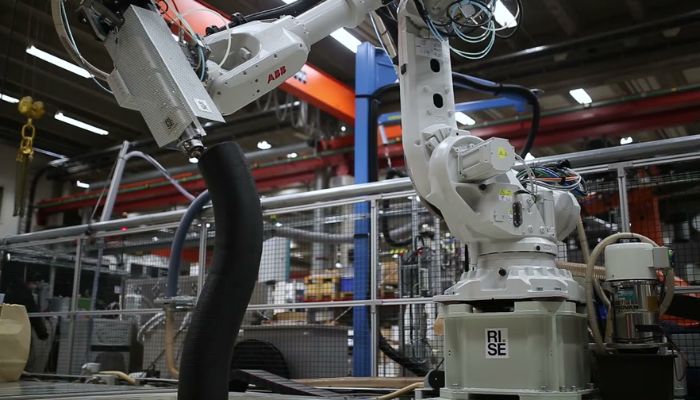
A robotic nonplanar 3D printer creating a curved pipe (Photo Credit: Emil Johansson)
1. Increased Flexibility and Multiplanar Toolpaths
Most 3D printers operate on the cartesian plane, a two-dimensional plane that is defined by the perpendicular x and y axes. Some robotic arms also are limited to a cartesian plane—but not all of them. Many robotic arm 3D printers can follow multiplanar toolpaths, printing not just on one flat plane, but in multiple directions. By not being restricted by traditional layer-by-layer, horizontal 3D printing, users are allowed greater design freedom.
More from the desk
Six other notes from the rest of the bench.
 PrintersDisco Ultimate; the new generation of 3D printers from DagomaFrench manufacturer Dagoma revealed its new generation of FDM 3D printers, the Disco Ultimate. 4 years after the creation of the Discovery200 which later evolved into DiscoEasy200, the company presents a new kit that should attract the attention of more than one. The…
 GuidesInside Craitor: The Company Behind FieldFab, a 3D Printer for Extreme EnvironmentsLast October, U.S. troops demonstrated just how far additive manufacturing has come by successfully 3D printing drone parts inside a UH-60 Black Hawk helicopter mid-flight. As the aircraft carried out tactical maneuvers, the printer continued to operate, producing functional comp
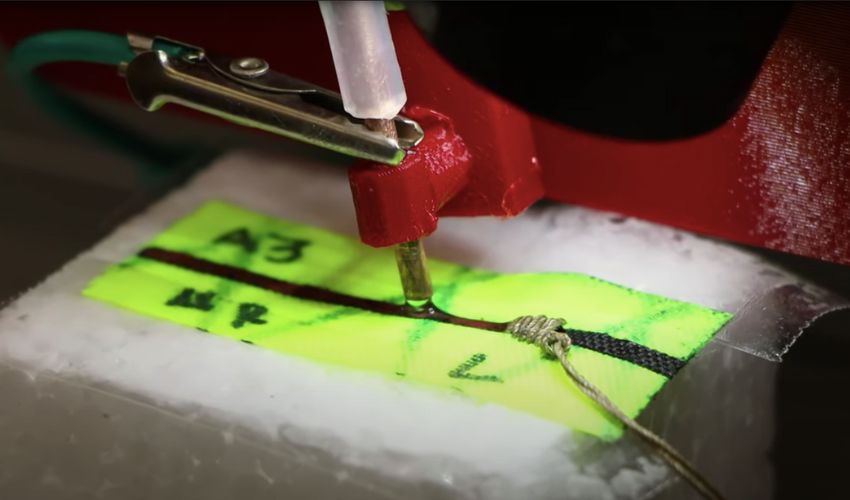 NewsUniversity Researchers Create New Method to Print Copper on Fabric for Wearable ElectronicsRecently, researchers from the Department of Electrical Engineering at the University of South Florida (USF) received a patent and official grant of $369,574 from the National Science Foundation (NSF). This will be used for the development of a method to…
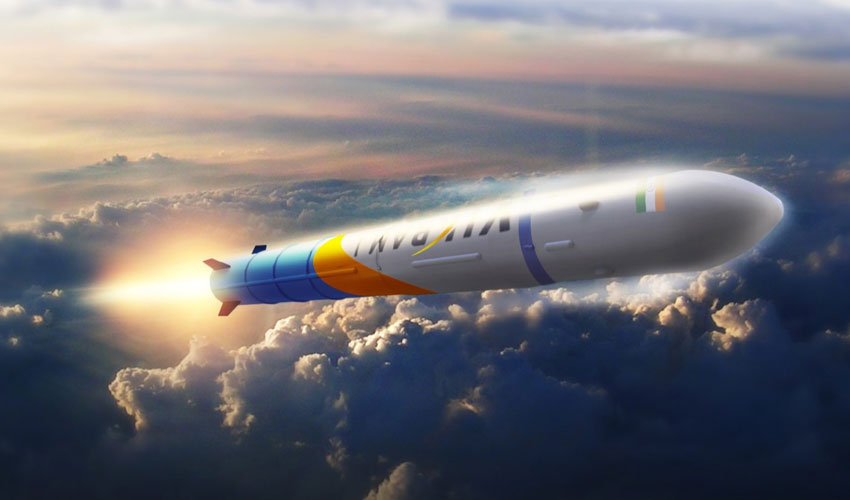 NewsFully 3D printed rocket engine unveiled by Skyroot AerospaceThe Indian startup Skyroot Aerospace has just unveiled its first fully 3D printed rocket engine. Named Dhawan-I after the famous engineer Dr. Satish Dhawan, it is a cryogenic engine – it uses gases kept in a liquid state at low…
 GuidesTop 10 of the best TEDxTalks on 3D printingA great way to present innovative ideas in technology, entertainment or design is the TED Talks conferences, a popular series that brings together experts to discuss the latest topics from different industries and fields. Since 2009, many of the talks…
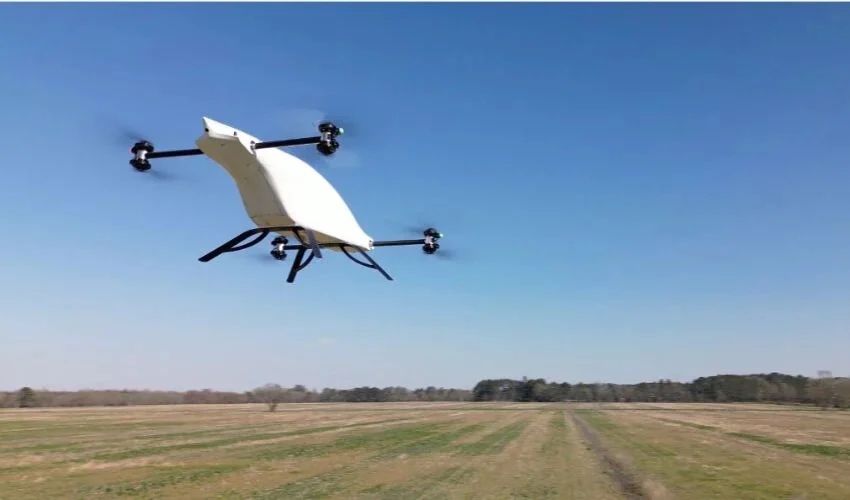 ApplicationsBlueflite Has Developed a 3D-Printed Hydrogen Storage System for UAVsIn the years to come, drones could play a decisive role in many areas, ensuring the rapid and safe transport of goods. Isolated rural areas in particular stand to benefit, as drones can quickly supply them with medicines or emergency…