News
The I-Seed: a 4D Printed Robot Capable of Analyzing Air and Soil Quality
In the Italian Institute of Technology (ITT), there is a bio-inspired robotics laboratory whose mission is to design and develop new innovative solutions, while drawing inspiration from nature. In 2021, they launched the I-Seed, a project to develop a new generation…
- 3 min read
- News
- Six more stories
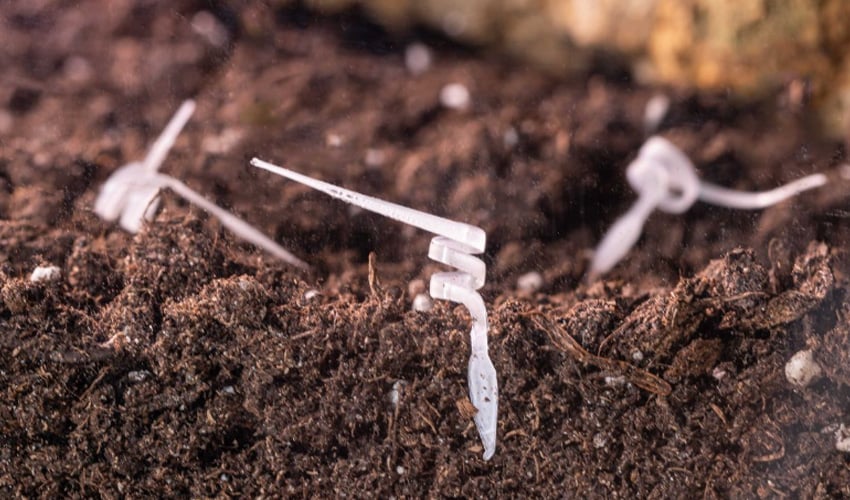
In the Italian Institute of Technology (ITT), there is a bio-inspired robotics laboratory whose mission is to design and develop new innovative solutions, while drawing inspiration from nature. In 2021, they launched the I-Seed, a project to develop a new generation of flexible, autonomous and biodegradable miniaturized robots using 4D printing. These robots are inspired by plant seeds. By merging scientific research and technological design, the laboratory aims to analyze and monitor air and topsoil environments, the part of the soil where plants find the nutrients necessary for their survival.
The creation of these biodegradable robots is in collaboration with the University of Trento, Italy. According to the researchers in charge of the project, the robot-seed is able to determine the temperature and humidity of the soil and air. It would also be able to see the presence of pollutants such as mercury, or the levels of CO2 in the atmosphere. The first I-Seed is inspired by the hygromorphic structure of a South African geranium, the pelargonium appendiculatum.
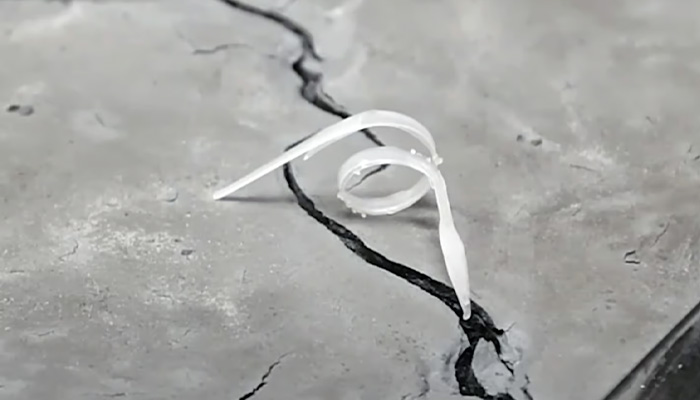
The robot seed changes its morphology according to the humidity (photo credits: Italian Institute of Technology)
An Autonomous and Biodegradable Seed Robot
This plant operates in a precise manner. When the environmental conditions are right, its seeds break off. Their hygroscopic properties, that is to say the absorption of moisture, allow them to change shape and move to explore and penetrate the ground. This helps to promote the germination of the plant. In order to design the seed robot, the researchers carried out a morphometric, histological and biomechanical investigation of the pelargonium appendiculatum to predict its behaviors. Next, the researchers leveraged the biomechanical specifications to model and fabricate the seed-like robot. As previously explained, the researchers claim to have made the robot using 4D printing.
More from the desk
Six other notes from the rest of the bench.
 News3D Printed Pavilion in Mexico Combines Craftsmanship and SustainabilityMEXTRÓPOLI is the largest Architecture and City Festival in the Americas, based in Mexico City. More than 80,000 people gathered at the 2022 edition to generate knowledge, exchange and a new vision of the city through architecture. One of the…
 PrintersBigRep Ships its 500th Large-Format 3D PrinterThe leading large-format 3D printer manufacturer, BigRep, celebrated the delivery of its 500th industrial machine last week. The company was founded in 2014, and is well known in the additive manufacturing industry for having developed some of the world’s largest…
 NewsWelsh student 3D prints coral structure to help save endangered coral reefsCoral reef conservation has been a big topic among ocean conservationists, as the endangered reefs could mean an end one of the most diverse ecosystems found on earth. It is for this reason that Jessica Gregory, a product design graduate…
 NewsHow is the 3D printing community responding to COVID-19?During the last few days, a wide range of initiatives have emerged across the world to face the current health crisis. It’s no secret that global stocks are running low for essential products such as masks or ventilators. Hospitals are…
 MaterialsMarble 3D printing filament is ideal for making sculpturesThe use of polymers in additive manufacturing has grown tremendously in the past decade. Today, there is a wide range of thermoplastics available on the market – each appealing to different types of users of 3D printing. The 3D printing…
 GuidesThe 10 Food 3D Printers You Should KnowCould food 3D printing have a place in your kitchen? Increasingly, yes: the technology is now being used in fine dining, personalized nutrition and alternative proteins, among other fields. In all of these applications, food 3D printers work the same…