News
3D Printed Pavilion in Mexico Combines Craftsmanship and Sustainability
MEXTRÓPOLI is the largest Architecture and City Festival in the Americas, based in Mexico City. More than 80,000 people gathered at the 2022 edition to generate knowledge, exchange and a new vision of the city through architecture. One of the…
- 3 min read
- News
- Six more stories
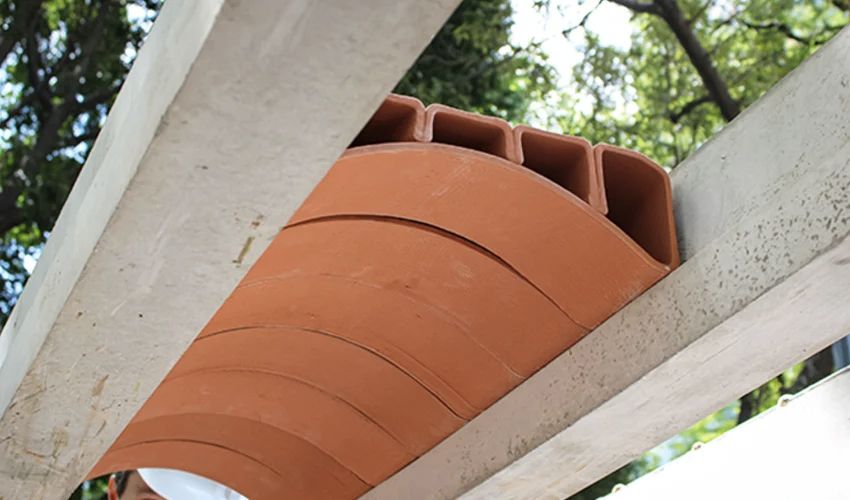
MEXTRÓPOLI is the largest Architecture and City Festival in the Americas, based in Mexico City. More than 80,000 people gathered at the 2022 edition to generate knowledge, exchange and a new vision of the city through architecture. One of the projects presented at the event is particularly exciting: it has resorted to additive manufacturing as a production method. Created in Mexico, this 3D printed pavilion was born with the aim of combining 3 ideas: new technologies, craftsmanship and recycling. The project was carried out thanks to the collaboration between an engineering team from Digital Structures MIT, the international organization New Story dedicated to ending homelessness in the world, and Échale, a Mexican social enterprise that offers housing solutions through the integral development of communities.
This and many other projects are highlighting the growth of additive manufacturing. Specifically, the use of the technology in architecture is booming thanks to the benefits it offers, and numerous examples include a 3D printed metal bridge now in use in Amsterdam. Let us now look at the characteristics of this project and the combination with other key aspects today.
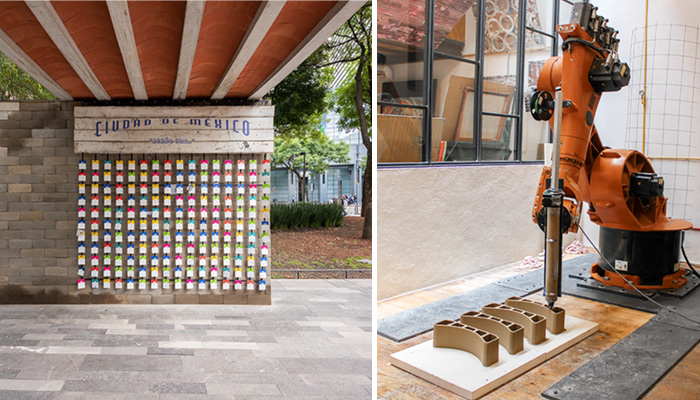
Credits: Dinorah Schulte / Arturo Arrieta
The Pavilion 3D Printing Process
Called “Dreams with Fiber/Timber, Earth/Concrete,”” the pavilion consists of a 3D printed structure that recognizes Mexico City’s rich history. According to those in charge of the project, “the design imagines new possibilities through a critical adaptation of traditional paper craftsmanship, the creative reuse of recycled wood, and the innovative use of earth and concrete.” The use of additive manufacturing in this architectural project aims to explore the future of affordable housing in the country. It also seeks to minimize the environmental impact of traditional construction methods.
More from the desk
Six other notes from the rest of the bench.
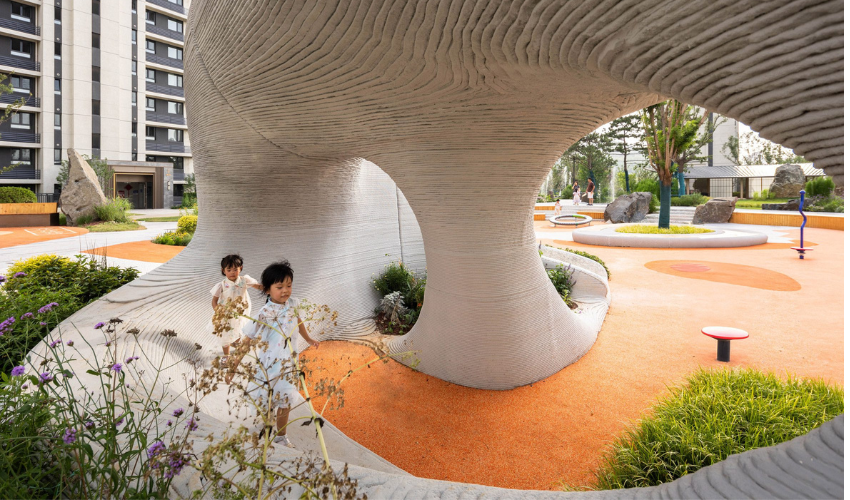 NewsBoulder Park in China Features 3D Printed Concrete PlayscapeXISUI Design, a creative studio from Shanghai, just introduced a new public project that showcases how 3D printing can reshape public spaces with the opening of Boulder Park in Jinan, Shandong province. The new playscape relies on three large 3D…
 NewsUniversity of Idaho Awarded $4M to Develop 3D Printing Building Method Using Wood WasteAn interdisciplinary research team from the University of Idaho (U of I) was given $4M USD to develop technology that will turn Idahoan wood waste into a more sustainable building construction material. Ultimately the goal is to use the material…
 Guides#3DStartup: PERFI’s Volumetric 3D Printing Platform for Personalized Medical DevicesPersonalization is one of 3D printing’s biggest promises, yet in medical applications it’s still slowed down by long lead times and heavy post-processing. PERFI Technologies is flipping that script. Instead of building parts layer by layer, the startup uses volumetric…
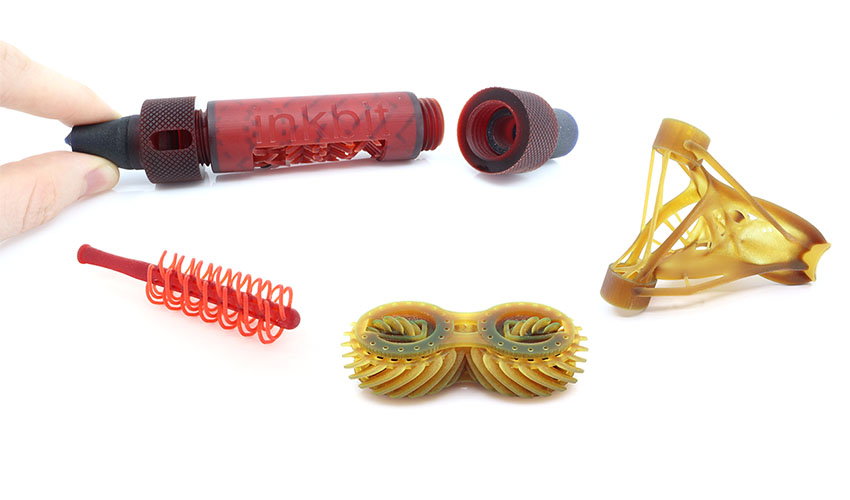 PrintersInkbit raises $12 Million to industrialize its AM systemAs we’ve told you before, the startup straight out of MIT, Inkbit, is working towards overcoming traditional 3D printing constraints by giving its machines ‘eyes’ and a ‘brain’. Recently, the company managed to close a $12M equity financing round. The…
 NewsASTM International Stakes Claim on the Wohlers Report in Recent AcquisitionIn the midst of the excitement leading up to the Standards Forum at Formnext 2021, ASTM International announced the acquisition of Wohlers Associates. In its 35 years as a global industry leader in additive manufacturing, Wohlers Associates was able to…
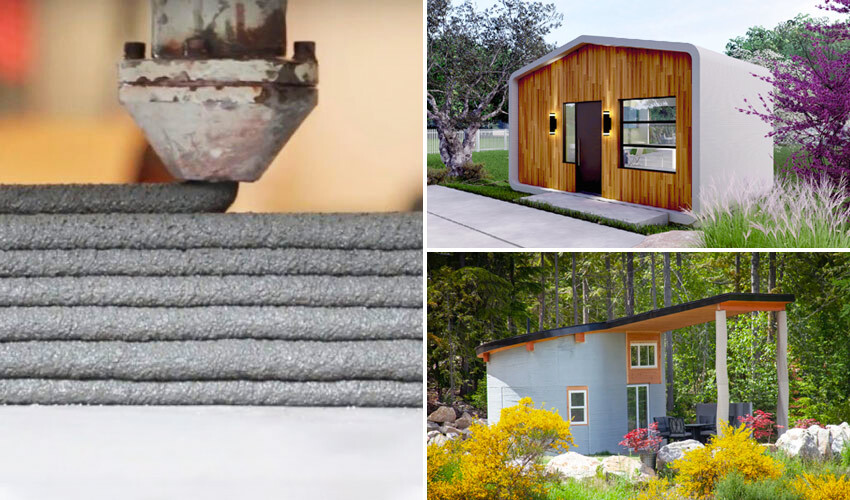 Guides3D Printed Houses: A Closer Look at Completed Projects from Around the WorldAs you may know, additive manufacturing is becoming increasingly important in the construction market. The new technologies make it possible to create more complex shapes, build walls faster, and reduce labor costs. Many construction companies have already started to 3D…