News
#3DStartup: Inkbit, 3D printer powered by machine-vision and AI
A startup straight out of MIT, Inkbit, is working towards overcoming traditional constraints to 3D printing by giving its machines ‘eyes’ and a ‘brain’. The industrial 3D printer developed by Inkbit is a multi-material machine capable of printing extremely flexible…
- 3 min read
- News
- Six more stories
A startup straight out of MIT, Inkbit, is working towards overcoming traditional constraints to 3D printing by giving its machines ‘eyes’ and a ‘brain’. The industrial 3D printer developed by Inkbit is a multi-material machine capable of printing extremely flexible materials with great accuracy. It uses machine learning and artificial intelligence to address challenges in additive manufacturing, especially when using rubber-like materials such as silicone, or high-temperature materials such as epoxy. The system scans each layer that is being printed and corrects errors in real time, while at the same time it uses this information to predict the warping behavior of materials. We met with Davide Marini, co-founder and CEO of Inkbit to learn more about the startup’s technology and activities.
3DN: Can you introduce yourself and tell us how the startup Inkbit came about?
My name is Davide Marini and I am the co-founder and CEO of Inkbit. I am originally from Italy and came to the United States to pursue my PhD in mechanical engineering. I discovered my vocation for entrepreneurship after working for several years as a scientist at Children’s Hospital Boston, after which I cofounded a company called Firefly BioWorks in the area of life sciences. Interestingly, Firefly’s technology relied on shining UV light through a mask to polymerize monomers in a microfluidic channel in order to obtain individually encoded and bio-functional microparticles. It was essentially micro-scale 3D printing, even though at the time I didn’t think of it in this way.

Davide Marini, co-founder and CEO of Inkbit
After Firefly was acquired, I was looking at a number of exciting technologies being developed in various academic labs, in search for my next adventure. I met the inventors of Inkbit’s technology at an event organized by the MIT Desphande Center for Technological Innovation, where they were exhibiting their prototype printer. The team was based at the MIT Computer Science and Artificial Intelligence Lab (CSAIL) and was led by Prof. Wojciech Matusik, a pioneer in the emerging field of computational fabrication. I knew very little about 3D printing then, but what struck me immediately in Javier Ramos’ description of the technology was the elegance of the idea. It seemed natural to me that a 3D printer should be able to react and self-correct in real-time while printing. The business card I handed to Javier carried a quote he recognized from a sixteenth century nun, which I took as a sign that I was looking in the right direction.
More from the desk
Six other notes from the rest of the bench.
 NewsICON Raised $207 million in Series B Round Led by Norwest Venture PartnersTexas-based startup ICON took the 3D printing industry by storm in March 2018 at SXSW in Austin, presenting the first permitted 3D-printed home in the United States, which took about 48 hours to print—a fraction of the traditional construction time.…
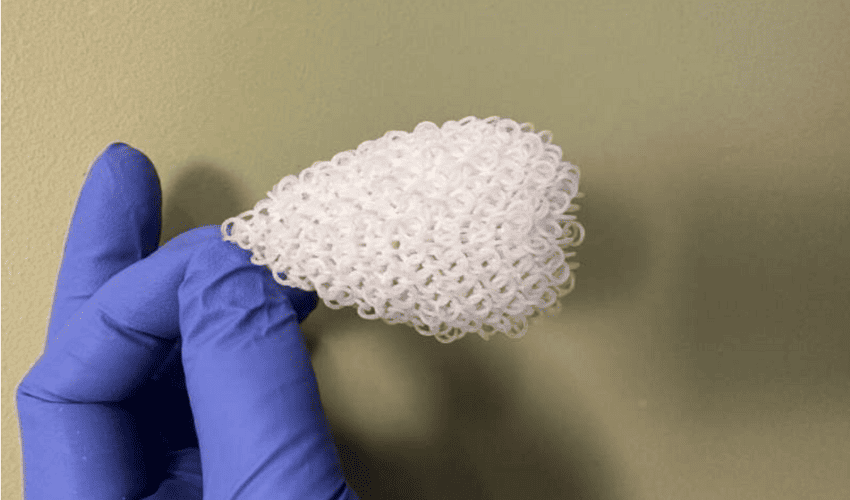 MaterialsResearchers Create Polycatenated Architected Materials (PAMs) for 3D PrintingRecent advances in materials science have led to new solutions in architecture and design. In a recent example, a team of researchers in California has developed polycatenated architectural materials (PAMs), which are capable of interweaving to form unique 3D structures.…
 Printers3Dnatives report: The most popular 3D printersThe 3Dnatives Comparator lists hundreds of 3D printers that range from Desktop and RepRap/kit printers to professional and industrial ones. Our Comparator includes a range of models that are based on various processes such as filament filtration and powder sintering,…
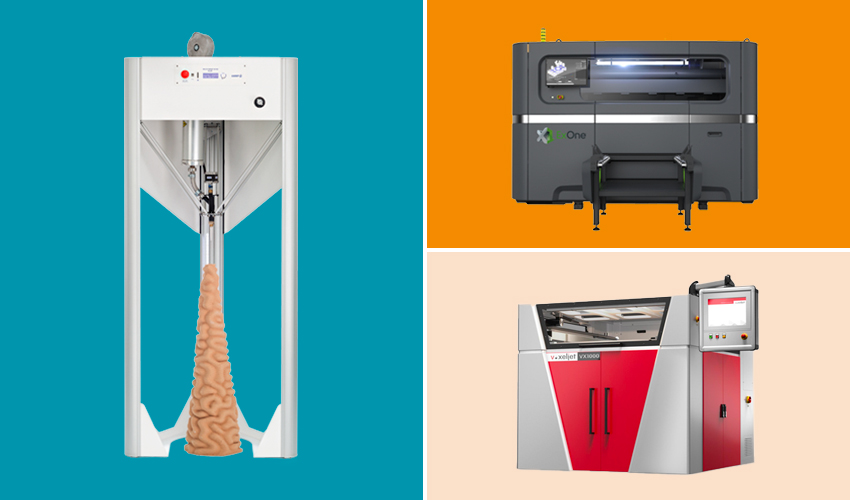 PrintersThe Top Ceramic 3D Printers on the MarketAt the end of 2021, the research firm IDTechEx published a report that estimated that the ceramic additive manufacturing market would be worth $400 million by 2032, seven times more than the forecast for 2022. This is proof that this…
 ApplicationsComposite 3D Printing Unlocks Applications in Aerospace and Robotics in ChinaThough much focus has been put on 3D printing with polymers and metals in recent years, there is one material family that has shown immense growth in the additive manufacturing sphere: composites. As strong as metal and as light as…
 PrintersVerne Unveils More Affordable PEKK SLS 3D PrinterIt is no secret that there are very few SLS 3D printers that are compatible with high-performance polymers. In particular, SLS-PEKK 3D printing has found it difficult to establish itself on the market, as the acquisition costs are higher than…