News
3D Technologies Could Help Save Endangered Freshwater Mussels
One of the greatest challenges facing biologists is preserving the world’s delicate biodiversity by saving endangered animals. We have all heard of the most famous examples like black rhinos, mountain gorillas, African forest elephants, orangutans and of course hawksbill se
- 3 min read
- News
- Six more stories
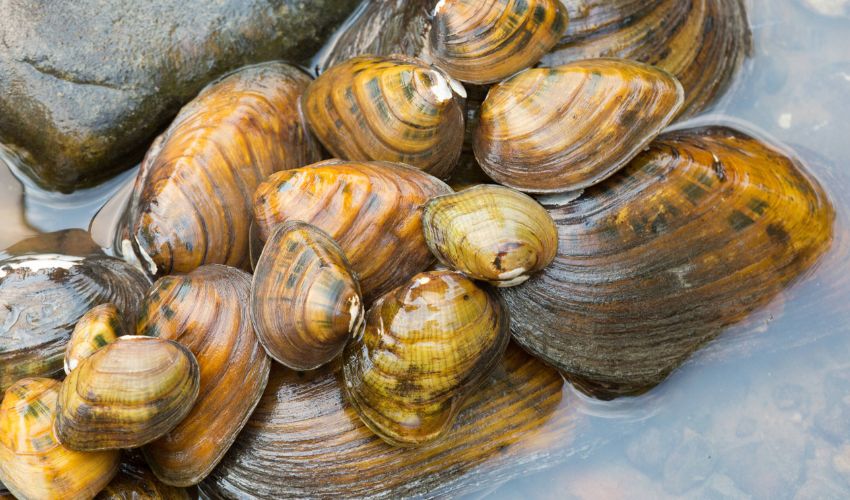
One of the greatest challenges facing biologists is preserving the world’s delicate biodiversity by saving endangered animals. We have all heard of the most famous examples like black rhinos, mountain gorillas, African forest elephants, orangutans and of course hawksbill sea turtles, but with more than 41,000 species assessed to be under threat of extinction by the International Union for Conservation of Nature (IUCN), there are many more on the list. This includes in our very own backyard, with over 1000 endangered or threatened in the USA alone. Now in order to save one group, scientists and imaging specialists from Florida Museum of Natural History and the Smithsonian Institution’s National Museum of Natural History have teamed up to use 3D technologies to help protect freshwater mussels.
Freshwater mussels are actually one of the world’s most endangered species. John Pfeiffer, curator of bivalves (a group of marine and freshwater molluscs) at the Smithsonian Institution, explains that though the U.S. is an important hot spot for freshwater mussel biodiversity, “Many of the country’s freshwater mussels are at risk of extinction. Roughly one out of every three species are protected under the Endangered Species Act, and another 30 species are thought to have recently gone extinct.” Considering that mussels are essential to the health of streams and rivers thanks to their filtration abilities, removing algae, excess nutrients and heavy metals from their surroundings, and ability to stabilize streambeds with dense colonies, their extinction could be catastrophic for their biomes. Hence this latest effort.
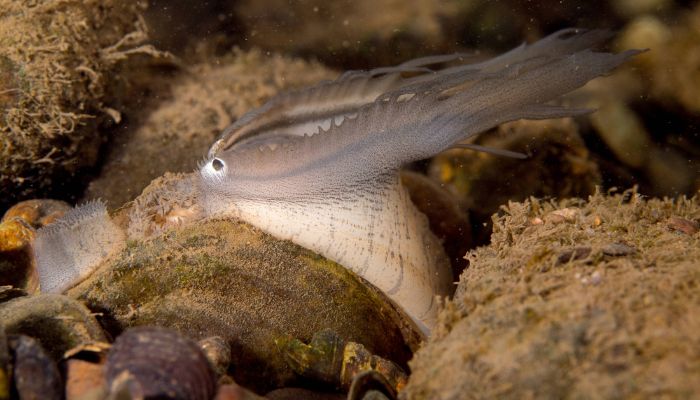
Freshwater mussels, such as these pictured here, use fish to help transport them upstream (photo credits: Ryan Hagerty, U.S. Fish And Wildlife Service, CC0)
How Can 3D Technologies Help Save Freshwater Mussels?
In essence, the use of 3D technologies to help save the freshwater mussels will be two-fold. The first, is centered on education. A key part of protecting any species is of course bringing their awareness to the general public as well as directly into the hands of biologists who are attempting to protect them. As such, the National Conservation Training center is planning on creating 3D prints of the shell to enhance the Freshwater Mussel Identification course, offered to conservation professionals across the country, as well as regular citizens. This is critically important since as mussel populations decline, it seems to be increasing hard to find reference specimens for critical research.
More from the desk
Six other notes from the rest of the bench.
 NewsTitanium, its alloys and 3D printing with Ti6Al4VTitanium and its alloys, particularly Ti6Al4V, are of great importance in 3D printing. Titanium is a metal found in nature as an oxide, specifically rutile (TiO2) or ilmenite (FeTiO3). The extraction of pure titanium is carried out using the Kroll…
 News3D Daily Show #1: New Additive Manufacturing Solutions for a Digital IndustryFormnext 2022 opened its doors yesterday morning and the 3Dnatives teams is there on scene, going behind the scenes of the event and allowing you to follow all the news of this world event direct from your home! Every morning,…
 SoftwareGrabCAD: The Collaboration Software for 3D Printing and CADGrabCAD is one of the most popular platforms when it comes to finding and downloading a CAD file: with more than 7 million users, it allows engineers, industrial designers and professionals to share their creations and discuss the challenges of…
 ApplicationsNew European Collaboration Brings a 3D Printed Twist to Vehicle Safety DesignResearchers from both Scotland and Italy have announced a new type of 3D printed metamaterial that has the ability to transform the way vehicles absorb impact. The design has a unique twisting lattice structure and can adapt its response to…
 PrintersMIT Researchers Unveil 3D Printer That Can Identify Unknown MaterialsIn response to the relentless quest for environmentally-friendly production processes, several research initiatives have sought to improve existing 3D printing materials or develop new ones, but printing these can still be a challenge. To resolve this obstacle, researchers from M
 Software3DEXPERIENCE World 2025: What Impact Will AI and Robotics Have on Humanity?3DEXPERIENCE World 2025, the event organized by Dassault Systèmes that brings together thousands of professionals, designers, engineers, makers and creatives each year, has ended. This year it was held in Houston, Texas, February 23-26. 3DEXPERIENCE World is an opportunity to&hel