News
Titanium, its alloys and 3D printing with Ti6Al4V
Titanium and its alloys, particularly Ti6Al4V, are of great importance in 3D printing. Titanium is a metal found in nature as an oxide, specifically rutile (TiO2) or ilmenite (FeTiO3). The extraction of pure titanium is carried out using the Kroll…
- 3 min read
- News
- Six more stories
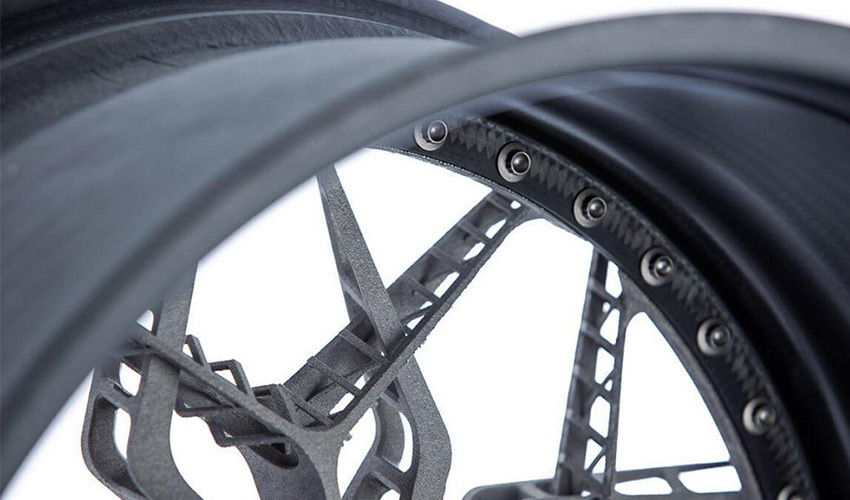
Titanium and its alloys, particularly Ti6Al4V, are of great importance in 3D printing. Titanium is a metal found in nature as an oxide, specifically rutile (TiO2) or ilmenite (FeTiO3). The extraction of pure titanium is carried out using the Kroll Method. In its basic and simplified form this consists of obtaining titanium tetrachloride (TiCl4) by chlorination at 1000ºC in the presence of carbon oxide, which is subsequently reduced with magnesium or ground sodium in an inert atmosphere at a temperature of between 800-850ºC, obtaining pure titanium. The high reactivity of titanium makes it difficult to obtain it as pure metal, so a sample with 99.9% purity is commercially classified as pure titanium. Because of this, the material is generally used in combination with other elements to form an alloy.
The main properties of titanium are its high mechanical strength, low density and excellent corrosion resistance. This makes titanium and its alloys attractive materials for several sectors including aeronautics, aerospace, and medicine among others. The only significant disadvantage of titanium is its high price. Additionally, due to the properties of its alloys, the materials have vast potential for the manufacture of parts and elements by additive manufacturing.
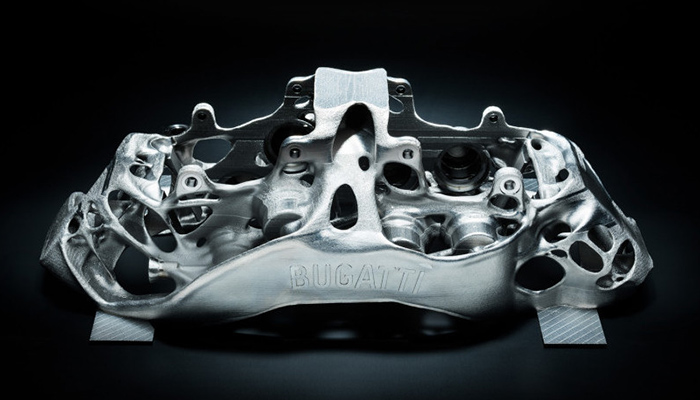
Bugatti additively manufactured a titanium brake. | Credits: Bugatti
Classification and types of titanium alloys
Titanium alloys are divided into three groups: α, α + β and β, depending on the phase or phases present in the microstructure of the alloy. At this point, many of you may be wondering what a microstructure and phase is. The microstructure is the structure of a material that is visible under an optical or electron microscope. It provides information about the size, shape and orientation of the individual crystals or grains that make up a material. The microstructure also largely defines the properties of the material. In contrast, a phase is a region of the material with homogeneous physical and chemical properties. As such, it differs in its microstructure and/or composition from another region. Both characteristics of the material depend on the rate at which it cools from a liquid to solid state as well as the heat treatment applied.
More from the desk
Six other notes from the rest of the bench.
 NewsThe Glass Helmet, a 3D printed helmet to see American football players“They will be seen“, this is the new promise of the Glass Helmet Project, a transparent 3D printed American football helmet for all professional athletes. The project, born from a collaboration between designer Victor Salomon and Uninterrupted, co-founded by star&hell
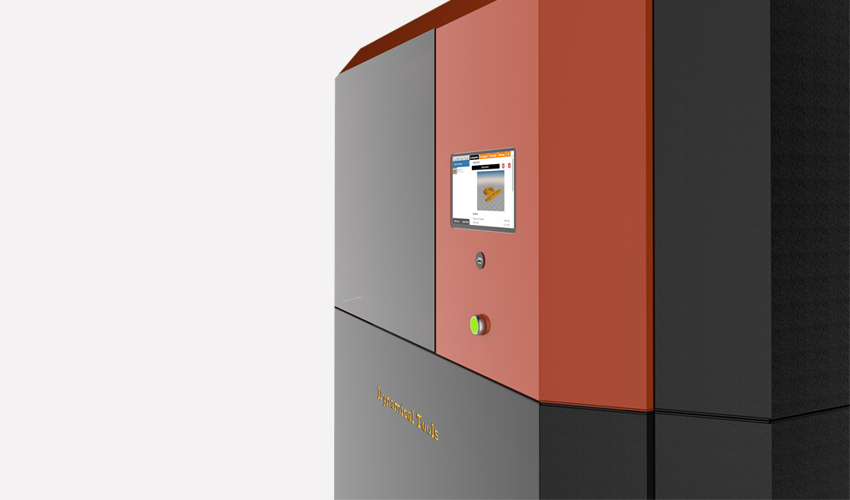 PrintersSLS: The New 3D Printer from Dynamical ToolsDynamical Tools are a Spanish 3D printer manufacturer based in Zaragoza. They are rapidly expanding and have recently moved into a new, larger headquarters. Their CEO, Pablo Murillo, says “We do not want to stop growing and we work hard…
 News#TALK3D: An Interview with Kristin Mulherin, President of Women in 3D PrintingAccording to “The State of Women in 3D Printing” report, published by Sculpteo in 2020, the majority of women in the additive manufacturing sector are active in sales, marketing and R&D departments. In addition, there was a notable gap between…
 News3D printing helps meerkats imitate wild behaviorIn the United States, the Cincinnati Botanical Garden and Zoo has partnered with GE Additive to use 3D printing on a project that could help certain animal species mimic wild behavior. Metal additive fabrication has played a key role in…
 NewsEvolve Additive Solutions to Showcase New STEP Technology Capabilities and New CEO at RAPID + TCTFollowing the recent introduction of STEP Parts Now, an on-demand additive parts service, Evolve Additive Solutions will be highlighting the robust production capabilities of STEP technology at RAPID + TCT 2024, in collaboration with key partner and largest customer, Fathom&helli
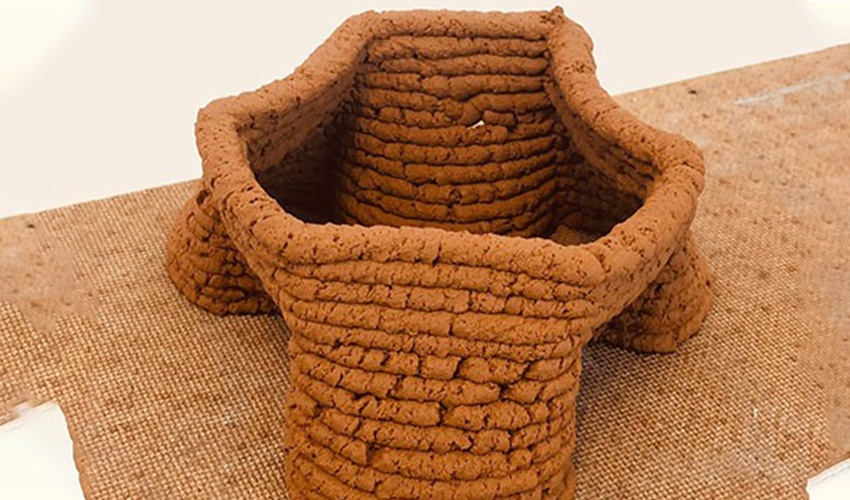 News3D printing sustainable structures using local soilThe construction industry is currently facing two major challenges: the demand for sustainable infrastructure and the need to repair deteriorating buildings, bridges and roads. While concrete is the material of choice for many construction projects, it has a large carbon…