Printers
MIT Researchers Unveil 3D Printer That Can Identify Unknown Materials
In response to the relentless quest for environmentally-friendly production processes, several research initiatives have sought to improve existing 3D printing materials or develop new ones, but printing these can still be a challenge. To resolve this obstacle, researchers from M
- 3 min read
- Printers
- Six more stories
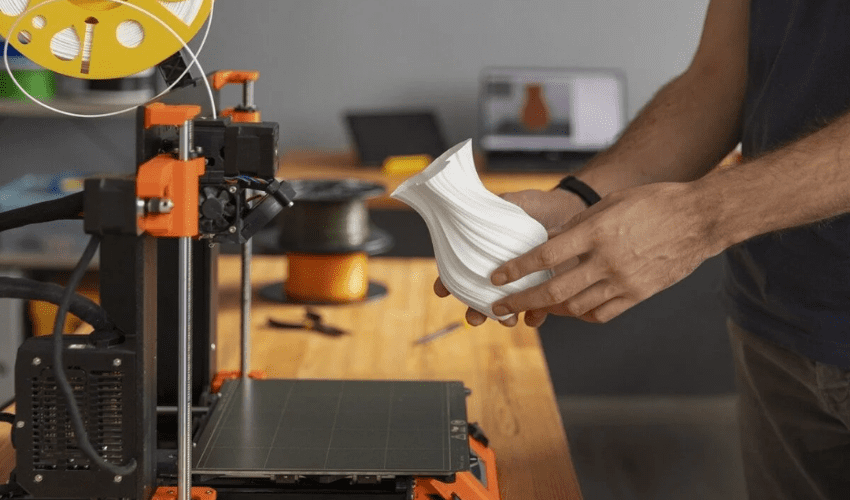
In response to the relentless quest for environmentally-friendly production processes, several research initiatives have sought to improve existing 3D printing materials or develop new ones, but printing these can still be a challenge. To resolve this obstacle, researchers from MIT’s Center for Bits and Atoms (CBA), the US National Institute of Standards and Technology (NIST) and Greece’s National Center for Scientific Research (Demokritos) have collaborated to develop a special 3D printer that is capable of autonomously defining printing parameters for unknown materials. This breakthrough is crucial, as it facilitates the use of renewable and recyclable materials, whose properties are diverse and difficult to characterize. By enabling a more efficient and adaptive use of materials, this 3D printer paves the way for more sustainable additive manufacturing.
Although 3D printing is becoming increasingly popular as a more environmentally-friendly process, manufacturers often find it difficult to recycle the plastics used. The introduction of new, sustainable materials is also a challenge, as print parameters have to be adjusted individually for each material – a complex process that is often carried out manually. Indeed, when printing with a new material, up to 100 parameters have to be set manually in the 3D printer software to ensure correct extrusion of the material.
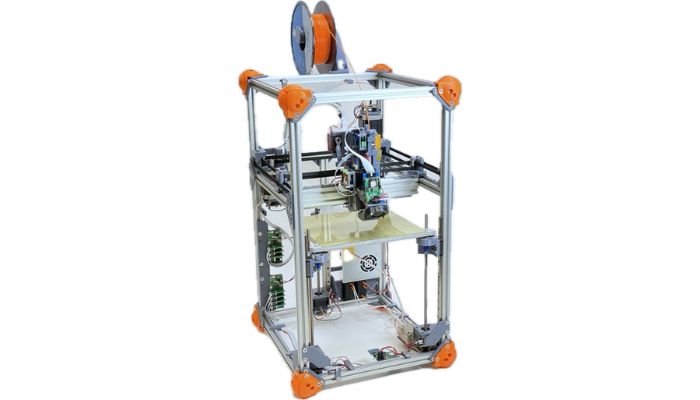
Photo Credits: MIT
And although established parameters already exist for standardized materials, these have been determined after long series of tests. Furthermore, the main challenge with renewable and recyclable materials lies in their variability, making it virtually impossible to standardize parameters. As a result, users are forced to configure parameters for each material individually. This of course makes it difficult to make material choices that are more eco-friendly.
More from the desk
Six other notes from the rest of the bench.
 MaterialsExtrudr, the New Manufacturer of 100% Biodegradable FilamentsCreated in 2014 by Johannes Früh, Extrudr is a new player in the field of filament manufacturers for 3D printers. Despite its young age, the Austrian company already offers an extensive range of materials including PLA, TPU, PETG as well as…
 Guides3DBGPRINT gives access to 3D printing technologies in Europe3DBGPRINT was founded by Yordan Angelov, who, after spending his early career in marketing and sales in big software companies in Bulgaria decided to found a consultancy business in additive manufacturing. Therefore, 3DBGPRINT was founded in 2013 to inform, educate…
 NewsMattel Is 3D Printing the Toys of TomorrowWhen it comes to producing toys, additive manufacturing is a helpful tool that has been used across various industries. Companies such as LEGO have already used AM for applications such as the creation of new parts and the elimination of…
 NewsBroken shoe? This new 3D printing material repairs itselfResearchers at the University of Southern California, Viterbi School of Engineering, have developed a 3D printing material that repairs itself on its own after being fractured or punctured. These materials could be game-changing for many industries such as the shoe,…
 MaterialsReciflex, the new TPU filament made out of 100% recycled materialWe have all heard it before, the classic mantra of “Reduce, reuse, recycle.” Well, Spanish company Recreus has put the concept into action with their newly introduced Reciflex, a TPU filament for 3D printing that is made 100% out of…
 Software#3DStartup: Could nureo’s Automated Engineering Software Eliminate Manual CAD?The promise of additive manufacturing has always been design freedom, yet engineers frequently face complex, manual design processes to turn a concept into a manufacturable part. The Zurich-based software startup nureo is changing this by bridging the gap between advanced…