Applications
New European Collaboration Brings a 3D Printed Twist to Vehicle Safety Design
Researchers from both Scotland and Italy have announced a new type of 3D printed metamaterial that has the ability to transform the way vehicles absorb impact. The design has a unique twisting lattice structure and can adapt its response to…
- 3 min read
- Applications
- Six more stories
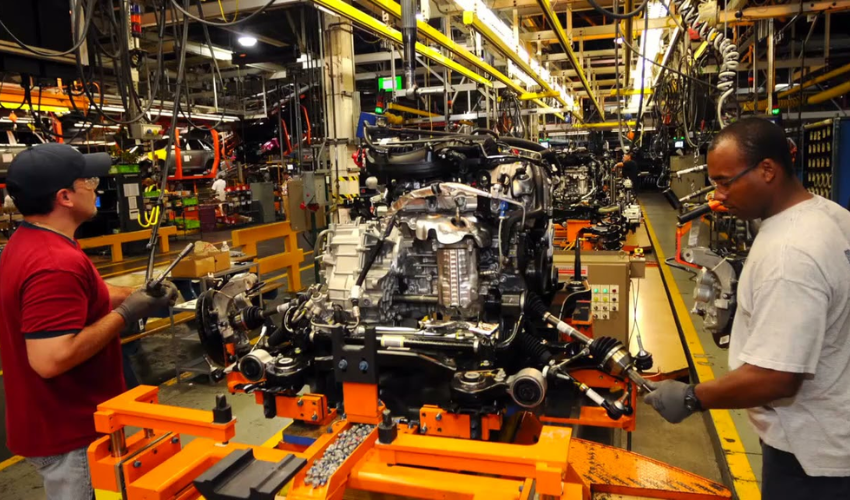
Researchers from both Scotland and Italy have announced a new type of 3D printed metamaterial that has the ability to transform the way vehicles absorb impact. The design has a unique twisting lattice structure and can adapt its response to collisions. These structures could be implemented in crumple zones, which are primarily located within the front of the vehicle and absorb the most impact in head-on collisions. This new metamaterial can potentially pave the way for safer and more efficient crash protection systems.
Developed using additive manufacturing, the adaptive twisting metamaterial features a precisely engineered gyroid lattice printed from steel. The design allows the structure to twist into itself under pressure, dispersing energy from an impact in a controlled manner. This level of responsiveness marks a significant step forward compared to traditional foams or crumple zones, which are limited to a single, fixed resistance profile.
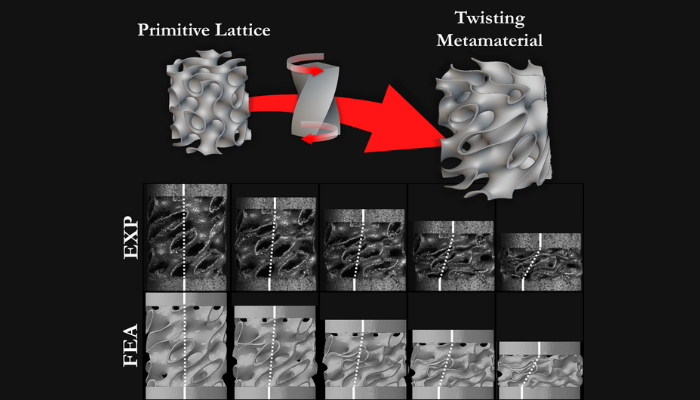
A graphic showcasing the evolution from primative lattice to the new twisting metamaterial. (Photo Credit: University of Glasgow)
The research team, led by Professor Shanmugam Kumar from the University of Glasgow’s James Watt School of Engineering, demonstrated how the material’s behavior can be tuned by adjusting mechanical constraints during compression. In laboratory tests, the 3D-printed lattice could shift between stiff and flexible configurations, offering tailored energy absorption across different impact scenarios.
More from the desk
Six other notes from the rest of the bench.
 PrintersMink: the world’s first portable makeup 3D printerThe Mink concept started in 2014 and was unveiled at the TechCrunch Disrupt conference that year. Five years later, the world’s first ever portable makeup 3D printer from Mink will officially be available for pre-order. With the press of a…
 NewsAitiip Leads The HERON Project to Improve Energy Efficiency in AeronauticsZaragoza-based Aitiip Technology Center has taken the reins of the European HERON project. The idea came about as a result of the European commitment to the environment—more specifically, due to carbon emissions from the aeronautics industry. Thus, the primary mission…
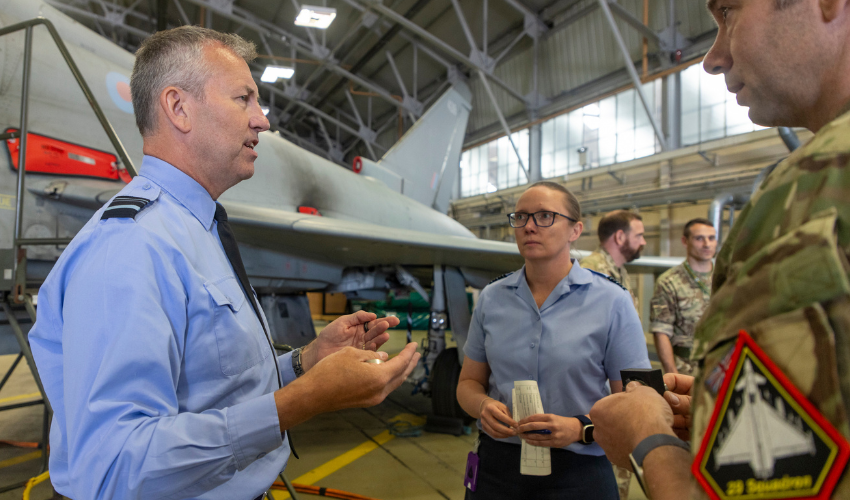 ApplicationsFirst RAF-Made 3D Printed Part Installed on Operational Typhoon JetIn a new development within the defense sector, the United Kingdom’s Royal Air Force has successfully installed its first in-house manufactured 3D printed component to an operational Typhoon fighter jet at RAF Coningsby. This is a new milestone that signals…
 NewsMyMiniFactory Acquires Thingiverse: A Turning Point for the 3D File EcosystemThis is major news for the entire maker community and the 3D printing market as a whole: MyMiniFactory has acquired 100% of Thingiverse. The popular free 3D file platform was previously owned by UltiMaker, following several strategic shifts between MakerBot…
 NewsAll You Need to Know about IceSL3D printing has dramatically transformed various sectors, offering the possibility of bringing complex, customized objects to life from simple digital files. However, to bring these creations to life, the use of a slicer is essential. This enables the model to…
 NewsNexa3D and Stratasys Both Complete AcquisitionsIt seems that it is time once again for another round of acquisitions in the additive manufacturing sector. After a year that has been relatively quiet compared to last year, this week we have seen a flurry of activity. First…