News
How Can 3D Printing Help in the Fight Against Counterfeit Goods?
Over the years, the trade in counterfeit goods, mostly of luxury brands, has spread rapidly all over the world. Data from the OECD in 2019 already showed that the trade in fake goods amounted to about 3.3% of all world…
- 3 min read
- News
- Six more stories
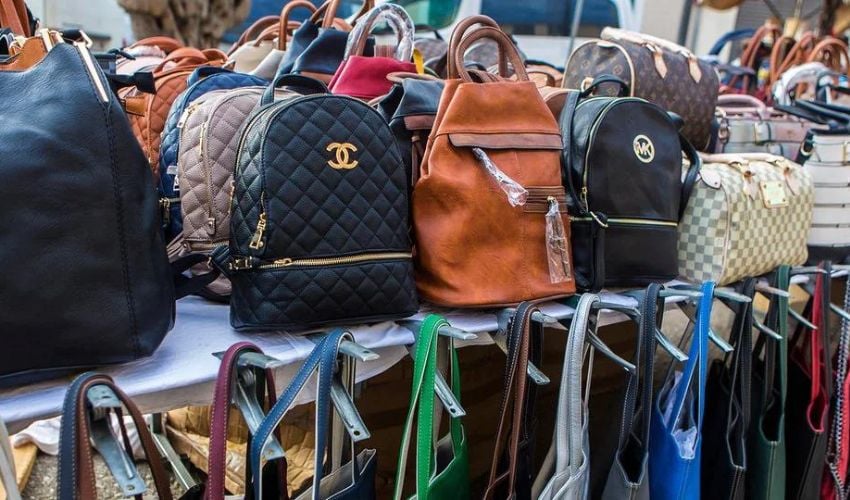
Over the years, the trade in counterfeit goods, mostly of luxury brands, has spread rapidly all over the world. Data from the OECD in 2019 already showed that the trade in fake goods amounted to about 3.3% of all world trade and was rising steadily. Moreover, some counterfeits today look so genuine that they can hardly be distinguished from the original. To address these issues, a research team at the University of Hong Kong (HKU) is working on the development of an extremely precise additive manufacturing process designed to detect counterfeit products and thus make it easier to remove them from circulation.
The fact that the value of counterfeit goods in circulation is estimated at several billion dollars not only affects the global economy, but also has consequences for security. Although there are already all kinds of measures taken by companies that want to protect their products from potential counterfeiting, there are still major obstacles in this regard. For example, one of these security concepts is the integration of a QR code, however this is not always the safest option as these can be very easy to reproduce due to limited data encryption capacity. Dr. Ji Tae Kim, who works in the mechanical engineering department at HKU and is the leader of the research team, has come up with a new way to detect such counterfeits thanks to a 3D printing process that will be used to produce polarization-encoded anti-counterfeiting labels.

Dr. Ji Tae Kim (left) and Dr. Jihyuk Yang (right) (photo credits: HKU)
Advantages of a 3D Label Versus a 2D Label to Identify Counterfeit Goods
It is not only the fact that the dimension of a 3D versus a 2D label is different, but also the digital information included with it. In this research, published in a paper titled “Three-Dimensional Printing of Dipeptides with Spatioselective Programming of Crystallinity for Multilevel Anticounterfeiting,” researchers used diphenylalanine (FF) as a material allowing them to 3D print dipeptides. Dipeptides are chemical compounds consisting of two amino acid residues. The researchers at HKU chose to develop these because of their unique properties. The Dr. Yang, lead author of the study conducted, noted particularly the piezolectricity and optical optical birefringence in dipeptides due to their crystalline nature.
More from the desk
Six other notes from the rest of the bench.
 NewsCzech City Wants to Build a Historic 3D-Printed ChurchFor centuries, churches were built across Europe as an expression of devotion to God. Even today, these houses of worship remain at the heart of many towns and offer insight into history through their architecture and interior design. Building a…
 Printers3D Scanning Will Be Used in Ukraine to Document Evidence of War CrimesThe war in Ukraine has been going on for over half a year now. It has already claimed over 5500 lives and injured more than 8000 due to Russia’s attacks on the civilian population. The country’s infrastructure has also suffered…
 NewsWhat Were the Key 3D Printing Trends in 2025?As the end of the year approaches, we at 3Dnatives are taking a step back to analyze what has truly defined the additive manufacturing industry in 2025. It is already clear that this has been a year of technological maturity,…
 NewsWhat is Two-Photon Polymerization?Nano- and microscale 3D printing offers design freedom and efficiency, paving the way for numerous pioneering innovations, particularly in the fields of micro-optics and micromechanics. In turn, these achievements drive new developments, promoting technological progress. As a res
 MaterialsArchiREEF’s 3D-Printed Terracotta Tiles Restoring Coral in Hong KongIn 2020, a team of scientists from The University of Hong Kong (HKU) launched ArchiREEF, a startup on a mission to restore marine life in the coral reefs near Hong Kong. We previously covered ArchiREEF’s 3D-Printed terracotta tiles but there…
 Applications3D Printed Bone Scaffolds Move Closer to Clinical RealityBone is deceptively complex. It is light, porous, and strong at the same time, a combination that has long challenged engineers and clinicians trying to replace or repair it. Metal implants and bone grafts remain standard solutions, but they rarely…