Guides
TPM3D Talks Clean, Efficient SLS 3D Printing and Expanding Internationally
One of the countries where we are seeing the fastest growth in additive manufacturing is undoubtedly China. And while many associate the Chinese market with desktop solutions, whether extrusion or vat photopolymerization, there are a growing number of manufacturers offering&helli
- 3 min read
- Guides
- Six more stories
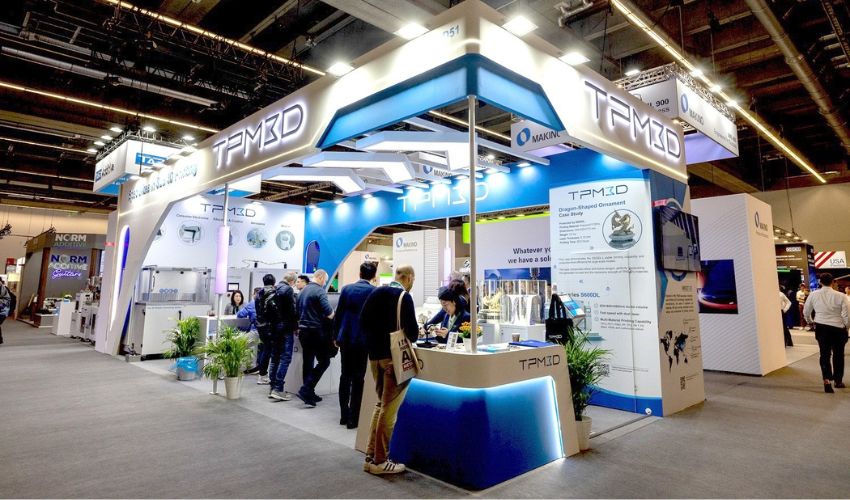
One of the countries where we are seeing the fastest growth in additive manufacturing is undoubtedly China. And while many associate the Chinese market with desktop solutions, whether extrusion or vat photopolymerization, there are a growing number of manufacturers offering industrial solutions, including some that have been around for quite some time and are now moving into the international market. One of the most notable of these is TPM3D. The SLS 3D printing solutions provider has made its mark in its home country and has started expanding internationally. We spoke to the CEO to learn more about the company, its journey and what we can expect from it in the near future.
3DN: Could you introduce yourself and your connection to 3D printing?
My name is Lucy Zhai, I am the CEO of TPM3D. After earning my engineering bachelor and MBA from Peking university, I worked in product development, applications, manufacturing, sales and marketing for industrial markets in Fortune 500 companies. I held various leadership roles at General Electric (GE) in both the Industrial & Consumer Division and the Energy Division, gaining deep insights into the industrial markets in China and the Asia-Pacific region.

TPM3D CEO, Lucy Zhai
This experience led me to join Stratasys in 2016 as the General Manager for Greater China. Given the wide range of applications of 3D printing in the industrial field, I believed this technology could accelerate R&D in manufacturing and reduce costs, offering great potential. In 2018, our founder team acquired a company share from Stratasys and rebranded it as “TPM3D,” focusing on the development and promotion of SLS technology as an independent entity.
More from the desk
Six other notes from the rest of the bench.
 NewsGanit Goldstein on her vision of 3D printing for fashionGanit Goldstein is a 3D designer working on how to merge additive manufacturing technologies with fashion to bring new possibilities to the industry. Her aim is to work with new technologies to provide custom-made items that fit the wearer perfectly.…
 ApplicationsVintage Jaguar restored with HP Jet Fusion 3D printing solutionBy now it is quite well known that the automotive industry is one of the sectors that take advantage of additive manufacturing the most. From Porsche 3D printing engine pistons for its famous 911 GT2 RS model to Lamborghini Sian…
 PrintersFELIX 3D printers Unveils Modular Industrial 3D Printers Built for Customization and SpeedIn industrial 3D printing, scale and standardization often go hand in hand. But since its founding in 2011, FELIX 3D printers has built its reputation on a different principle: adaptability. The Dutch manufacturer’s modular approach has allowed it to create…
 Guides3DCeram Discusses Industrial Scale Production of Ceramic Parts3DCeram is a manufacturer of industrial 3D printers, specializing in ceramics and stereolithography in particular. For several years now, the French company has been designing solutions to meet the requirements of a wide range of industries, from defense to biomedical…
 NewsTOP 5 videos of the week: Bespoke bodies – the prosthetics exhibitionWe found the TOP 5 videos of the week related to 3D printing and collected the additive manufacturing here. Share your videos and comment on the article below or on the 3Dnatives’ Facebook or Twitter account. Hope you’ll enjoy and…
 MaterialsInterview with Biogelx about its bioinks and the future of bioprintingBiogelx is a spin-out from the University of Strathclyde in Glasgow, engaged in the development and production of synthetic bioinks for 3D cell cultures and bioprinting applications. When we talk about this sector and its progress, we often talk about…