Printers
Why Combine 3D Printing and Industrial Automation Applications?
3D printing is widely used in the field of automation such as in compression molding. It’s a formative manufacturing method, currently popular in industry, that involves compressing the desired amount of molding material between two heated presses to give it…
- 3 min read
- Printers
- Six more stories
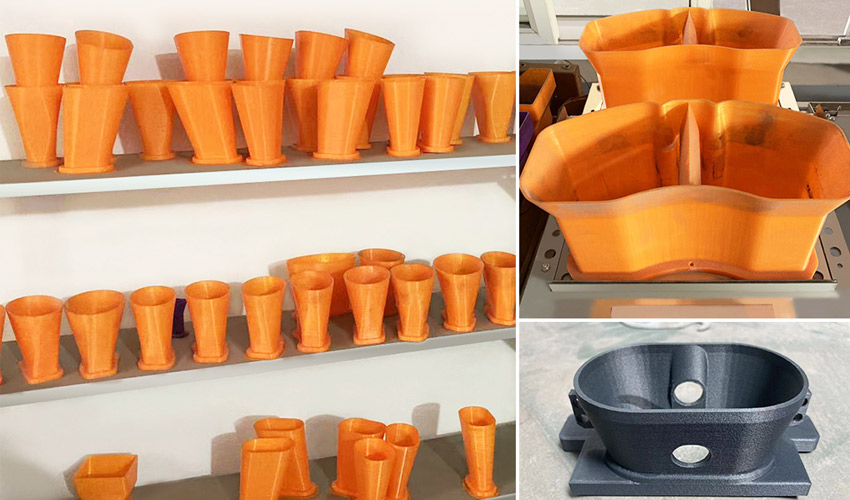
3D printing is widely used in the field of automation such as in compression molding. It’s a formative manufacturing method, currently popular in industry, that involves compressing the desired amount of molding material between two heated presses to give it its final shape. It is cost-effective compared to other production processes, allowing both small parts and large components to be designed. In addition, the base mold can be 3D printed, giving manufacturers more flexibility and geometric freedom. That’s why one electrical manufacturer has invested in several 3D printers from Flashforge, including 11 Creator 4 models. With this investment, the company was able to reduce its labor costs by 80% and cut delivery times by 50%.
Flashforge is a Chinese manufacturer that entered the 3D printing market in 2012. Since then, it has offered a wide range of solutions worldwide and caters to applications in education, healthcare, jewelry, and more. Among its wide range of 3D printers is the Creator 4, an industrial FDM machine with two independent extruders and different extrusion options to expand the range of compatible materials. It’s a ideal solution for multiples industries such as automotive, medical or consumer goods. It boasts a printing volume of 400mm*350mm*500mm, a heating plate capable of reaching 130°C and a closed chamber that can rise to 65°C. It is a solution that offers optimal temperature control combined with production flexibility, allowing it to be combined with automation processes, such as compression molding.
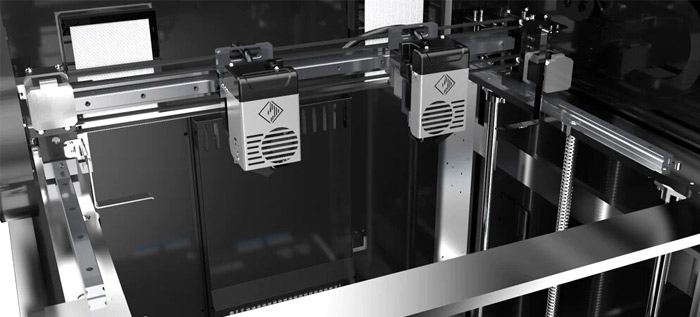
The Creator 4 offers two independent extruders
Integrating 3D Printing into the Compression Molding Process
One of the challenges of compression molding is the design of the hoppers and mold: each hopper must match the mold cavity exactly so that the material can flow properly. However, the molds used are not all the same shape, with different or irregular cavities, which multiplies the number of hoppers needed. Flashforge’s customer, which specializes in the manufacture of electrical equipment, explained: “Each project involves dozens, if not hundreds, of different shaped molds. Each size requires over a hundred hoppers. So, a completed project represents tens of thousands of hoppers. In the past, we have had to hire trade experts or even outsource the order. However, whichever solution we chose, it was costly in time and money, as was post-project maintenance.”
More from the desk
Six other notes from the rest of the bench.
 NewsCan Chitosan Improve the Sustainability of 3D Printing Plastics?Why not use natural resources to design new 3D printing materials? That’s the thinking behind a team of researchers from Malaysia, Singapore, Thailand and India. They sought to understand how they could use chitosan, a natural polymer found in certain…
 ApplicationsFiat Chrysler Automobiles uses AM to design suspension systemA team of engineers from Fiat Chrysler Automobiles (FCA) collaborated with researchers from Fraunhofer Institute to design a 3D printed wheel carrier with an integrated brake caliper for one of their sports cars. Still in the prototyping stage, this part,…
 SoftwareAll You Need to Know About Lychee SlicerContrary to its name, Lychee Slicer is not a tool for a tropical fruit, but rather a slicer that is an essential companion for SLA and resin 3D printers. Specifically, this is the slicer software from the manufacturer Mango 3D,…
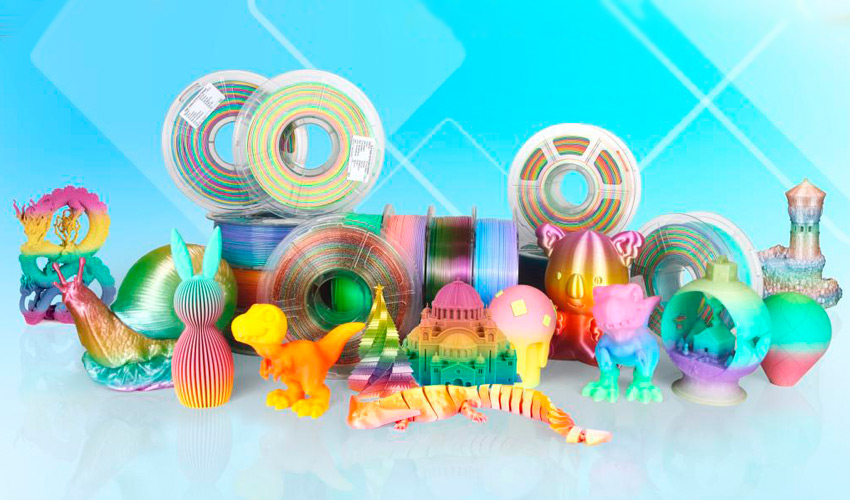 MaterialsiSANMATE’s Materials Open Up a World of Possibilities for Innovation With 3D PrintingThe choice of materials for additive manufacturing is a key consideration depending on the intended use of the technology. As this manufacturing method expands and develops, many companies in different industries are considering its adoption. That is why today, there…
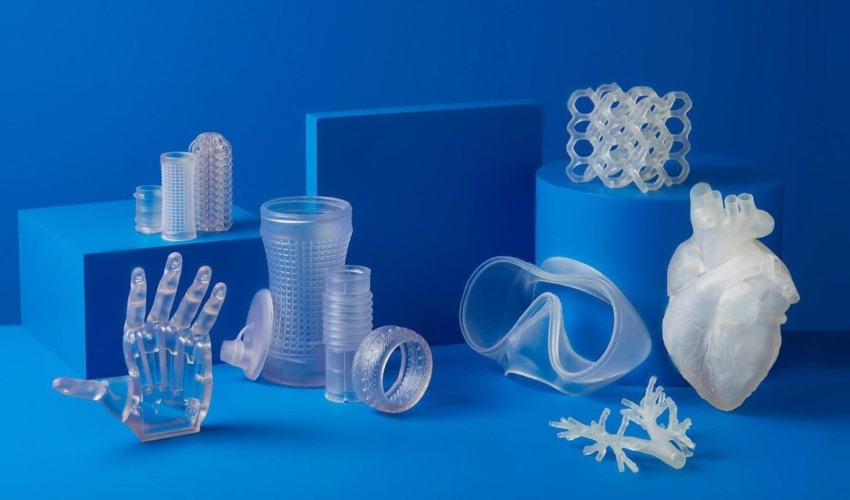 NewsFormlabs is Now a Multi-Billion Dollar CompanyAfter raising $150 million in a round of Series E funding led by SoftBank Group Corp’s Vision Fund 2, Formlabs is now officially a multi-billion dollar company. At present, the company offers 3D printers, filaments, software and 3D printing services…
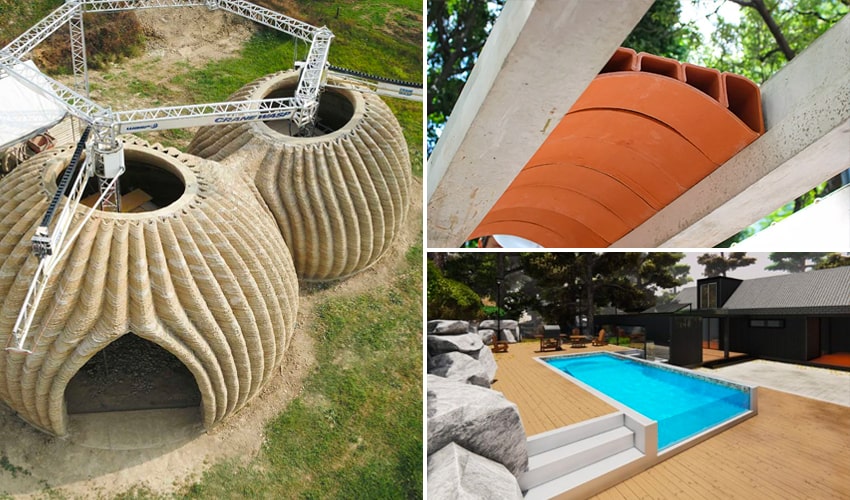 Guides3D Printed Architecture: Our Top PicksThe Oxford English Dictionary defines architecture as “the art and study of designing buildings”: whether it is houses, offices, bridges or schools, this art is greatly impacted by new technologies. Architects are looking for innovative structures, both in terms of&he