Applications
3D Printing is Being Used to Treat Children With Severe Burns
3D printing is making more and more progress in the medical field with applications in bioprinting, 3D printed prostheses, digitization of dentistry and much more. Adding to the advances of additive manufacturing in medicine is a recent collaboration between Italy…
- 3 min read
- Applications
- Six more stories
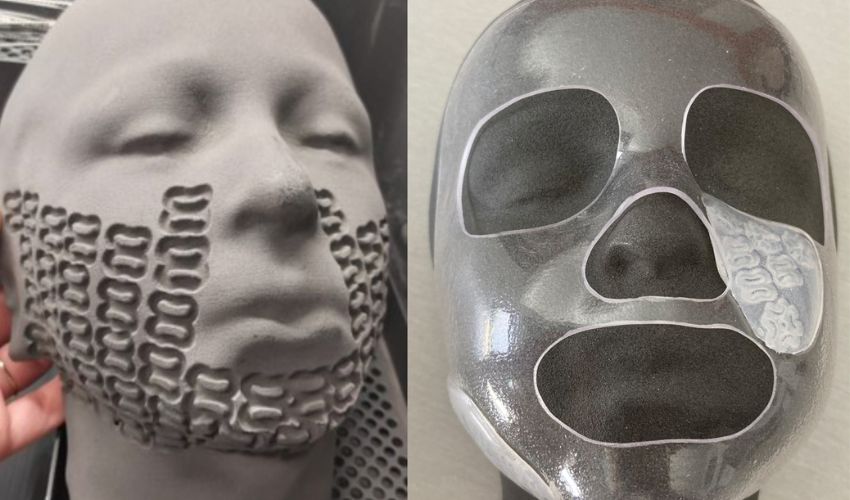
3D printing is making more and more progress in the medical field with applications in bioprinting, 3D printed prostheses, digitization of dentistry and much more. Adding to the advances of additive manufacturing in medicine is a recent collaboration between Italy and France. It is a pilot project carried out by the Romans Ferrari pediatric rehabilitation center in Lyon in collaboration with 3DZ. 3DZ is a 3D printer distribution company based in Castelfranco Veneto (TV), with several offices around the world and significant experience in the field. In this case, 3D printing has been used to produce facial masks that can help treat children with facial burns.
The Romans Ferrari Center in Lyon, a pediatric rehabilitation facility that has treated severely burned children for many years, involved students from the Ecole Centrale de Lyon and approached 3DZ’s French branch. Ultimately, the goal was to find a less painful alternative method of making the orthoses that are used to treat burns on the faces of children and others. Namely, to make the facial orthosis (i.e., a plate that is placed on the face) using conventional methods, an impression of the face must be taken, which is then used to make a mask that is a perfect and pliable replica of the child’s face. In this method, the face is modeled with plaster strips that are applied directly to the skin, which is painful and disturbing, especially for the skin and sensitivity of children.
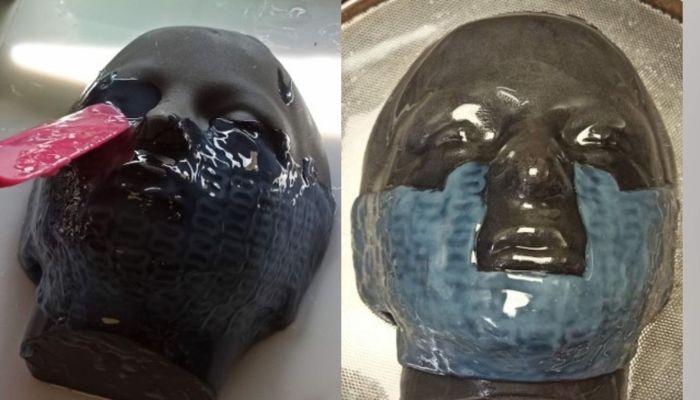
Photo Credits: 3DZ
The collaboration between 3DZ and Romans Ferrari therefore made it possible to rethink this procedure and make it more child-friendly and generally less invasive and more efficient. In essence, the companies replaced the plaster cast with a 3D scan of the patient’s face. Thanks to the 3D scanner, they were able to obtain a perfect reproduction of the patient’s face in all its details without coming into contact with his skin.
More from the desk
Six other notes from the rest of the bench.
 NewsWhat is the Forecast of Additive Manufacturing by 2022?Arizton – Advisory and Intelligence is an American consulting firm that recently published a study on the global outlook and forecasts for additive manufacturing. Following the recent Gartner Report, the report provides a global view of the market in terms…
 NewsThe State of Women in 3D Printing: study on women in the industryA few days ago we reported on The State of 3D Printing 2020, Sculpteo’s annual report on the state of the 3D printing industry. Among other things, this report shows that 3D printing is becoming more and more common in…
 NewsTop 5 Videos: Aerosint’s New And Innovative Powder RecoaterAnother Sunday means another Top 5 list of videos straight from the world of 3D printing! We start off this week’s top 5 with a video about Aerosint, a Belgian AM company that has developed a new 3D printing solution…
 ApplicationsEOS and Hyperganic 3D Print More Efficient Space Propulsion ComponentsThe German manufacturer EOS recently signed a partnership with Hyperganic, a company based in Munich, which develops algorithmic engineering software based on artificial intelligence. The goal of this cooperation in is to integrate the Hyperganic core platform with EOS’ 3D&
 NewsRobotic jellyfish 3D printed to protect coral reefsPreserving our oceans has become a real concern: more and more species are threatened by human pollution. It is urgent to propose solutions to protect this marine ecosystem. 3D printing can be one solution. We can see some progress made with…
 GuidesFrontier Bio on Overcoming the Organ Shortage With 3D-Printed Human Tissue3D printing has profoundly transformed the medical field, bringing significant changes to the way we think about healthcare. At the heart of this transformation, Frontier Bio is exploring the opportunities offered by 3D printing and tissue engineering to grow human…