Applications
3D Printer Successfully Tested on Parabolic Flights
3D printing in space is no longer a myth: it’s possible to design 3D parts in such a demanding environment, where gravity presents obvious constraints and obstacles. Numerous projects have demonstrated that it is possible to create a wide variety…
- 3 min read
- Applications
- Six more stories
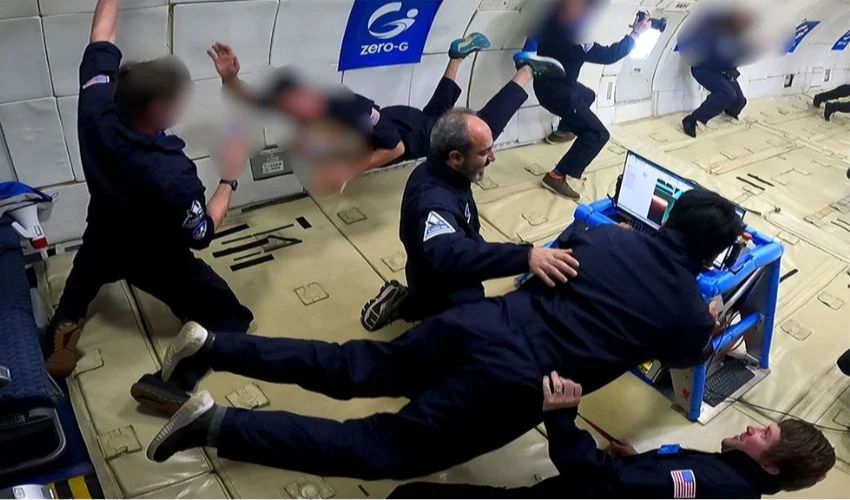
3D printing in space is no longer a myth: it’s possible to design 3D parts in such a demanding environment, where gravity presents obvious constraints and obstacles. Numerous projects have demonstrated that it is possible to create a wide variety of components on board a spacecraft. One of these is the LASED (Laser Ablation and Sintering Enabling Deposition) machine. This is a compact 3D printer capable of generating nanoparticles, depositing materials via a nozzle and sintering powder. If these features are already noteworthy, add to that the fact that it can print in microgravity. So far, it has been successfully tested on board a Boeing, which has produced parabolic arcs that provide 23 to 25 seconds of microgravity.
Masoud Mahjouri-Samani is a professor in the Department of Electrical and Computer Engineering at Auburn University. When describing the LASED machine, he explains: “It’s a fully functional machine. Everything is integrated. You can program it to complete complex tasks in 20 seconds. In space, without that time constraint, it can do even more.” In concrete terms, it measures just 60 cm in length and consumes less than 500 watts, making it extremely practical for applications aboard a spaceship where every square meter counts.
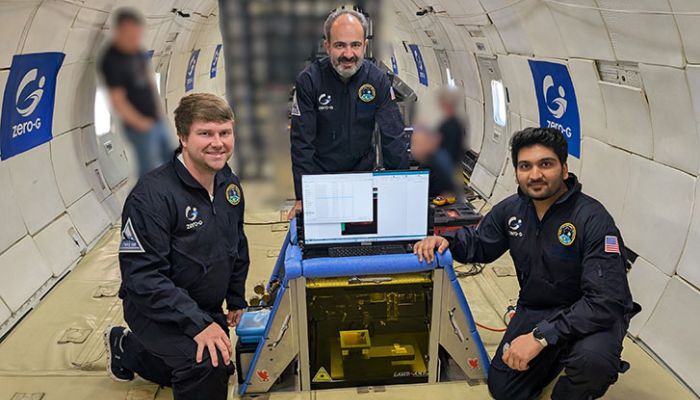
From left to right: Colton Bevel, Masoud Mahjouri-Samani and Aarsh Patel, in front of the LASED 3D printer.
The aim was to design a solution capable of 3D printing parts in microgravity conditions, to avoid long and costly supply chains. Having a 3D printer in space gives astronauts a great deal of freedom, particularly when they need flexible electronic components. It’s this type of application that Masoud Mahjouri-Samani’s team has been focusing on.
More from the desk
Six other notes from the rest of the bench.
 ApplicationsNourish3D and Colgate Unveil a 3D Printed Food Supplement for Better Oral HygieneWhile 3D printing is regularly in the news in the health sector, it is currently rare to see the technology associated with dietary supplements and oral care. That’s why Nourish3D, a British company specializing in 3D printed dietary supplements, has…
 NewsiPhone X Face ID Deceived by 3D Printed MaskSince being announced in September, the iPhone X is Apple’s latest smartphone release. New features of the iPhone X include a facial recognition tool to unlock the device or send payments. When presented, Apple lauded how accurate their tool was.…
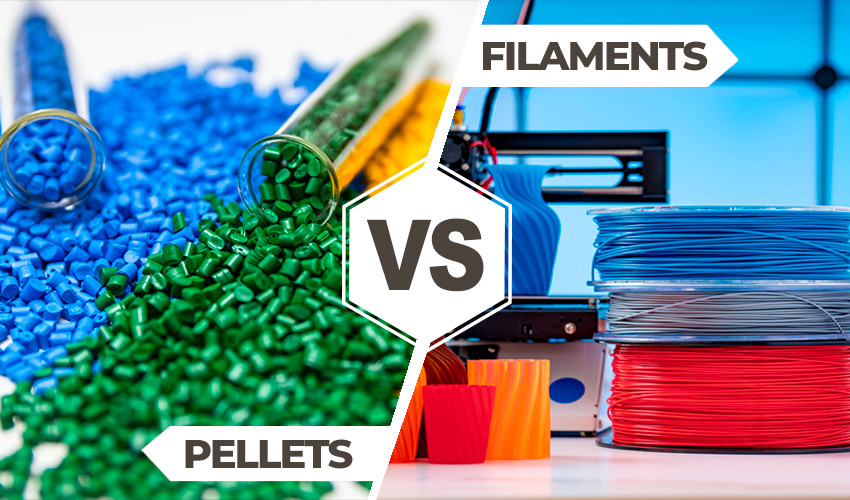 MaterialsFilaments vs Pellets: Which Type of Plastic to Choose for 3D Printing?Plastics are without doubt one of the most widely used material families in additive manufacturing. Compatible with a wide variety of processes, they offer multiple properties and characteristics to parts, whether those are destined to be prototypes, tooling or end-use…
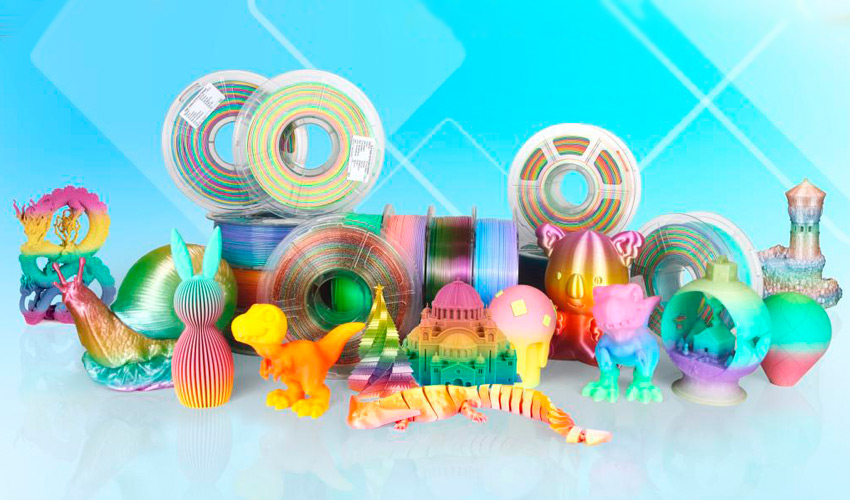 MaterialsiSANMATE’s Materials Open Up a World of Possibilities for Innovation With 3D PrintingThe choice of materials for additive manufacturing is a key consideration depending on the intended use of the technology. As this manufacturing method expands and develops, many companies in different industries are considering its adoption. That is why today, there…
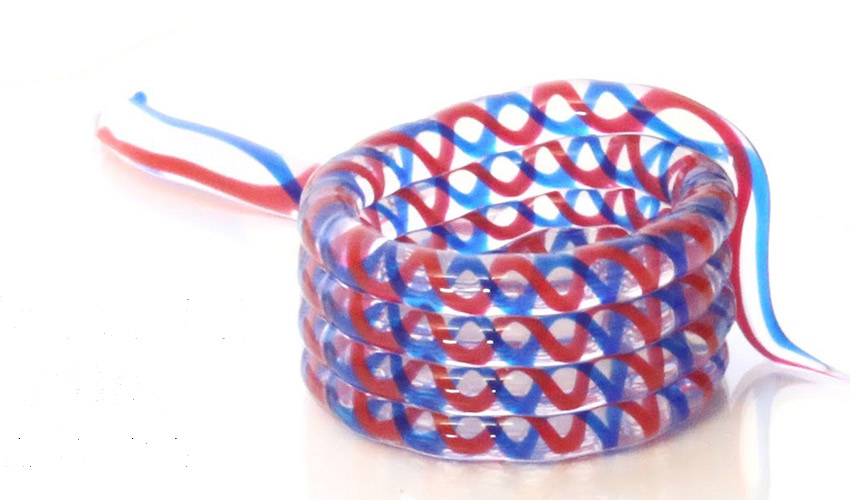 NewsResearchers Have Created a New Rotational, Multimaterial 3D Printing ProcessA team of researchers from the Harvard John A. Paulson School of Engineering and Applied Sciences and the Wyss Institute for Biologically Inspired Engineering at Harvard University have taken inspiration from nature to develop a rather surprising 3D printing method.…
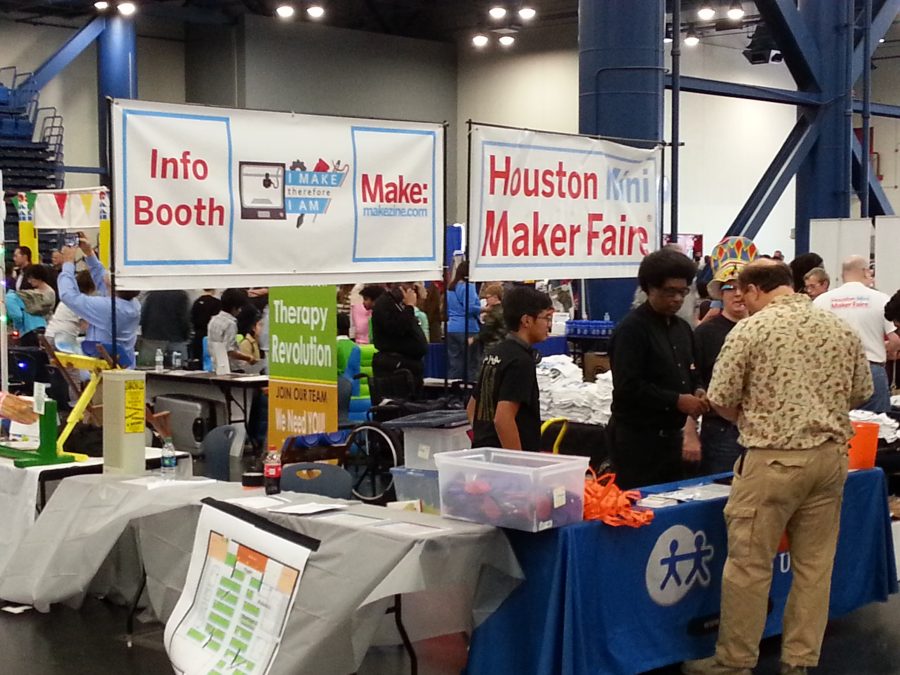 GuidesHouston Maker Faire 2017: Our interview before the eventAhead of Houston Maker Faire 2017, we spoke to Andrew Lynch, one of the many people behind making this event happen. Houston Maker Faire runs from the 21st to the 22nd of October 2017. To find out more information about…