Materials
Filaments vs Pellets: Which Type of Plastic to Choose for 3D Printing?
Plastics are without doubt one of the most widely used material families in additive manufacturing. Compatible with a wide variety of processes, they offer multiple properties and characteristics to parts, whether those are destined to be prototypes, tooling or end-use…
- 3 min read
- Materials
- Six more stories
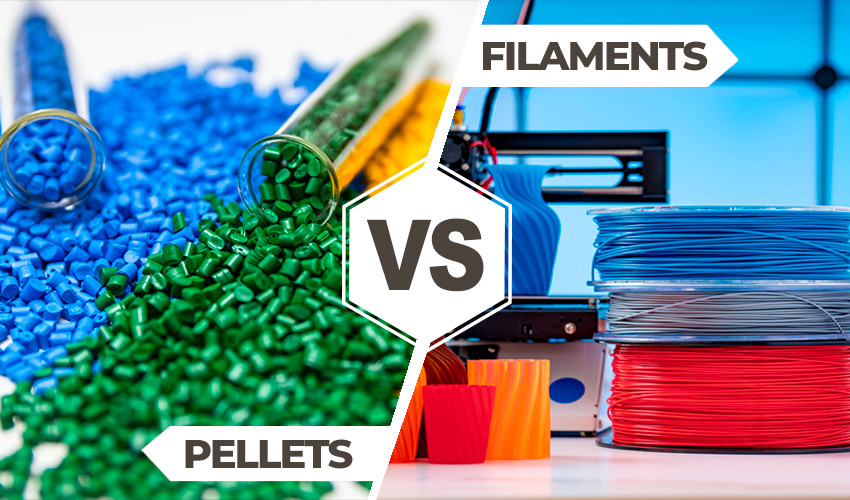
Plastics are without doubt one of the most widely used material families in additive manufacturing. Compatible with a wide variety of processes, they offer multiple properties and characteristics to parts, whether those are destined to be prototypes, tooling or end-use objects. Available in many forms – filaments, pellets, powders, resins – they meet the needs and requirements of manufacturers in all sectors. While we compared powders to plastic resins a few months ago, it’s time to take a look at two other polymer families: filaments and pellets. What are their characteristics and applications? Which 3D printing processes are they compatible with? What manufacturers are on the market, and how much do these materials cost? We tell you all about it in this new dedicated article!
Filaments and pellets are two forms of material currently compatible with 3D printing, and although metallic and ceramic solutions are available today, we’ll be concentrating solely on plastics. First of all, we need to go back over the definition of a plastic pellet and a plastic filament. A pellet is a kind of small ball 0.5 cm in diameter that can be melted, molded or extruded to make all kinds of plastic objects. Plastic pellets are therefore key in the chemical industry. They can be used in additive manufacturing with specific machines.
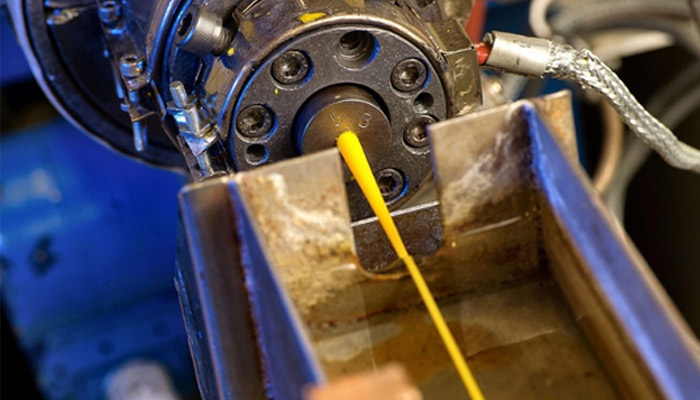
To make filament for 3D printers, you need plastic pellets (photo credits: Capifil)
Filament, on the other hand, is a thermoplastic obtained by mixing plastic pellets or ground plastic scrap with several additives. A filament extruder is required to achieve the tube-like appearance. After several stages of cooling, the filament passes through a coiling machine to obtain a spool that can then be used by a 3D printer.
More from the desk
Six other notes from the rest of the bench.
 ApplicationsVolvo Embraces 3D Printing With Titomic’s Cold Spray TechnologyRepeatedly, we’re exposed to the groundbreaking applications of 3D printing within the automotive and transportation industries, showcasing the immense potential of this technology. Numerous car manufacturers have embraced additive manufacturing in their production processe
 GuidesHow Chat3D Uses Custom Software to Optimize 3D Modeling Workflows3D modeling is now at the heart of many industries, from video games and animation to additive manufacturing. However, it is not always easy to implement and can sometimes be ill-suited to real-world conditions. This is precisely the challenge that…
 SoftwareRiven Launches New Re-Scaling Tool to Prevent Shrinkage and WarpingBerkeley-based American company, Riven is launching a brand new re-scaling tool in order to reduce the effects of shrinking or warping incurred during the printing process on all 3D printed parts and allow users to print parts more accurately. The…
 NewsWhat Did You Miss at RAPID + TCT 2022?Weren’t able to attend RAPID + TCT 2022? The largest trade show in North America took place in Detroit, Michigan between May 17th and 19th. After three keynote presentations and over 105 hours of educational content, the event has closed…
 ApplicationsScientists 3D print magnetic liquid dropletsScientists at Berkeley Lab in the US have made a new material that could lead to 3D printable magnetic liquid devices. Today, many essential technologies rely on magnets made from solid materials – for example, magnetic data storage devices or…
 NewsTrends and Challenges for Composites in Additive Manufacturing: JEC World 2026As with every major industry event, JEC World 2026 provided an opportunity to assess the current state of the additive manufacturing and composites sector. At this composites conference taking place in Paris, France, additive manufacturing was presented not as an…