News
Researchers create 3D printed sweating robot muscle
At Cornell University, a group of researchers have created a 3D printed sweating robot muscle. By enabling the robot hand to sweat, the muscle can regulate its temperature in the same way that mammals do. The researchers explained that thermal…
- 3 min read
- News
- Six more stories
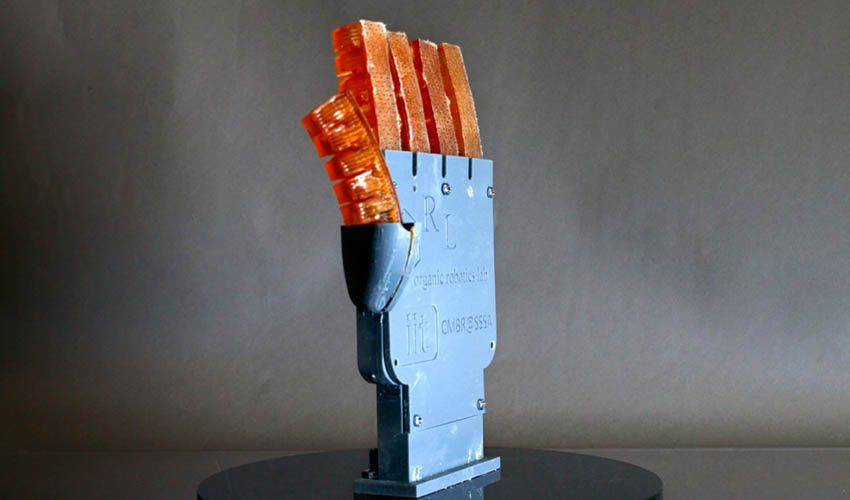
At Cornell University, a group of researchers have created a 3D printed sweating robot muscle. By enabling the robot hand to sweat, the muscle can regulate its temperature in the same way that mammals do. The researchers explained that thermal management is essential to allow robots to work over a long period of time without overheating. According to the lead researcher on this project, Rob Shepherd, this form of thermal management is a viable solution thanks to additive manufacturing.
The team’s research, Automatic Perspiration in 3D Printed Hydrogel Actuators, was published in Science Robotics and details the method that enables the robot muscle to sweat. In fact, if the high-torque density motors and exothermic engines that power a robot overheat, the robot will cease to operate. This is even more of an issue with soft robots that are made of synthetic materials. So why not take inspiration from mammals and allow the robot hand to sweat?
One of the research scientists explains: “The ability to perspire is one of the most remarkable features of humans. Sweating takes advantage of evaporated water loss to rapidly dissipate heat and can cool below the ambient environmental temperature. So as is often the case, biology provided an excellent guide for us as engineers.”
More from the desk
Six other notes from the rest of the bench.
 ApplicationsRedwire Has 3D Bioprinted the First Human Knee Meniscus in SpaceWhen it comes to innovation in outer space, additive manufacturing is on the front lines as we continue to push boundaries while exploring the final frontier. Indeed, the flexibility and ability to produce locally are two of the main reasons…
 News3D Printed Reefs Help Restore Marine Life in Danish WatersIn a recent project, Danish multinational power company Ørsted and the World-Wide Fund for Nature (WWF) deployed 3D-printed reef structures in Kattegat, a strait between Denmark and Sweden. The goal of this initiative is to test how the 3D printed…
 GuidesSuperfici Talks Using 3D Printing for the Shipbuilding IndustryAmong the industrial sectors currently reaping the benefits of additive manufacturing is the maritime industry. High standards, high surface quality, attention to detail, durable materials and customized design are just some of the sector’s requirements that 3D printing can
 Applications3DExpress: 3D Printed ‘Ice Dollhouse’ to Pave the Way for Construction in Cold, Remote AreasIn this week’s #3DExpress, we welcome the wintry winds of December with a rather chilly offering. U.S. army scientists have successfully 3D printed an ice dollhouse, which they hope will open up possibilities for construction 3D printing in cold, remote…
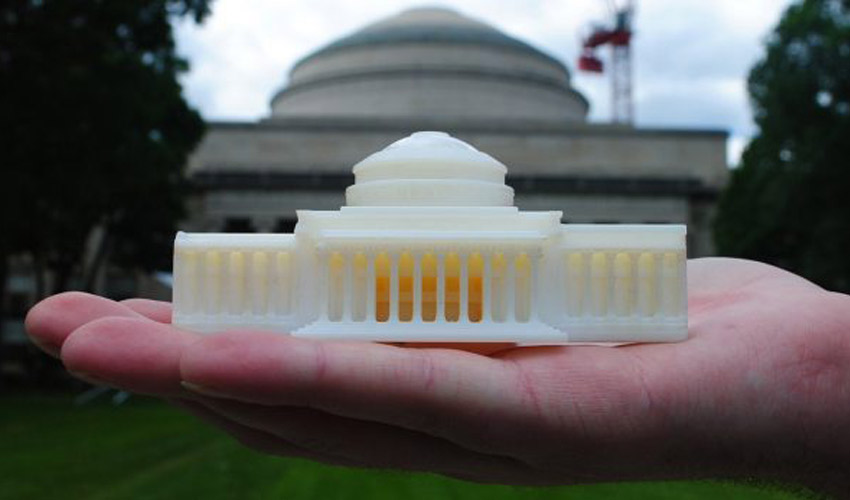 NewsMIT launches ADAPT; A consortium dedicated to additive manufacturingThe American research institute MIT announced the creation of a consortium dedicated to additive manufacturing called ADAPT (for Additive and Digital Advanced Production Technologies). The goal of this business association is to identify visionary research, scalable education pla
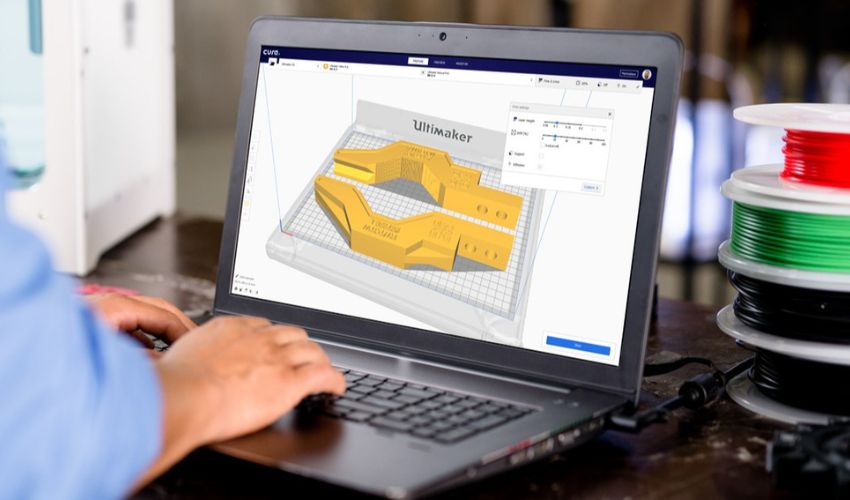 SoftwareCura: All You Need to Know Before Getting StartedAs many of you will know, in order to get a piece 3D printed, you need a slicing software, more commonly known as a slicer. The slicer converts the 3D model into a G-code file that will provide the 3D…