Applications
3D Printed Spinal Devices Approved by FDA
No longer are 3D printed medical implants a thing of science fiction, as our readers know. Now, two companies, Nvision Biomedical Technologies and Invibio Biomaterial Solutions, have co-developed the first 3D printed PEEK Interbody System, consisting of devices for spinal…
- 3 min read
- Applications
- Six more stories
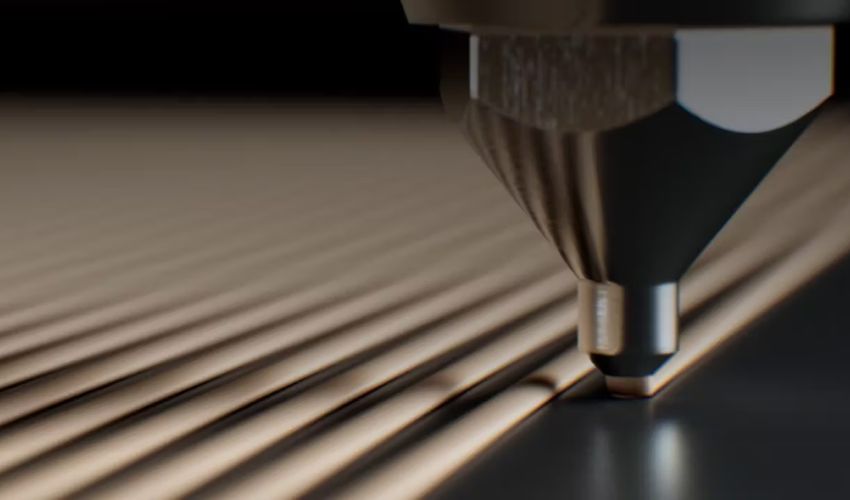
No longer are 3D printed medical implants a thing of science fiction, as our readers know. Now, two companies, Nvision Biomedical Technologies and Invibio Biomaterial Solutions, have co-developed the first 3D printed PEEK Interbody System, consisting of devices for spinal infusions. Specifically, they created Cervical and Anterior Lumbar Interbody Fusion (ALIF) spine devices using PEEK-OPTIMA™. Last week, they announced that the U.S. Food and Drug Administration (FDA) granted clearance for their interbody system, so it will now be available for clinical use.
PEEK, or polyether ether ketone, is a semi-crystalline thermoplastic often used for medical applications because it is sterilizable, biocompatible, and heat, wear, and chemical resistant. PEEK has properties similar to bone, meaning, if implanted, it can promote the reconstruction of tissues around the implant, accelerating osseointegration. PEEK-OPTIMA has already been used in over 15 million implants, and its superior imaging capability also allows surgeons to accurately monitor fusion progression.
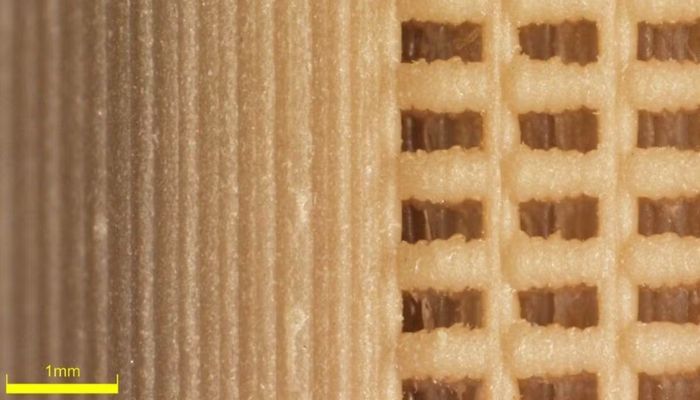
This close-up of the Nvision Interbody System shows its porous PEEK-OPTIMA structure (photo credits: Invibio)
Nvision and Invibio’s ALIF spine devices each incorporate porous and solid structures. John Devine, MD of Invibio, defined their purpose, explaining that “The combination of solid and highly intricate porous PEEK-OPTIMA structures within the Nvision system allows for potential bone ingrowth to achieve fixation while maintaining the inherent benefits of PEEK-OPTIMA for imaging and bone-like modulus.”
More from the desk
Six other notes from the rest of the bench.
 NewsFord and HP Use Recycled 3D Printing Materials to 3D Print New Auto PartsAfter the decision to once again turn to 3D printing for its manufacturing processes, Ford has joined forces with HP. The pair are set for an industry first, turning used 3D printed parts and powders into injection molded auto parts.…
 SoftwareDigital Twins in 3D Printing: All You Need to KnowHave you heard of digital twins? The idea was first developed in the 1960s as a way to create a living model of the Apollo mission in order to help evaluate its failure through a physical model of the vehicle…
 MaterialsA filament based on boron carbide, one of the hardest materials on the marketAdditive Composite and Add North are two Swedish companies that have worked together to develop a composite filament based on boron carbide, one of the hardest materials on the market after diamond and cubic boron nitride. Marketed under the name…
 NewsTop 5 Videos of the Week: 3D printed frames and much more!This week we found the top 5 videos about 3D printing and the way additive manufacturing is shaping our society. The technology has infiltrated many sectors, from medical to automotive! Check out our selection of the week to keep up with the innovations! This week we…
 ApplicationsThe Lions’ Den—3D Artificial Intelligence Lab in Medical Innovation CompetitionThe Lion’s Den is an annual medical innovation competition with the aim of improving health care in the Canadian province of New Brunswick. This year, on September 10th, 3D technology is one of the innovations being pitched for the chance…
 Guides#3DStartup: PrintParts on the Importance of Scanning and Tracking 3D Printed PartsAs 3D printing continues to industrialize, more companies are looking to overcome obstacles to its adoption. One that has been gaining in attention lately centers on the traceability of a part. Parts made with additive manufacturing are often feared to…