Applications
The first 3D printed safety part for German railway
The German Mobility Goes Additive (MGA) network, whose objective is to explore the adoption of additive manufacturing in mobility, has just approved the first 3D printed safety-related component for the railway sector. This is a metal brake suspension link, successfully…
- 3 min read
- Applications
- Six more stories

The German Mobility Goes Additive (MGA) network, whose objective is to explore the adoption of additive manufacturing in mobility, has just approved the first 3D printed safety-related component for the railway sector. This is a metal brake suspension link, successfully installed on a metro of the German company Hamburger Hochbahn AG. This is a real success for the MGA Approval Working Group, which was created in 2017 to obtain its first certification for the operational use of a highly sought-after and safety-relevant 3D printed component.
In the railway sector, additive manufacturing has gradually made way for itself and we are beginning to see more and more projects come to fruition: two weeks ago, we told you about Bombardier, which turned to Stratasys’ high-temperature solutions to design a custom ventilation system. Another example is Angel Trains, which has equipped some trains with 3D printed armrests, tables and handles. It is true that we are more concerned with less critical parts such as interior parts, which do not play a decisive role in the proper functioning of the train. This observation is changing with this news announced by MGA, which approved a 3D printed part essential to safety.
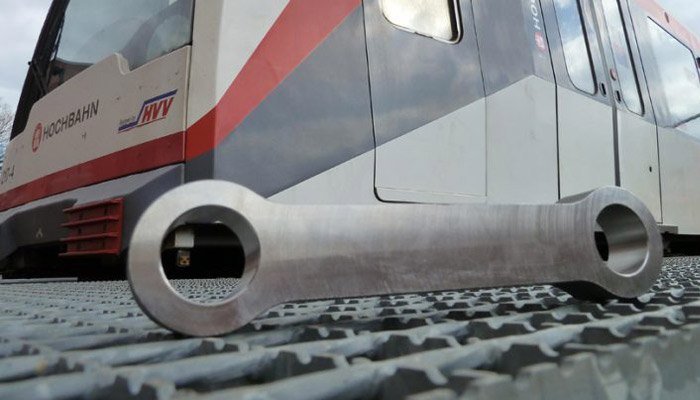
The approved 3D printed part | Credits: Mobility goes Additive e.V., 2019
A collaborative project around additive manufacturing
MGA has worked with many partners to obtain approval for this brake suspension link – for example, Siemens Mobility, which heads the Approval Group, Deutsche Bahn AG and the Fraunhofer Institute. It was TÜV SÜD that evaluated the necessary quality assurance procedures, tests and all the corresponding documentation. Finally, the part could be put into service in August 2019 after obtaining operational approval from the Hamburg Technical Supervisory Authority, in accordance with BOStrab, the German body that defines the rules for the design and operation of light rail vehicles.
More from the desk
Six other notes from the rest of the bench.
 GuidesThink big, print small: Nanofabrica on the benefits and applications of microscale 3D printingOne of the major benefits that additive manufacturing has over traditional manufacturing is its ability to be customized for individual use, no matter how big or small the part may be. Never is this more evident than with microscale 3D…
 News3D Printing Job Market Trends in 2020While many industries were heavily impacted by the health crisis during 2020, the field of additive manufacturing continued to grow. Companies are more confident in the technology and continue to invest in order to continue their development. But that’s not…
 Materials“Sustainable is Beautiful” – Eburo on Vegan Ivory for 3D PrintingIvory is considered one of the most precious materials in the world and has fascinated mankind since time immemorial. It is the substance from the tusks of elephants or mammoths, although nowadays it is mainly the tusks of the African…
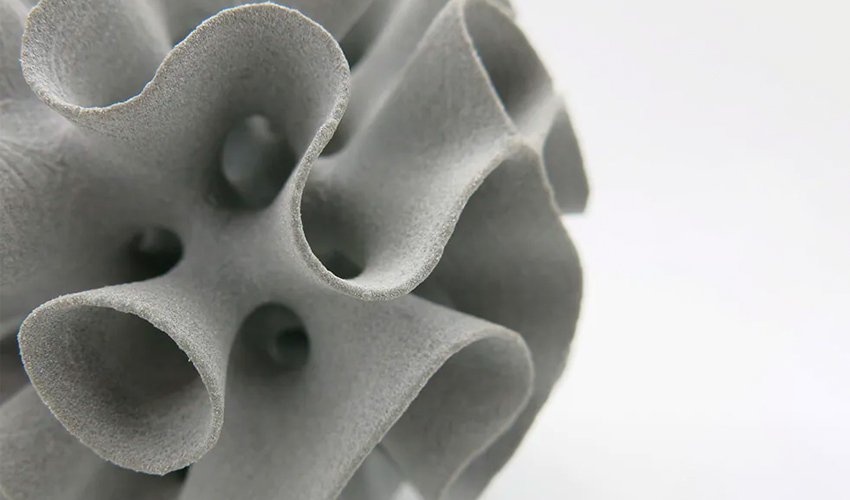 MaterialsNylon and Sustainability, the Path to Responsible Additive Manufacturing?Nylon, as we already know, is a synthetic polymer belonging to the polyamide (PA) group. In additive manufacturing, we can find it in filament form (PA6) for FDM technology, or in powder form (PA11 and PA12) for technologies such as…
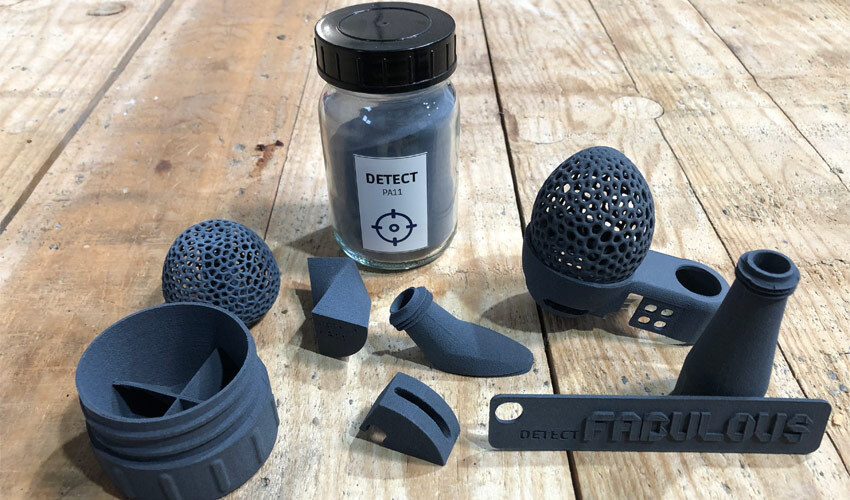 MaterialsFabulous is Presenting New Industrial Materials at Formnext 2021In 2020, Fabulous launched into the development of powders for additive manufacturing, more specifically thermoplastics for powder bed fusion processes. One of its first developments, BLUECARE, is a powder that has been certified for food contact in the European Union…
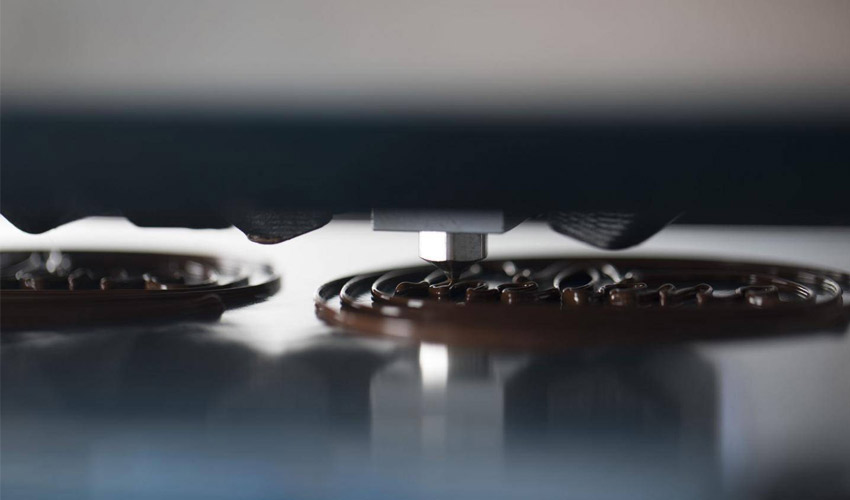 NewsThe first chocolate 3D printing studio opens in the NetherlandsChocolate manufacturer Barry Callebaut recently opened its first chocolate 3D printing studio through its subsidiary Mona Lisa, which specializes in the decoration of these sweets. The company says it is the first structure of its kind, where top chefs will…