News
The first chocolate 3D printing studio opens in the Netherlands
Chocolate manufacturer Barry Callebaut recently opened its first chocolate 3D printing studio through its subsidiary Mona Lisa, which specializes in the decoration of these sweets. The company says it is the first structure of its kind, where top chefs will…
- 3 min read
- News
- Six more stories
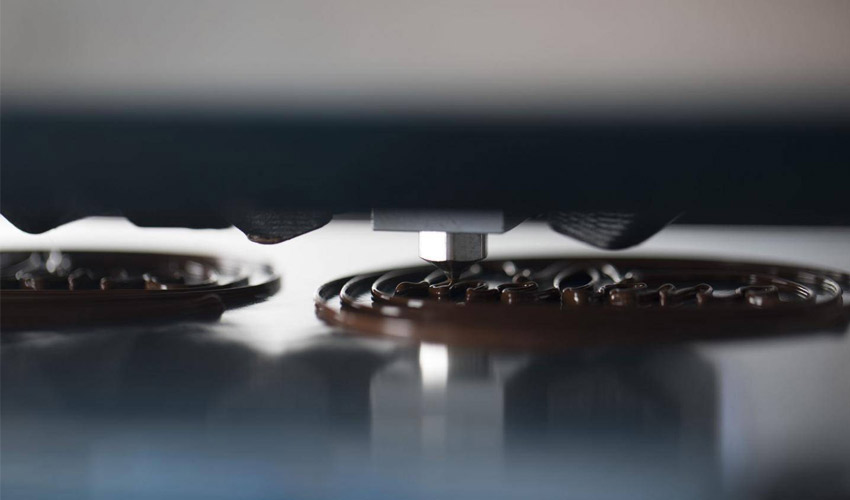
Chocolate manufacturer Barry Callebaut recently opened its first chocolate 3D printing studio through its subsidiary Mona Lisa, which specializes in the decoration of these sweets. The company says it is the first structure of its kind, where top chefs will be able to test new ideas and imagine complex and original creations. Based in Zundert in the Netherlands, this studio is equipped with several machines capable of printing chocolate pieces in series and fairly quickly: the brand explained at the inauguration of the studio that it could create thousands of pieces at the same time from Belgian dark chocolate. An initiative that combines craftsmanship, cutting-edge technology and mass customisation.
Following a study carried out by the Swiss group, 7 out of 10 consumers surveyed wanted to “test new chocolate experiences“, so what could be better than offering them 3D printed chocolate? It’s not the first time we’ve heard of such a concept, but most of the time, it’s simply the mould that is 3D printed. However, the new 3D studio, Mona Lisa, should be able to create pieces in dark chocolate with 56% cocoa. We don’t know for sure what technology is put in place however, it is fairly easy to guess an extrusion process was used.
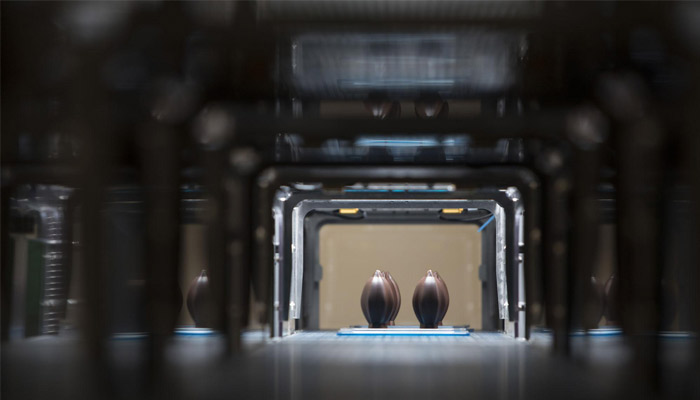
The 3D studio is equipped with several chocolate 3D printers | Credits: Barry Callebaut
According to Mona Lisa, the company has been working for 3 years on the development of its machine, which offers a tray size of 20 cm in length. It can print a small part in just one minute. What is interesting is the possibility for pastry cooks to imagine all possible shapes using additive manufacturing design techniques. They should be able to create honeycomb structures, nested pieces or even very fine details. In particular, 3D technologies will allow rapid prototyping and the ability to offer different iterations before moving on to the finished product.
More from the desk
Six other notes from the rest of the bench.
 NewsNew York Bill Proposes Background Checks on 3D Printer BuyersAfter a raft of busts in New York which led to the discovery of several caches of ghost guns, made of untraceable weapon components made from 3D printers, lawmakers in the empire state have now put forward a piece of…
 NewsOlivier van Herpt prints in 3D Delft BlueFor centuries Delft pottery, also known as Delft Blue, has gained worldwide renown; these Dutch pieces are particularly known for their finesse and quality. So when we combine 3D printing with this tradition of the seventeenth century, we can only…
 ApplicationsThe Role of AM in the Automotive IndustryIn the automotive industry, OEMs have historically mostly used additive manufacturing for rapid prototyping. In more recent years however, advances in AM have slowly been transforming the ways in which end-use parts are designed, manufactured and distributed. Deloitte’s 3D opport
 SoftwareMeshMixer, the Free Surface 3D Modeling SoftwareMeshMixer is one of the free 3D software programs provided by Autodesk, which offers several interesting features to help users in not just modeling but also in 3D printing processes. Available on Windows and Mac OS, version 3.5 of MeshMixer…
 Applications3D Systems Further Consolidates With Simbionix SaleIn a further attempt to move to focus only on 3D printing, 3D Systems has announced that they have sold their medical simulation business, Simbionix. The $305 million USD sale of the simulation business was to Surgical Science Sweden AB,…
 Printers#3DStartup: Apis Cor, Creators of the 3D Printed HouseIf you’ve been on the internet in the last year, you may have seen the viral clip of a 3D printed house built in just 24 hours. Apis Cor are a Russian company who built a whole, functional house in…