Applications
3D Printed Microrobots Successfully Administer Targeted Drug Delivery
3D printing has been revolutionizing medicine for years: from 3D-printed custom drugs to bioprinted replicas of human tissue, the technology promises to change how treatments are administered, offering an unprecedented level of personalization. Now, researchers at Caltech have mi
- 3 min read
- Applications
- Six more stories
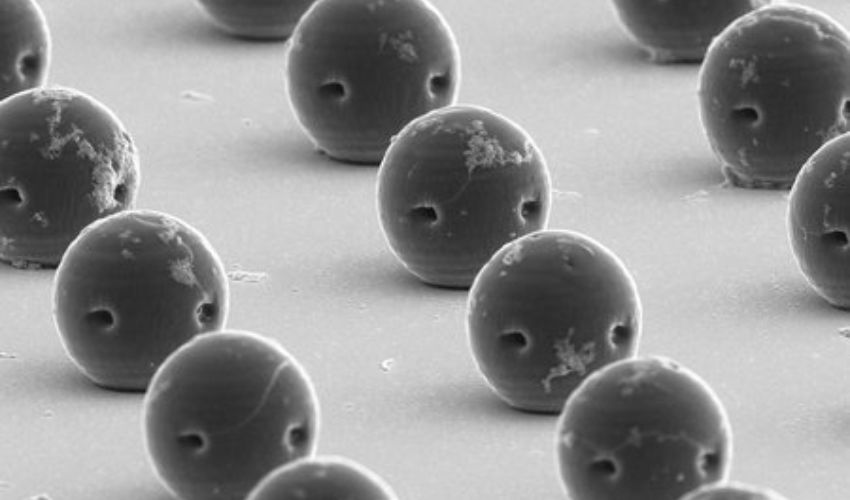
3D printing has been revolutionizing medicine for years: from 3D-printed custom drugs to bioprinted replicas of human tissue, the technology promises to change how treatments are administered, offering an unprecedented level of personalization. Now, researchers at Caltech have minuscule robots for targeted drug delivery, thanks to additive manufacturing technology.
These robots are not what you would typically picture when a robot comes to mind. Instead, they are small, bubble-like spheres that, once inside the body, can be directed to a desired site. To perform their job, the robots must overcome several challenges. Firstly, they have to survive in bodily fluids like blood, urine or stomach acid. Additionally, they must be controllable, and only once they reach their target can they release their medical cargo. Once they deliver their medicine, they must be absorbed by the body, without leaving any harmful substance behind.
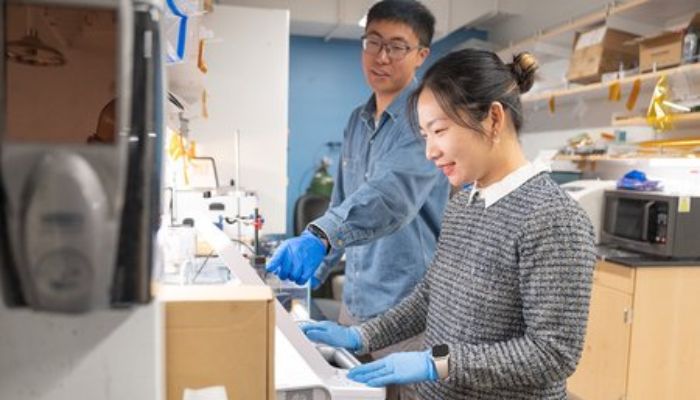
Graduate students and lead authors Hong Han and Xiaotian Ma collaborate with Prof. Wei Gao on experiments involving ultrasound imaging-guided acoustic propulsion of the microrobots.(Photo Credit: Lance Hayashida/Caltech)
The Caltech researchers developed minuscule robots that met all those requirements and called them bioresorbable acoustic microrobots (BAM). What’s more? The BAMs successfully delivered medicine that reduced the size of bladder tumors in mice. Wei Gao, professor of medical engineering at Caltech, Heritage Medical Research Institute Investigator, and co-corresponding author of the new paper about the bots, explained BAMs’ advantage. “Rather than putting a drug into the body and letting it diffuse everywhere, now we can guide our microrobots directly to a tumor site and release the drug in a controlled and efficient way,” Gao said.
More from the desk
Six other notes from the rest of the bench.
 Guides#3DStartup: Augmental’s MouthPad^ Makes Technology More AccessibleWhat if it were possible to control a computer, tablet, or phone without moving a finger? For people with paralysis, Mouthpad^ from Augmental makes this a reality. The device sits discreetly on the roof of the mouth and converts subtle head…
 NewsHow well do YOU know 3D Printing? Take Our Quiz:Do you fancy yourself as a bit of a 3D printing genius? Test yourself in our 3D printing quiz! [os-widget path=”/3dnatives/are-you-a-3d-printing-expert”] Have an opinion? Let us know in a comment below or on our Facebook and Twitter pages! Sign up for our free weekly
  NewsTOP 5 videos of the week: Orthodontics, metal blades and more!A new selection of the best 3D printing videos of the week, just for you! Find our TOP 5 videos of the week below and tell us what your favorite video is in a comment or on our Facebook and Twitter page.…
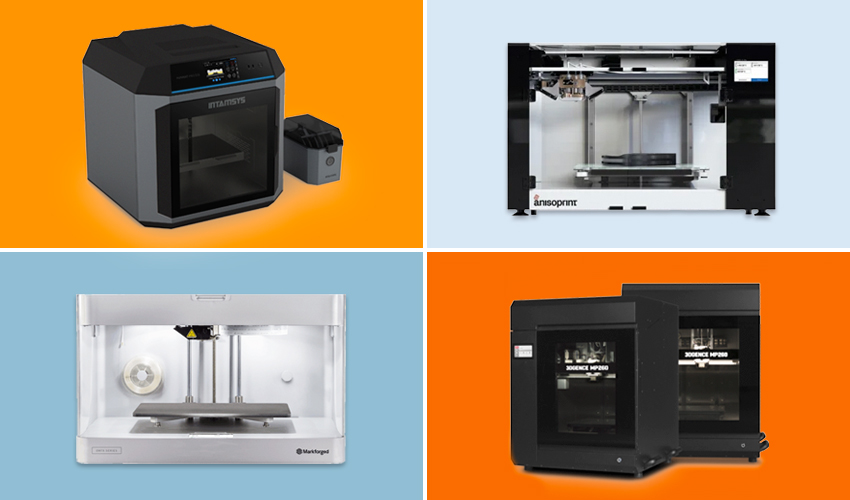 PrintersThe Top Compact, Industrial FDM 3D PrintersDespite the growth in other additive manufacturing technologies in other years, fused deposition modeling continues to dominate a large share of the market. This can be seen not only with a corresponding rise in commercial, lower-cost solutions in recent years,…
 NewsHow 3D Printing is Transforming Water InfrastructureYou learned it in science class: water is the foundation of life. The renewable resource is often taken for granted, since for many of us, it is easily accessible with a turn of the tap. However, the infrastructure that delivers…
 Guides#3DStartup: Tailored Fits moving forward on insolesThe demand for customised products is a growing market. One company that is catering to this demand is TAILORED FITS. Based in Switzerland the company was founded in 2016 and are using 3D technology to create custom insoles for you…