News
As 3D Printed Guns Evolve, So Does Their Threat
According to a report, 3D printed guns have become a compelling choice for criminals and a definite threat to security. In the UK, police made one of the largest seizures of 3D printed weapon components last month and warned of…
- 3 min read
- News
- Six more stories
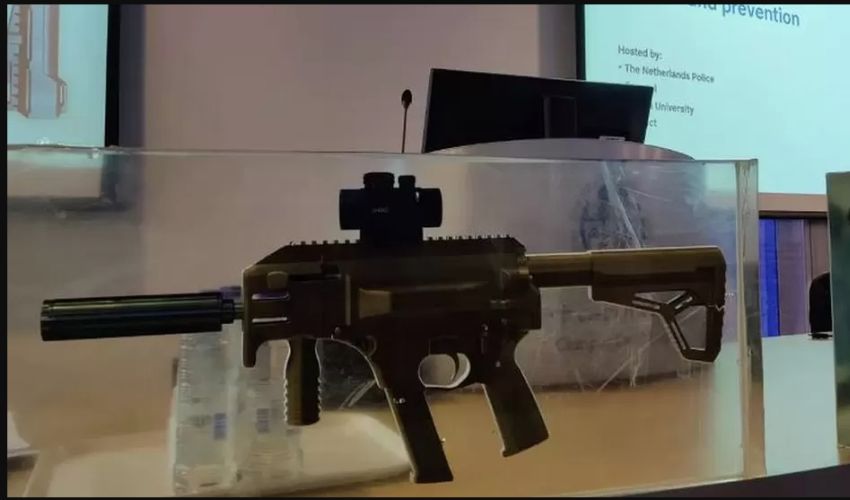
According to a report, 3D printed guns have become a compelling choice for criminals and a definite threat to security. In the UK, police made one of the largest seizures of 3D printed weapon components last month and warned of the discovery of a home factory in London where these were stored. Weapons made using additive manufacturing generally have certain small components which can be printed at home using an ordinary desktop printer: this accessibility is a double-edged sword. Where it is a benefit of 3D printing as it allows people creative freedom to produce what they wish, in this case it is a cause for concern as it is by nature difficult to regulate.
As the technology improves, 3D printed guns have developed from being unreliable weapons to a ‘credible’ choice for criminals, according to the National Crime Agency (NCA). Matthew Perfect, head of the National Firearms Targeting Centre, says the latest weapons would pose a definite threat on the street. He suggests that the Covid-19 pandemic could have increased their appeal as international trade and transport was decreased and so people sought to purchase or produce domestically as an alternative method to border smuggling.
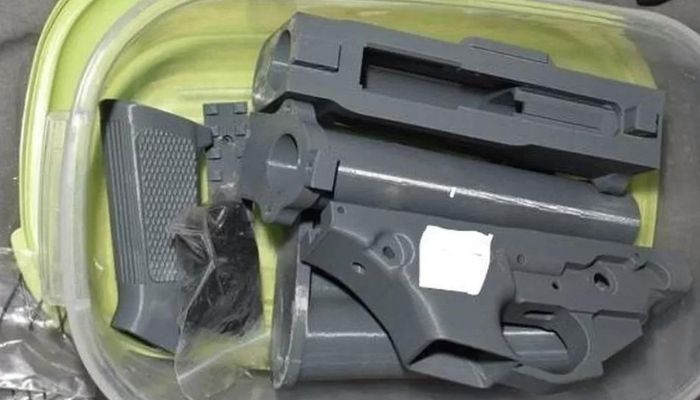
A box of 3D printed weapon components found by the Met Police during the raid. (Photo credit: Metropolitan Police/PA Wire/BBC News).
Currently only 80-90% of 3D printed guns are made using the technology. This is because the metal barrel, among other components, is usually made using traditional methods. However, it is possible that in the future as metal 3D printing improves, more of the gun could be made using this technology. Dr Rajan Basra, senior research fellow at the International Centre for the Study of Radicalisation at King’s College London, warns that these weapons are ‘moving into the mainstream’ and one model in particular comes with a 100-page manual and specific instructions for the user. In general, if you look on any website hosting open-source CAD files, users give extensive information to others about how precisely to make the product. This normally innocuous custom has therefore become a source of judicial concern.
More from the desk
Six other notes from the rest of the bench.
 NewsTree Column, Blast Studio’s Column 3D Printed Out of Mycelium and WasteWhile we are used to seeing 3D printing associated with plastic and metal, more and more initiatives are combining the technology with natural materials. London-based design studio Blast Studio recently developed a 3D printing method using mycelium, also sometimes called…
 PrintersEpson Officially Enters the 3D Printing MarketIt’s hard not to have heard of the Japanese group Epson, especially when it comes to 2D printers. And today, it particularly interested us because the electronics giant is taking an unexpected turn in the additive manufacturing market. The company…
 NewsTop 5 Videos: From Formnext Highlights to 3D Printed SoundCheck out the Top 5 Videos of the Month! We begin with 3Dnatives uncovering the most surprising and innovative discoveries from Formnext 2025. Next, 3D Monotech showcases how large scale additive manufacturing is redefining sustainability and safety in the marine…
 News#TOP5 Videos: Artec 3D’s scanner, 3D printing changing innovation…We found the TOP 5 videos of the week about 3D printing and the way additive manufacturing is shaping and changing our society. This week we touch on Artec’s scanner to digitalise museum pieces, iGo3D’s co-founder vision of the industry,…
 NewsInside 3D Tour: Behind the Scenes at Massivit’s Headquarters and Additive Manufacturing FacilitiesAt this point, it seems likely that you have already heard of Inside 3D Tour, the series of videos in which 3Dnatives visits major manufacturers or distributors in the 3D printing industry to learn firsthand how different additive manufacturing methods…
 ApplicationsThe Gradual Yet Expanding Integration of 3D Printing in DentistryA recent study conducted by the American Dental Association revealed that only 17% of dentists currently use 3D printers as part of their dental practice. Furthermore, of those dentists who do use 3D printers, a significant 67% have incorporated this…