Printers
Epson Officially Enters the 3D Printing Market
It’s hard not to have heard of the Japanese group Epson, especially when it comes to 2D printers. And today, it particularly interested us because the electronics giant is taking an unexpected turn in the additive manufacturing market. The company…
- 3 min read
- Printers
- Six more stories
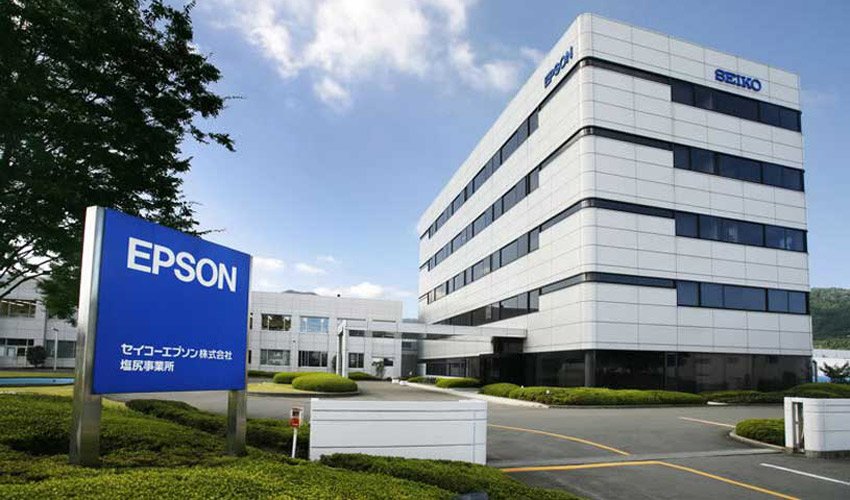
It’s hard not to have heard of the Japanese group Epson, especially when it comes to 2D printers. And today, it particularly interested us because the electronics giant is taking an unexpected turn in the additive manufacturing market. The company is expected to unveil its first 3D printer in two days at the International Robot Exhibition 2022, 8 years after a first announcement made by its president, Minoru Usui, to move into the market. This new solution is an industrial machine based on an extrusion process. The main difference is the use of a flat screw as a nozzle to expand the range of materials available and the amount of material deposited.
In January 2014, on the occasion of the group’s 30th anniversary, Minoru Usui had revealed his intentions to enter the 3D printing market within the next 5 years. At the time, Epson considered that the technology still had many limitations, particularly in terms of compatible materials. Since then, the market has evolved significantly and we only need to see the number of companies specialized in 2D that have taken the gamble of moving into additive manufacturing. There is of course HP which is a major player in the industry, but also Canon and Xerox. It is now Epson’s turn to market its new machine after internal use.
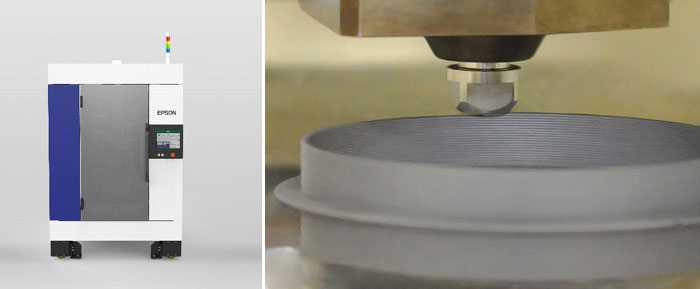
The Epson machine is based on an extrusion process (photo credits: Epson)
Epson has remained rather discreet about this new industrial 3D printer. We know that it will be based on an extrusion method made possible by a flat screw. The manufacturer specifies that it is the same as found on its injection molding machines – so these are proven and reliable components. The use of such a screw especially allows to widen the range of compatible materials by proposing a 3D printing based on granules, plastic or metallic, but also from high performance polymers like PEEK. The manufacturer states in its press release:
More from the desk
Six other notes from the rest of the bench.
 NewsThe Coolest Things We Saw at RAPID + TCTRAPID + TCT 2025 is in full swing! Eagerly anticipated every year, RAPID + TCT sets itself apart among additive manufacturing events globally, as it always promises to be much more than a trade show. To give you a better…
 NewsBQ and 3D printing bringing blind people closer to cultural heritage3D printing technologies have revolutionised many sectors, and opened many doors to help integrate people with disabilities. A few weeks ago, researcher Néstor F. Marqués, with the help of the company BQ and 3D printing, managed to recreate some historical…
 ApplicationsRicoh and Insight Surgery Partner to Make 3D Printed Surgical GuidesOn October 17th, Ricoh announced its partnership with Insight Surgery to provide patient-specific surgical guides for orthopedic and maxillofacial surgeries. These innovative, 3D printed surgical guides will help surgeons with precision by translating a bespoke virtual surgical p
 ApplicationsBacteria Could Play a Role in 3D Printed Construction on MarsAs NASA puts it, “no other planet has captured our collective imagination quite like Mars.” In recent years focus has turned from travel to the Moon to the space race to Mars. The more ambitious among us aims to colonize…
 ApplicationsPitch 3D from 3DHEALS in In (3D) ustry, boosting the medical sector3DHEALS is a platform for 3D printing and bioprinting specialised in the health sector. This platform is already known for its different events in the USA and has joined up with partners like IN (3D) USTRY. Several European countries has also…
 MaterialsMycelium as a Material for 3D PrintingAs plastic remains one of the most widespread materials on earth, there has been much discussion on to its impact on the climate. However, anyone who believes that plastic is the only culprit among environmentally harmful materials is mistaken. The…