News
Viktor&Rolf decorates its famous Flowerbomb perfume with a 3D printed set
On the 15th anniversary of its famous Flowerbomb perfume, the Dutch fashion house Viktor & Rolf released a limited edition version of the product. Rather, they released a limited edition ornament for the bottle, which was 3D printed before being…
- 3 min read
- News
- Six more stories
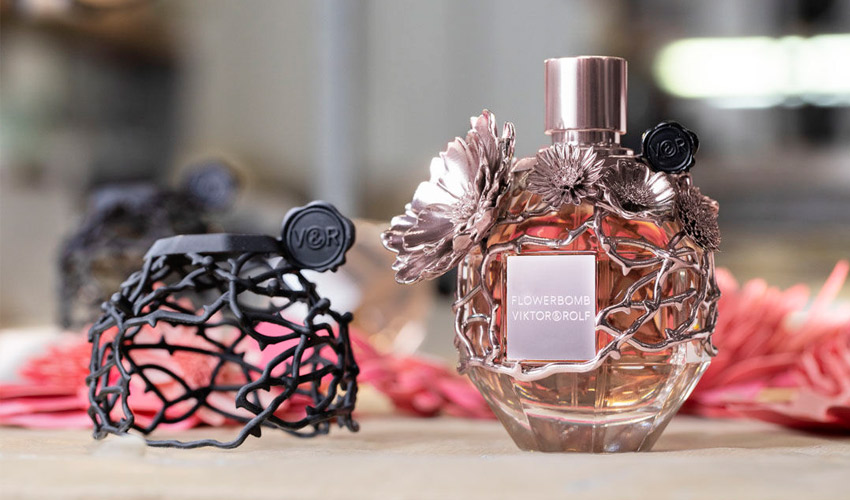
On the 15th anniversary of its famous Flowerbomb perfume, the Dutch fashion house Viktor & Rolf released a limited edition version of the product. Rather, they released a limited edition ornament for the bottle, which was 3D printed before being polished and electroplated to obtain a rose gold finish. This is a fine example, combining new technologies and traditional methods, to demonstrate how additive manufacturing is disrupting the luxury sector. The project was carried out in collaboration with L’Oréal, and the French 3D printing service Erpro which used machines from the manufacturer Carbon.
Founded in 1993, Viktor & Rolf quickly stood out with its conceptual glamor and provocative collections. In 2005, it launched the Flowerbomb perfume which very quickly became all the rage among women. Its creators, Viktor Horsting and Rolf Snoeren, say that, from the start, it has been about embedding the consumer in a dream: “Flowerbomb will take you by surprise. When we showcase our collections, we don’t just showcase clothes, we present a dream and that’s what this fragrance is too. ” 15 years later, they wanted to shine the spotlight on their bestseller by creating an adornment worthy of a Haute Couture piece.

The set was 3D printed (photo credits: L’Oréal)
Belonging to the L’Oréal group which has used additive manufacturing in many of their projects for a few years now, the brand has turned to 3D printing once again to imagine a complex and elegant set, impossible to obtain via traditional methods or at least, not so quickly and with so much agility. The 3D printing service Erpro was entrusted with printing the different parts for the sets. Using Carbon resin machines, it produced the different components for 15 sets. Each component was polished, cleaned and then assembled by hand. Once the set was ready, a layer of rose gold was deposited by electrolysis to obtain this superb finish.
More from the desk
Six other notes from the rest of the bench.
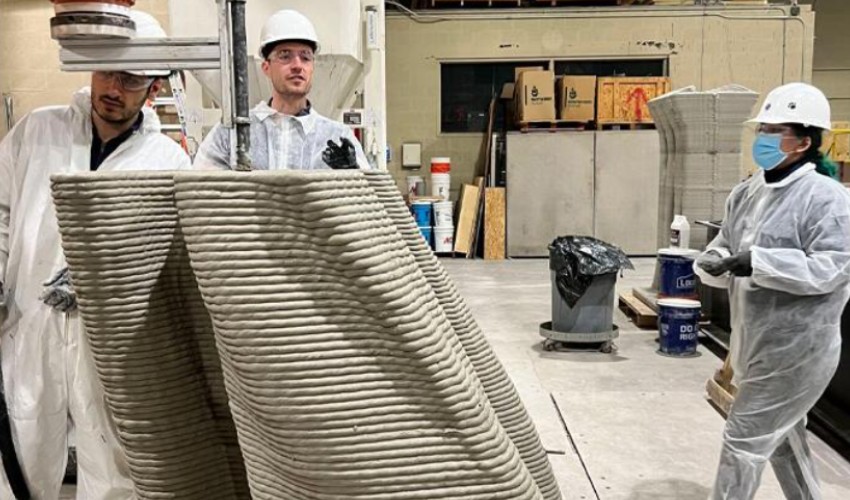 NewsPenn State Tackles Alaska’s Housing Shortage with 3D Printed Homes InitiativeIn Alaska, where rugged landscapes and harsh winters have exacerbated the housing crisis , researchers at Penn State have developed a promising solution to alleviate the state’s housing shortage. Led by Professor José Pinto Duarte, Stuckeman Chair in Design Innovation&helli
 NewsVolkswagen Integrates Binder Jetting into its Production LineIn December 2018, carmaker Volkswagen announced the opening of a dedicated additive manufacturing center at its main production site in Wolfsburg specifically to test HP’s technology. The German company is now integrating the metal binder jetting process, with the goal&hell
 NewsForward AM and Xuberance Announce Additive Manufacturing Technical Center in ChinaInterest in additive manufacturing, specifically in the Asia-Pacific region, continues! Forward AM is joining companies like EOS and Arburg, and has opened a new Additive Manufacturing Technical Center (AMTC) in Shanghai, China. The new center is a collaboration between Forward&h
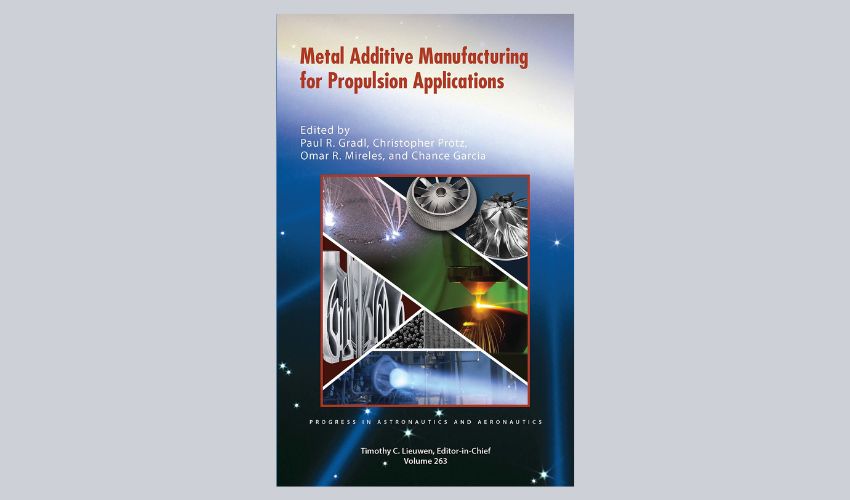 ApplicationsGiveaway: Win a Free Copy of Metal Additive Manufacturing for Propulsion ApplicationsOne of the areas in which metal additive manufacturing has been showing its true value has undoubtedly been aerospace. Over the past few years we have seen it be used for everything from replacement parts in airplanes to entirely 3D…
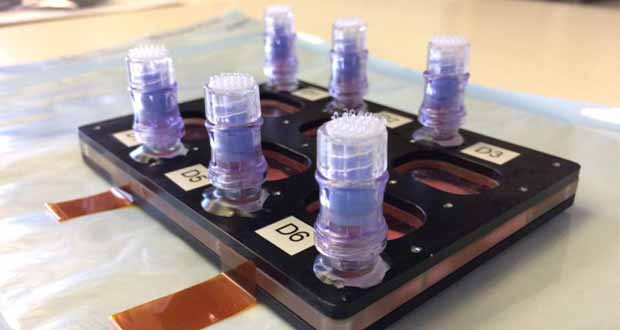 Applications3D Bioprinting in space could accelerate cancer researchAt the University of Colorado in Boulder, a research center affiliated with NASA is using 3D bioprinting to develop more realistic cancer cell structures aboard the International Space Station. Under a research project called Magnetic 3D Cell Culturing, Their hopes…
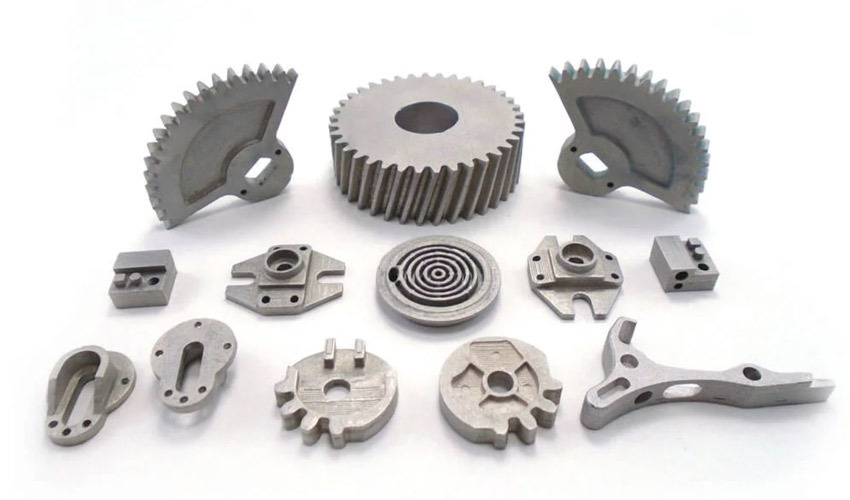 Guides#3Dstartup: CASTOR on unlocking the benefits of industrial 3D printingOur 3D startup of the month, CASTOR, comes from Israel and has developed a software solution to help manufacturers reduce their lead times and manufacturing costs in 3D printing. Its objective is to take advantage of all the benefits of…