News
3D Printed Energy Infrastructure With Lower Material Consumption
Spanish company Iberdrola specializes in electricity and natural gas, offering distribution and marketing solutions. Recently, it collaborated with the manufacturer Hyperion Robotics and Peikko to 3D print the foundations of its green energy transmission networks. Specifically, t
- 3 min read
- News
- Six more stories
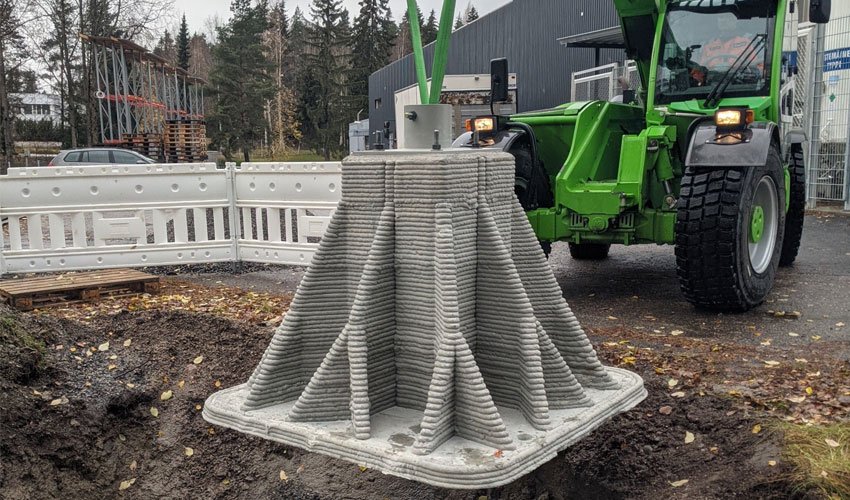
Spanish company Iberdrola specializes in electricity and natural gas, offering distribution and marketing solutions. Recently, it collaborated with the manufacturer Hyperion Robotics and Peikko to 3D print the foundations of its green energy transmission networks. Specifically, they envisioned an pad foundation, a shallow foundation that takes and spreads point loads safely, made of concrete, for substation projects not only using 75% less material but also improving the production method of these critical structures.
Concrete is now one of the most consumed materials on Earth, generating about 8% of global carbon emissions. However, its production is growing rapidly, which could have disastrous environmental consequences for our planet. Faced with this ecological dilemma, several players have focused on concrete 3D printing to reduce their impact by offering less harmful alternatives. Indeed, it is common knowledge that additive manufacturing uses only the material it needs, thus reducing the waste generated. Hyperion Robotics is one of these players, using robotic arms to extrude concrete layer by layer.
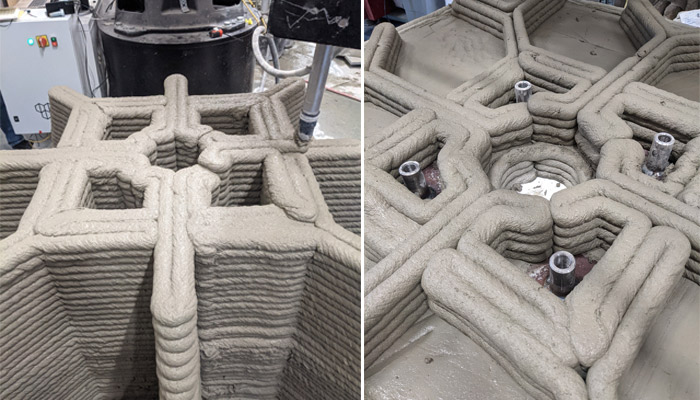
Photo Credits: Hyperion Robotics
More sustainable energy transmission networks?
Its 3D printing solutions were recently used on behalf of Iberdrola, a group that builds miles of power lines to distribute renewable energy. As the company expands, it is looking to develop more grids to carry so-called green energy. It has turned to concrete 3D printing to design more efficient means of transmission that are less harmful to our planet.
More from the desk
Six other notes from the rest of the bench.
 NewsBambu Lab Breaks Into the World of Toys With CyberBrick™Toy cars, tractors, fire trucks or radio-controlled airplanes—these toys are enjoyed worldwide. But what if you want to turn play into an enjoyable learning time to spend with the family? This is the idea that prompted MakerWorld, the community platform…
 ApplicationsBritish Patient Receives First-Ever 3D Printed Eye ProstheticHow can additive manufacturing help patients in the medical industry? Well, for one UK patient we may have our answer. Recently, Steve Verze from Hackney, UK, became the first person in the world to receive a fully 3D printed eye…
 NewsTitomic 3D prints the largest titanium droneTitomic is an Australian manufacturer of 3D metal printers that recently unveiled a 3D printed titanium drone, the largest on the market according to the company. And for good reason, this one is 1.8 metres in diameter! It was designed…
 NewsMick Fanning surfs on a 3D printed surfboardWhile the automobile and aerospace industries have typically been the dominate leaders in 3D printing technology, new industries are beginning to take notice of this technology’s capabilities. The sporting industry is now a contender within the 3D printing technology race,
  NewsiFactory3D Wins Best 3D Startup of 2020!2021 having just begun, it is the perfect time to look back on the most important innovations of the last 12 months. In the manufacturing sector, many companies have chosen to launch their projects in order to bring change or…
 News$1.25 Million Grant to Protect Hawaiʻi Using 3D Printed Environmental Hazard SensorsHawaiʻi faces a wide range of environmental hazards, including wildfires, drought, flooding, hurricanes, tsunamis, and water contamination. These risks are becoming more severe as the climate continues to change, raising urgent questions about how to protect both the islands and&