News
$1.25 Million Grant to Protect Hawaiʻi Using 3D Printed Environmental Hazard Sensors
Hawaiʻi faces a wide range of environmental hazards, including wildfires, drought, flooding, hurricanes, tsunamis, and water contamination. These risks are becoming more severe as the climate continues to change, raising urgent questions about how to protect both the islands and&
- 3 min read
- News
- Six more stories

Hawaiʻi faces a wide range of environmental hazards, including wildfires, drought, flooding, hurricanes, tsunamis, and water contamination. These risks are becoming more severe as the climate continues to change, raising urgent questions about how to protect both the islands and the people who live there. One part of the solution lies in data collection, which makes it possible to track environmental changes and identify early warning signs before disaster strikes. To support this effort, the National Science Foundation has awarded $1.25 million to researchers at the University of Hawaiʻi at Mānoa and Georgia Tech to develop environmental hazard sensors capable of delivering life-saving data in real time.
The goal of the project is to create a low-cost, open-source electronics printer for creating sensors that are faster, more affordable, and locally produced. This will bring advanced monitoring tools within reach of communities across the state. These sensors can be 3D printed in mere minutes and deployed the same day to gather actionable data for both organizations and residents. They have the potential to track water quality, detect soil contamination, and more, while connecting to a compact, AI-enabled handheld device (smaller than a smartphone!) that processes and uploads the data to the cloud.
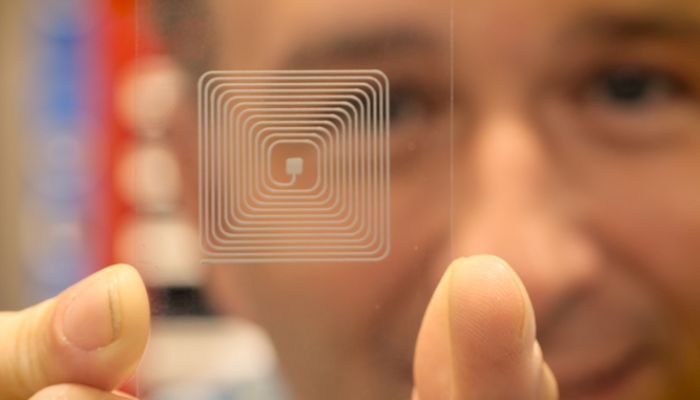
Professor Tyler Ray with a sensor (Photo Credit: The University of Hawai’i)
The Technologies Used to Create Environmental Sensors
To design the system, the team is exploring a family of 3D printing technologies for printed electronics, including aerosol jet, inkjet, and direct-ink-writing, selecting the method based on each application’s needs. “This is integrated into a hybrid approach that uses either FDM or SLA, or conventional machining, if geometries are required beyond a simple flat sheet,” principal investigator and UH Mānoa College of Engineering Associate Professor Tyler Ray explained via email.
More from the desk
Six other notes from the rest of the bench.
 NewsTop 5 Videos: Resin 3D Printing TechnologiesIt’s Sunday again, so get ready for our new list of top 5 videos about 3D printing! This week, we’re giving you new insight into the methods in 3D printing with our new Ex[planned video! After that, you’ll hear a…
 News3DExpress: Anker Makes Kickstarter History with $46 Million for eufyMake E1 PrinterWhen its Kickstarter campaign closed on June 28, Anker made history: with over 17,000 backers and $46 million in pledges, the tech company now holds the record for the most-funded campaign in Kickstarter history—surpassing the previous record of $41.7 million.…
 ApplicationsFirehawk Oversubscribes $60 Million Investment, Securing Key European InvestorFirehawk Aerospace, a defense company specializing in advanced energetics and propulsion, has just secured investment from Presto Tech Horizons (PTH), a defense and resilience tech fund created through a partnership between European venture capital firm Presto Ventures and global
 PrintersFrench Manufacturer Namma Expands Its Range of Hybrid Solutions to Meet Industrial RequirementsIn 2021, Bordeaux-based start-up Namma presented EVA, an industrial multiprocess machine that combines three processes to produce metal, polymer and composite parts. Three years later, it has strengthened its offering with two additional models, positioning itself in both hybrid
 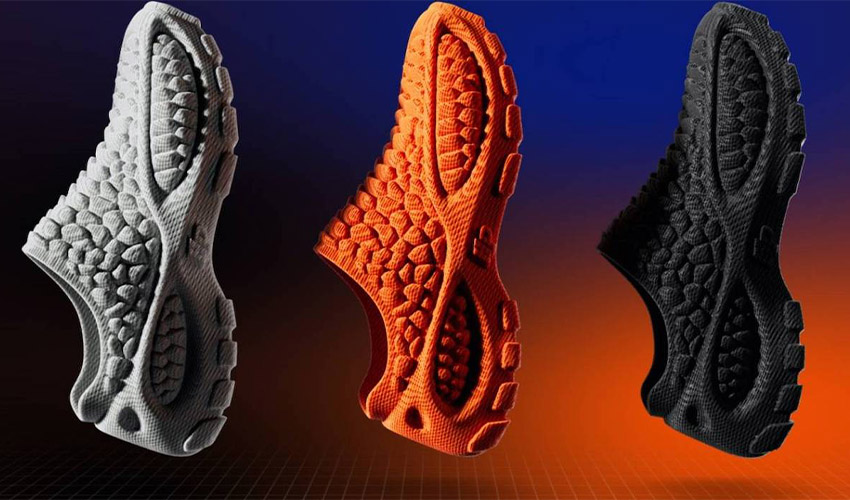 NewsHeron Preston & Zellerfeld Create 3D-Printed HERON01 SneakerFor several years now, the footwear industry and additive manufacturing players have been collaborating on innovative shoe projects. You may recall Adidas’ 3D-printed 4DFWD sneakers or Athos’ 3D-printed climbing shoes — 3D-printed footwear is easing its way to the mai
 Guides3DBiotech, additive manufacturing in regenerative medicine3D bioprinting has revolutionized the medical sector by providing advanced treatments that improve the quality of surgical interventions. In fact, we already analyzed the advantages of additive manufacturing for personalised medicine, and saw the various 3D printing technologies