Applications
British Patient Receives First-Ever 3D Printed Eye Prosthetic
How can additive manufacturing help patients in the medical industry? Well, for one UK patient we may have our answer. Recently, Steve Verze from Hackney, UK, became the first person in the world to receive a fully 3D printed eye…
- 3 min read
- Applications
- Six more stories
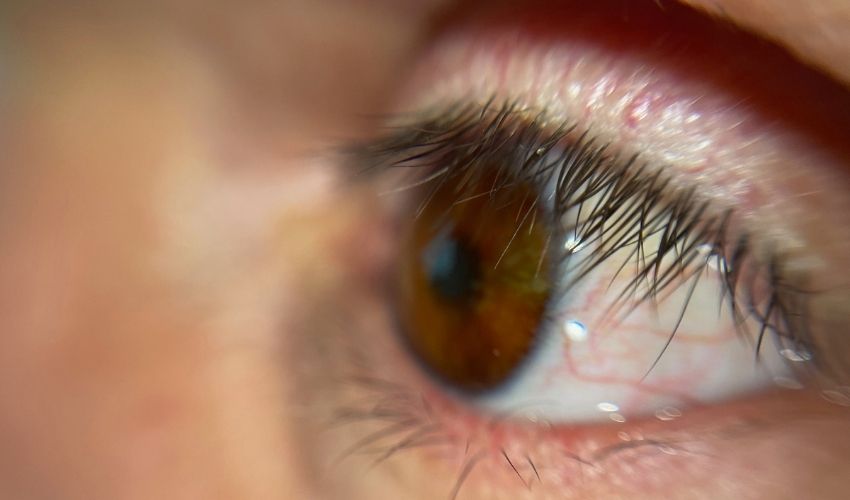
How can additive manufacturing help patients in the medical industry? Well, for one UK patient we may have our answer. Recently, Steve Verze from Hackney, UK, became the first person in the world to receive a fully 3D printed eye prosthetic. The Moorfields Eye Hospital NHS Foundation Trust patient also has the distinction of being the only person to use a 3D printed eye prosthetic as his sole prosthetic eye. The eye is notable for being more realistic with a clearer definition and real depth thanks scans of the socket and the eye to ensure a good match.
The printed prosthetic is part a collaboration between a number of actors throughout the UK and Europe, led by UCL researchers and Moorfields Eye Hospital NHS Foundation Trust. Professor Mandeep Sagoo, consultant ophthalmologist at Moorfields, commented, “We are excited about the potential for this fully digital eye. This has been a culmination of 4 years of development of sophisticated technology between Moorfields Eye Hospital, UCL Institute of Ophthalmology, Ocupeye Ltd and Fraunhofer. We hope the forthcoming clinical trial will provide us with robust evidence about the value of this new technology, showing what a difference it makes for patients. It clearly has the potential to reduce waiting lists.”
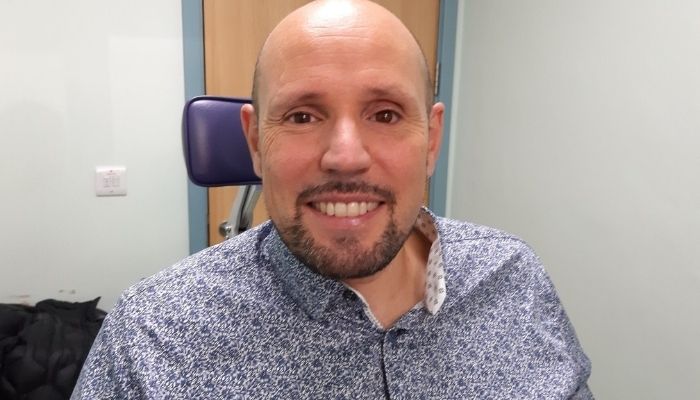
Steve Verze has received the first 3D printed eye prosthetic, which is more realistic than traditional models (photo credits: Moorfields Eye Hospital
Why Make a 3D Printed Eye Prosthetic?
One of the many ways that 3D printing is used in the medical sector is through prosthetics. The advantages are clear, using 3D scanning and printing, doctors are able to make prosthetics that are a more perfect fit for patients, making them more comfortable. The prosthetics can also then be made faster, cutting down significantly on waiting time which can be distressing for patients. In the case of eye prosthetics, UCL notes in their press release that about 0.1% of the population need one, about 60-70,000 people in England alone. Additionally, they must be replaced every five years and each eye socket is unique. These conditions make it the perfect application for 3D printing as customization is a key benefit of the technology.
More from the desk
Six other notes from the rest of the bench.
 NewsWhat to Expect at TCT 3Sixty 2022It’s not been that long since RAPID + TCT 2022 closed its doors, but trade show season is just starting in the 3D printing world. And now, you have another one to look forward to. From June 8th to 9th,…
 NewsTop 5 Videos of the Week: 3D printing for hypersonic applications …This week we found the top 5 videos about 3D printing and the way additive manufacturing is shaping our society. The technology has infiltrated many sectors, from medical to automotive! Check out our selection of the week to keep up with the innovations! This week we…
 PrintersCrane WASP; a modular 3D printer for the construction industryThe Italian 3D printer manufacturer WASP quickly specialised in the Fused deposition modeling and now offers a wide range of machines of any size. We remember their 3D delta printer measuring 12 meters in hight and was 7 meters wide, the BigDelta,…
 MaterialsHow do Laboratories and Research Centers Benefit from Ceramic 3D Printing?In 2018, French company Nanoe launched its additive manufacturing material offering. Called Zetamix, it offers ceramic and metal filaments for extrusion processes (FFF). It facilitates the creation of customized ceramic and metal parts for professionals and manufacturers. Today,
  News3D Printed Spikes From BMW Are Being Used to Make Bobsledding FasterIn the sports sector, 3D printing is continuously being used to customize equipment for athletes, even at the highest levels. The increased relevance of 3D printing was once again demonstrated by the German Bobsled, Luge and Skeleton Federation (BSD). In…
 News3D printed guns: Legalised in the United States3D printed guns have officially become legal in the United States of America. In 2013, the first 3D printed gun were released in the United States. Since then, a legal battle has been going on in connection with commercialisation and…