News
3D printed ceramic blocks for a natural ventilation system
Bat el Hirsh is a young artist who used ceramic 3D printing to design her new architectural work called Earthenwind. The project consists of 3D printed ceramic blocks assembled together to form a kind of giant screen, protecting from the…
- 3 min read
- News
- Six more stories
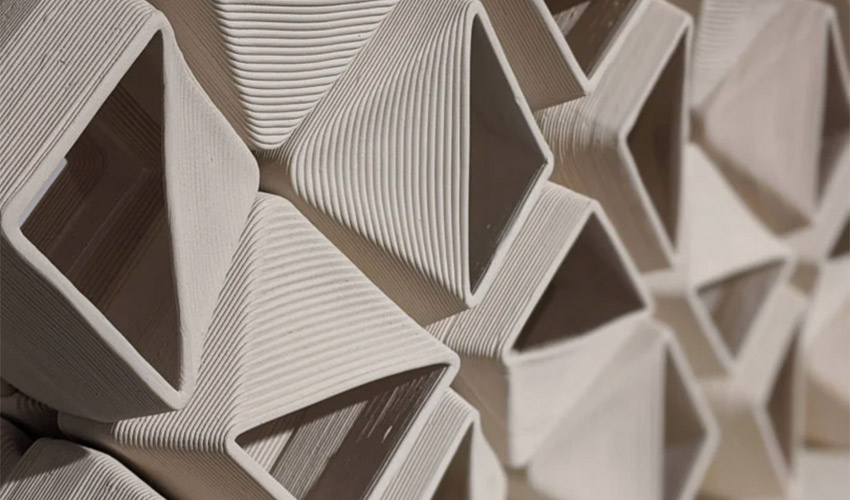
Bat el Hirsh is a young artist who used ceramic 3D printing to design her new architectural work called Earthenwind. The project consists of 3D printed ceramic blocks assembled together to form a kind of giant screen, protecting from the sun and providing a cooler area in hot countries. It can also serve as a decorative structure. The blocks are all of the same size, but some are empty, while others are half full, creating an interesting visual differentiation.
Ceramic additive manufacturing has long interested the architecture and design sector because it allows to design more original clay structures, quickly and at lower cost. Projects that combine ceramic 3D printing and construction are numerous, often based on the principle of extruding a clay-based paste. One of the companies that comes to mind is 3D Potter, who developed a whole range of ceramic 3D printers that were used for the Mud Frontiers project: the 3D printed huts made with the local soil mud.
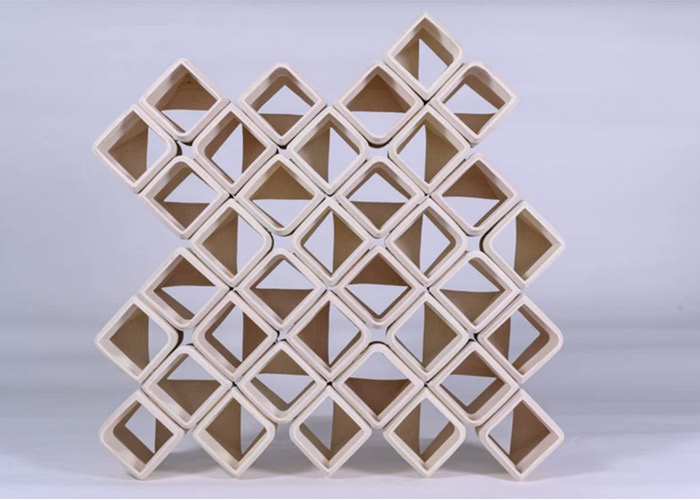
The facade from 3D printed ceramic blocks. (All image credits: Bat el Hirsh)
In this latest project, Bat el Hirsh used an FDM 3D printer, where a nozzle deposits layer by layer the clay that hardens during the printing process. The young designer explains that she was inspired by ancient pottery techniques that she wanted to mix with new technologies, but also by the mashrabiya of Islamic architecture. These are natural ventilation devices, usually made of wood, which provide protection from the sun and allow air to pass through. Instead of using wood, the artist turned to ceramics after discovering its properties in terms of cooling and ventilation.
More from the desk
Six other notes from the rest of the bench.
 NewsNanoDLP, The Platform That Prepares, Controls And Monitors Your Resin 3D PrinterThe use of software that assists the user during the manufacturing process is very important in the 3D printing industry. From the preparation of the digital file, to the lamination process, to the control of the printing in real time.…
 GuidesLemki Robotix on 3D Printing CampersWith summer now in full swing, we’ve got our minds on upcoming holidays. Lemki Robotix, a German-Ukrainian start-up and innovator in the field of large-format 3D printing with composite materials, has created a 3D printed camper that may be just…
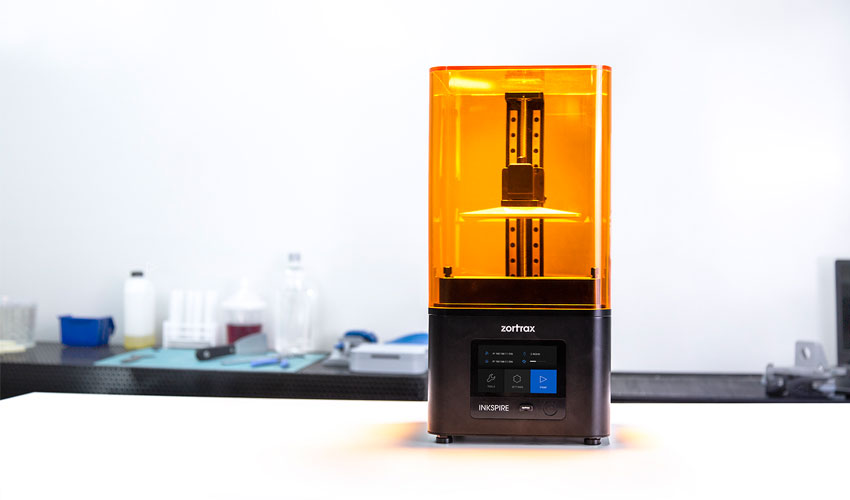 PrintersZortrax launches Inkspire; its first 3D resin printerThe Polish manufacturer Zortrax is an indisputable specialist in office FDM 3D printers. However, it is taking a new turn and have announced the launch of a new resin machine, the Inkspire. Instead of turning to more conventional stereolithography, they chose the Liquid Crystal D
 ApplicationsAntibacterial, 3D Printed Metal Under Development for Surgical ImplantsWithin the realm of medical 3D printing, we often discuss the value of plastic filaments, photopolymer resins, and silicone technologies that can assist with the comfort and rehabilitation of patients receiving treatment. However, one material that must not be overlooked…
 MaterialsEverything You Need to Know About Wax 3D PrintingThe term wax 3D printing is somewhat misleading, as in fact should be considered indirect 3D printing. In other words, 3D printing is not used to manufacture the final part, but as a step in the process. Wax 3D printing…
 ApplicationsBioprinted epithelium model could accelerate COVID-19 vaccine testingDuring the current COVID-19 pandemic, many 3D printing companies launched initiatives to curb the spread of the virus. Many have put their solutions at the service of medical staff and patients by creating 3D printed respirators, ventilators, and other medical…