Applications
Antibacterial, 3D Printed Metal Under Development for Surgical Implants
Within the realm of medical 3D printing, we often discuss the value of plastic filaments, photopolymer resins, and silicone technologies that can assist with the comfort and rehabilitation of patients receiving treatment. However, one material that must not be overlooked…
- 3 min read
- Applications
- Six more stories
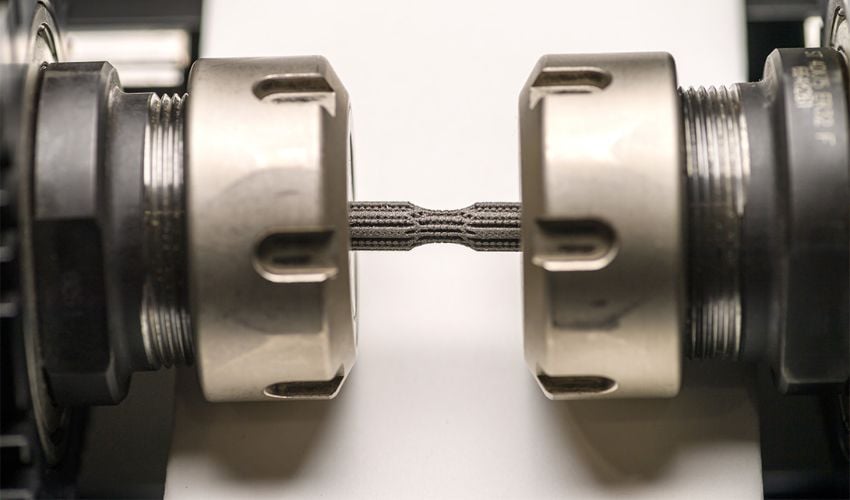
Within the realm of medical 3D printing, we often discuss the value of plastic filaments, photopolymer resins, and silicone technologies that can assist with the comfort and rehabilitation of patients receiving treatment. However, one material that must not be overlooked within this field is the use of metal 3D printing. The use of metal in the medical field is a crucial part of many implants, surgeries, and some prosthetic pieces which can often accompany patients for years or indeed, for a lifetime. One issue with medical parts, in general, is the acceptance or rejection of foreign material when interacting with the human body, leading to adverse side effects or infection. To combat these issues more easily, researchers at Washington State University (WSU) have announced their successful test of a 3D printed metal designed to be naturally antibacterial, opening the possibility for the material to one day be used for surgical implants.
During testing, the 3D printed metal was able to kill 87% of infection-causing bacteria and was able to do so without compromising its function as an implanted piece of medical equipment; the tissue around it did not reject the new implant. The WSU research team is hopeful that this development will be a means to control the spread of bacteria during common implant surgeries such as for the hip or knee. The growth of bacteria and subsequent infection during and after these surgeries is the leading cause of implant rejection. With materials that are naturally resistant and able to kill harmful bacterial cells, the outcomes for many may improve dramatically.
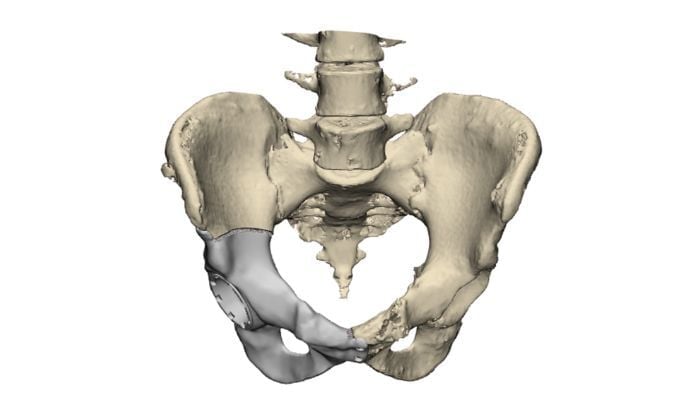
Titanium has been used in traditionally manufactured and 3D printed medical fields. (Photo credits: TrabTech)
The standard metal most often used for common surgeries is titanium, which has no major antibacterial properties and has been regularly utilized in the medical industry for nearly half a century without major technological changes. This has often led to post-surgery infections due to bacterial buildup on the implant. The danger is not only limited to one’s time on the operating table but can also develop in the following weeks or months. Indeed, in the worst of cases, patients may be forced to return to surgery to get the implant removed and replaced. The metal produced by the WSU team, however, would remove the need for such drastic measures while also eliminating the need for the patient to ingest supplemental antibiotic drugs.
More from the desk
Six other notes from the rest of the bench.
 NewsPrinting larger parts with Modix Modular Technologies 3D printersModix Modular Technologies is an Israeli manufacturer behind the Modix BIG line of 3D printers, designed, according to the manufacturer, to print large, industrial-quality parts. Six models are available today, with a first series of compact single-head machines and a…
 NewsTree Column, Blast Studio’s Column 3D Printed Out of Mycelium and WasteWhile we are used to seeing 3D printing associated with plastic and metal, more and more initiatives are combining the technology with natural materials. London-based design studio Blast Studio recently developed a 3D printing method using mycelium, also sometimes called…
 NewsSwissloop Tunneling Has Integrated a 3D Printer into a Tunneling Machine for Elon Musk’s HyperloopSwissloop Tunneling is an association of students located at ETH Zurich whose goal is to revolutionize the construction of tunnels. For several months now, it has been working on its “Groundhog Alpha” model, a 7-meter (nearly 23′) long machine that…
 NewsThe Impact of Additive Manufacturing on Nuclear Fuel TransportIn 2019, Orano Federal Services and the University of North Carolina at Charlotte explored the design of 3D-printed shock absorbers for containers used to transport spent nuclear fuel. However, the partners encountered several obstacles. Seven years later, the study has…
 ApplicationsInfographic: 3D Printing and its Role in Space ExplorationIt is safe to say, that additive manufacturing and aerospace are increasingly being seen to go hand in hand. This is especially the case when it comes to space. Though it may seem like science fiction, 3D printing has quickly…
 Software3DEXPERIENCE Make, Dassault Systèmes’ on-demand AM platformAdditive manufacturing is revolutionising the industry by leading a real change in production methods: relocation of manufacturing resources, gains in terms of flexibility for the production of prototypes and small series in-house, reduction in lead times and costs, etc. However,